Business Nov 12, 2026
Freight Industry Under Pressure as More Than 1,000 Jobs Face Cuts and Bankruptcy Filings Increase
Trucking companies, warehouse operators and freight service providers continue to grapple with rising operating costs, contract losses and financial difficulties, as restructuring and business closures drive further workforce reductions across the U.S. logistics sector.
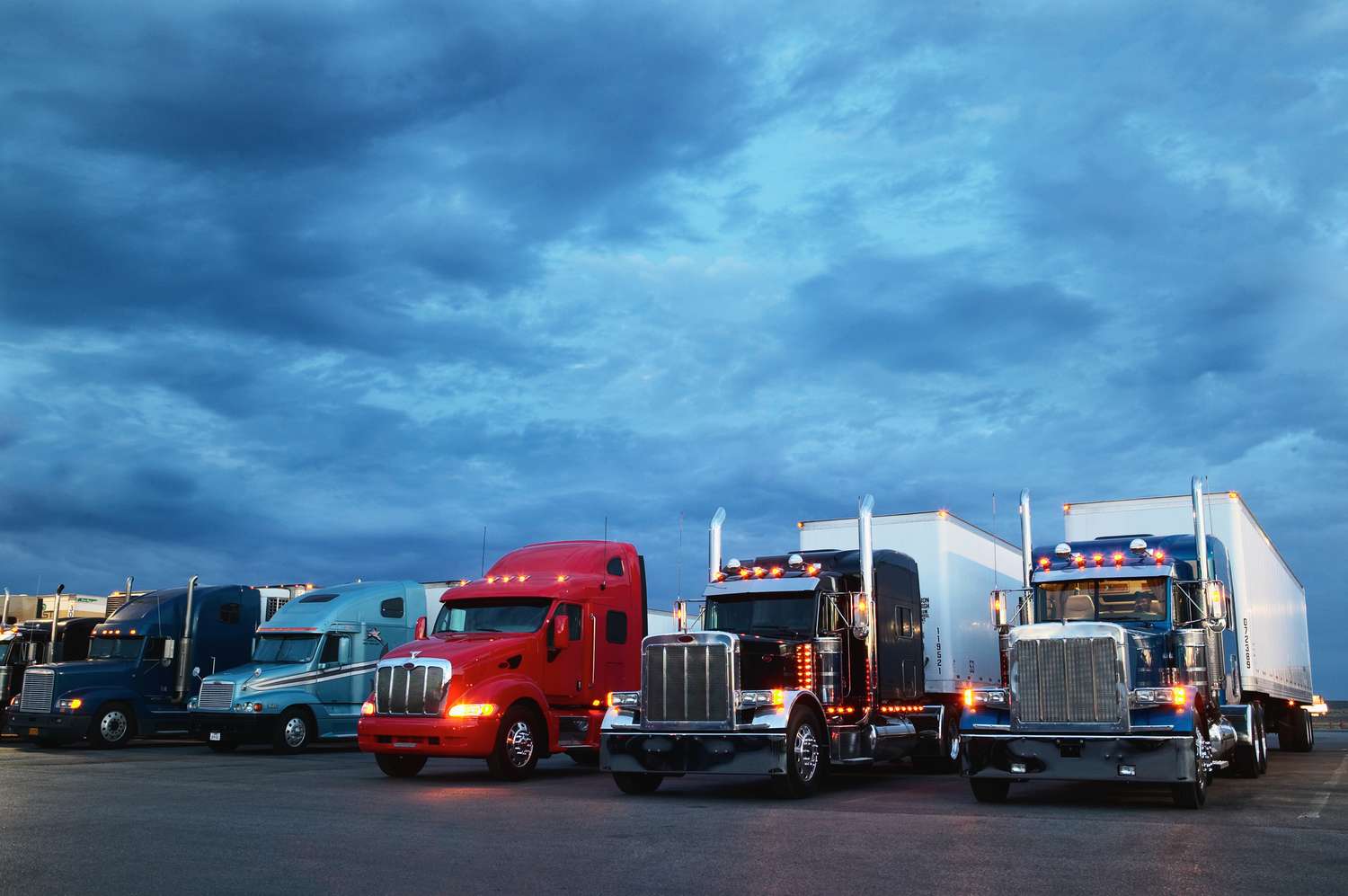
The financial strain affecting the U.S. transportation and logistics industry continues to intensify. More than 1,000 jobs are facing elimination, while a growing number of trucking companies, warehouse operators and freight-related businesses are turning to bankruptcy proceedings to address mounting financial difficulties.
According to layoff announcements and Worker Adjustment and Retraining Notification (WARN) notices compiled by FreightWaves between late October and November 11, at least 10 companies have announced workforce reductions totaling 1,021 positions.
The planned cuts affect employees across California, Ohio, Illinois, Pennsylvania, Wisconsin, Connecticut and New York. Several of the announced warehouse closures and job reductions are scheduled to take effect in early 2027.
At the same time, 15 businesses operating in transportation, distribution and freight-related activities have filed for Chapter 7 liquidation or Chapter 11 bankruptcy protection in cases dated between September 14 and November 10. Thirteen of those filings were recorded from October 19 onward.
Warehousing, distribution firms top in workforce cuts
Much of the job loss being announced is in warehouse operations and logistics facilities.
One of the companies planning major cuts is DSV Contract Logistics LLC. The company plans to lay off 175 workers at its Edwardsville, Illinois, facility starting Dec. 5. A WARN notice in Illinois says the permanent layoffs are due to the loss of a customer contract.
National Distribution Centers LLC announced closures affecting two distribution facilities, resulting in 293 jobs.
The company is shutting down its Perris, California distribution center on Jan. 4, 2027, with a loss of 167 jobs. Another 126 permanent jobs will be cut between January 5 and January 19 as a consequence of a separate decision affecting its Groveport, Ohio, operation.
Other supply chain operators are making similar changes to their workforces.
CEVA Supply Chain Inc. plans to cut 120 jobs at its Lockbourne, Ohio, facility by June 2027. The company did not say why it was cutting jobs.
Meanwhile, Kenco Logistic Services LLC is preparing to close its warehouse operation near Myerstown, Pa., permanently. This decision will impact 81 employees, with the first round of layoffs scheduled for March 1 and the process expected to be completed by June 15.
The air cargo segment is also feeling the workforce pressure. Worldwide Flight Services Inc., which provides air cargo handling and ground services, filed a WARN notice Oct. 29 announcing 59 permanent job cuts at its San Diego facility.
Amazon has announced another major operational change. The e-commerce company said Nov. 9 it would close its fulfillment center in La Puente, Southern California, at the end of January, affecting 94 employees. Some employees will be able to transition to other Amazon sites.
Manufacturing and distribution companies also cut jobs
It’s not only the traditional logistics operators and warehouse businesses that are feeling the pressure.
Oshkosh Corp. laid off about 80 salaried employees in its transport segment in late October. The job cuts were unveiled alongside the specialty vehicle maker’s third-quarter earnings, where it also cut its full-year profit forecast.
Craft and educational-supplies distributor S&S Worldwide said it will cut 70 jobs in Connecticut.
S.S. Delivery Systems LLC also filed a notice of facility closure affecting 49 workers in Rochester, N.Y.
Together, these announcements highlight the way financial and operational challenges are spreading across different segments of the freight and distribution ecosystem.
Overview of announced layoffs across the logistics industry
The following figures cover the 10 companies included in the report, combining permanent facility closures, workforce reductions and planned job eliminations.
Company | Location | Business activity | Jobs affected | Reported reason |
|---|---|---|---|---|
National Distribution Centers | Perris, California | Warehousing and distribution | 167 | Permanent facility closure |
National Distribution Centers | Groveport, Ohio | Warehousing and distribution | 126 | Permanent elimination of warehouse shifts and positions |
DSV Contract Logistics | Edwardsville, Illinois | Contract logistics and warehousing | 175 | Loss of a customer contract |
CEVA Supply Chain | Lockbourne, Ohio | Supply chain and contract logistics | 120 | Reason not specified |
Amazon | La Puente, California | E-commerce fulfillment | 94 | Fulfillment center closure |
Kenco Logistic Services | Bethel Township, Pennsylvania | Warehousing and third-party logistics | 81 | Permanent warehouse shutdown |
Oshkosh Corp. | Oshkosh, Wisconsin | Specialty vehicle manufacturing | Approx. 80 | Reason not specified; reductions coincided with weaker earnings and a lower outlook |
S&S Worldwide | Colchester, Connecticut | Wholesale distribution | 70 | Business circumstances |
Worldwide Flight Services | San Diego, California | Air cargo handling and ground services | 59 | Reason not specified |
S.S. Delivery Systems | Rochester, New York | Transportation and logistics | 49 | Facility closure |
TOTAL | 1,021 |
Source: Company announcements, WARN notices and layoff records. The total includes announced future job reductions and approximately 80 reported Oshkosh cuts. It does not represent a count of layoffs already completed.
More trucking operators are resorting to bankruptcy proceedings
The financial distress of smaller trucking operators and freight service providers is also being signaled by job cuts and bankruptcy filings.
Some of the carriers that have chosen Chapter 7 liquidation include Winners Trucking Inc. in Dallas, Texas; Bruin Logistics LLC in Cicero, Illinois; and JYM Trucking Inc. in Florida.
On Oct. 21, Winners Trucking filed a voluntary Chapter 7 petition with the U.S. Bankruptcy Court for the Northern District of Texas. The case was treated as a no asset case.
On Nov. 9, Bruin Logistics did the same, filing for Chapter 7 protection in the Northern District of Illinois. Its case was also categorized as a no asset proceeding.
JYM Trucking, a carrier with one truck and one driver based in Florida, filed for Chapter 7 protection October 27 in the Middle District of Florida.
Other companies in liquidation proceedings include Orlando-based RP3 Hauler Inc., a vehicle transport and interstate freight company, and Priority Freight & Logistics Corp., which filed for bankruptcy protection in Pennsylvania.
The two main bankruptcy procedures are designed for different purposes.
In general, Chapter 7 involves selling off a company's nonexempt assets and using the proceeds to pay creditors. In contrast, Chapter 11 allows companies to reorganize their debt or otherwise reorganize under the watch of the court.
Texas transport companies seek Chapter 11 restructuring
Texas is now another trouble spot with a number of transportation and truck maintenance companies filing for Chapter 11 protection.
El Paso-based livestock carrier X-Total Cattle Transportation LLC filed for bankruptcy protection Nov. 10 in the Western District of Texas.
The company listed liabilities between $500,000 and $1 million and assets of less than $50,000.
According to federal transportation records referenced in the filing summary, the carrier previously had four power units and five drivers. Its USDOT registration was inactive as of October.
Another El Paso business, Tri State Truck Repair LLC, filed for Chapter 11 protection Nov. 2. Its reported assets were estimated to be between $500,000 and $1 million, and its reported liabilities were also estimated to be between $500,000 and $1 million.
The company offers heavy-duty truck repair and maintenance services along the Interstate 10 corridor.
Grand Prairie, Texas-based commercial truck repair and inspection service SW Truck Care LLC filed for Chapter 11 on Nov. 9. Its assets and liabilities were both listed in the $1 million to $10 million range.
The trend isn't just in Texas. KR Transport & Services LLC, a Florida agricultural hauler, filed for Chapter 11 protection Oct. 29, listing assets and liabilities of $1 million to $10 million.
The proceedings suggest that financial distress is spilling over to companies other than freight transportation per se, including companies that maintain vehicles and equipment that support supply chain operations.
Bankruptcy pressures ripple through wider supply chain sectors
Latest financial troubles include freight distribution companies and companies in the supply chains for auto parts and agriculture.
Grapeman LLC, a California-based fresh fruit distributor, filed for Chapter 11 protection on Oct. 23. It said in the filing that it had liabilities between $10 million and $50 million, and assets between $1 million and $10 million.
Getpart LA Inc., an online auto parts retailer that sells automotive collision parts under the Fitparts brand, filed for Chapter 11 protection Oct. 26.
The Gardena, Calif.-based company has a distribution network that spans the country to support sales of auto parts.
Torres Metal Recycling Inc., an industrial recycling business in Sealy, Texas, also filed for Chapter 11 protection Oct. 23.
Another part of the larger picture involves an earlier case against SICC Logistx LLC. The North Carolina-based company, which worked as an Amazon Delivery Service Partner, on Sept. 14 filed for Chapter 11 protection.
The company is working to keep its contract with Amazon Logistics and resolve its outstanding financial obligations, including disputed debt related to merchant cash advances.
A rising financial burden across freight and logistics
The combination of layoffs, warehouse closures and bankruptcy proceedings highlights the continuing financial woes of the U.S. freight industry.
The latest announcements make clear the pressure is far from confined to trucking companies, but extends to contract logistics providers, distribution centers, air cargo handlers, automotive parts businesses and agricultural supply chain operators.
The effects on jobs and logistics operations could be felt for months to come, with several large-scale workforce reductions set to go into effect in early 2027.
END OF REPORT