



Frontline is continuing to cash in on the strong tanker market while pushing ahead with a major fleet renewal strategy.
The tanker giant controlled by shipping magnate John Fredriksen has confirmed the sale of its two oldest suezmax tankers, extending a broader plan focused on replacing older tonnage with newer and more efficient vessels.
The New York and Oslo-listed company said it agreed in April to sell the ships, built in 2014 and 2015, to an unrelated buyer for a combined value of $140m.
After commissions and debt repayments, Frontline expects the transaction to generate around $106m in net cash proceeds, along with an estimated second-quarter gain of approximately $55m.
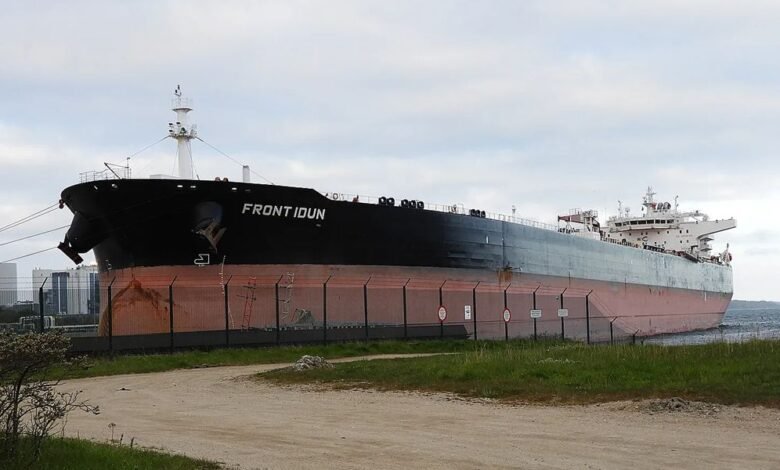
According to shipbroking sources, the vessels involved are believed to be the 2014-built Front Ull and the 2015-built Front Idun, both reportedly acquired by Greek owner Silk Searoad Maritime.
The move is the latest example of Frontline taking advantage of strong asset values to monetise older ships while simultaneously upgrading its fleet with larger and more modern crude carriers.
The company has been highly active in the sale and purchase market throughout the year.
Back in January, Frontline announced the acquisition of nine latest-generation scrubber-fitted eco VLCC newbuildings from affiliates linked to its largest shareholder, Hemen Holding, in a deal worth $1.224bn.
The package includes six vessels built or under construction at China’s Hengli Heavy Industries, along with three additional VLCCs under construction at Dalian shipyards.
To support the transaction, Frontline secured financing commitments of up to $737m through a combination of senior secured revolving credit and term loan facilities arranged during April and May.
The latest suezmax disposal follows another major fleet reshuffle completed earlier this year. Frontline sold eight of its oldest first-generation VLCCs, built between 2015 and 2016, for a total value of $831.5m.
All eight vessels were delivered during the first quarter, generating net cash proceeds of $477.2m and a gain of $210.9m for the company.
At the same time, Frontline has managed to secure highly profitable employment for some of its newest VLCC additions. Most recently, the company fixed two newly delivered VLCCs on one-year time charter contracts at rates of $110,000 per day, with both charters starting shortly after delivery.
As of the end of March, Frontline’s fleet consisted of 72 vessels, including 33 VLCCs, 21 suezmax tankers and 18 LR2/aframax vessels.
Once the nine VLCC acquisitions and the sale of the two suezmax tankers are completed, the company’s fleet will expand to 79 vessels with a total carrying capacity of approximately 17.6m dwt.
The latest transactions underline how Frontline is positioning itself for the next phase of the tanker cycle — reducing exposure to ageing assets while strengthening its presence in the modern VLCC segment, where demand for fuel-efficient ships remains particularly strong.