



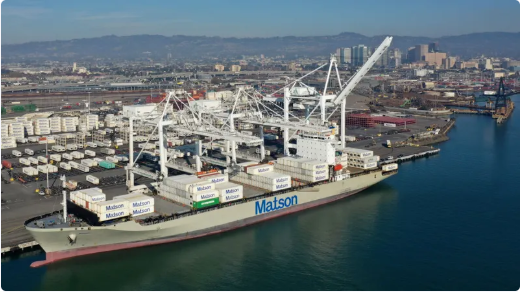
The U.S.-based ocean carrier Matson is seeing a noticeable shift in cargo flows as rising fuel costs and geopolitical tensions continue to reshape global freight decisions, with CEO Matthew Cox confirming a growing trend of “air-to-ocean freight conversions”.
Speaking during the company’s Q1 earnings call on May 4, Cox said the carrier has been benefiting from a combination of higher jet fuel prices, tighter air cargo capacity in selected markets, and broader supply chain rebalancing. These factors have encouraged some shippers to move freight away from air transport and toward ocean services.
A key driver, according to Cox, has been the impact of elevated fuel prices linked to instability in the Middle East, including the ongoing Iran conflict, which has pushed up aviation fuel costs and contributed to market dislocation in certain air freight corridors. He noted that airlines operating in regions heavily dependent on imported jet fuel have been particularly affected.
At the same time, Matson is also seeing stronger demand from South China, driven in part by e-commerce flows. Cox highlighted increased shipments of high-value goods such as data center servers and IT equipment, a trend that has extended beyond seasonal peaks into the second quarter.
Passenger flight reductions have also played a role. Cox pointed out that a significant portion of global air cargo capacity is carried in passenger aircraft belly space, meaning any reduction in flight schedules has a direct impact on available freight capacity. This, in turn, has supported further modal shifts toward ocean shipping.
Matson has experienced similar cycles in previous years, Cox noted, although the company’s expedited services continue to influence how long some of these conversions persist. Its China–Long Beach Express (CLX) service, which integrates with its broader logistics network across Asia, is positioned as a faster ocean alternative to air freight for selected cargo types.
Despite some air cargo capacity beginning to recover — which could bring short-term pricing relief for shippers — Cox said volatility remains high. Industry data cited in market reports suggests that while airlines may adjust schedules due to fuel constraints, the overall impact on air freight capacity is expected to remain limited for now.
On the ocean side, however, carriers are facing their own challenges. Continued instability around key shipping routes, including the Strait of Hormuz, has contributed to elevated fuel costs across the maritime sector. Cox said carriers are responding by attempting to pass on higher bunker costs through fuel surcharges, although timing mismatches can affect earnings.
Matson itself has not seen direct operational disruption, but Cox warned that fuel price volatility will continue to influence near-term financial performance as cost recovery mechanisms lag behind market changes.
Overall, the situation reflects a broader freight market realignment, where air and ocean networks are increasingly interlinked — and sensitive to both geopolitical risk and energy price fluctuations.