



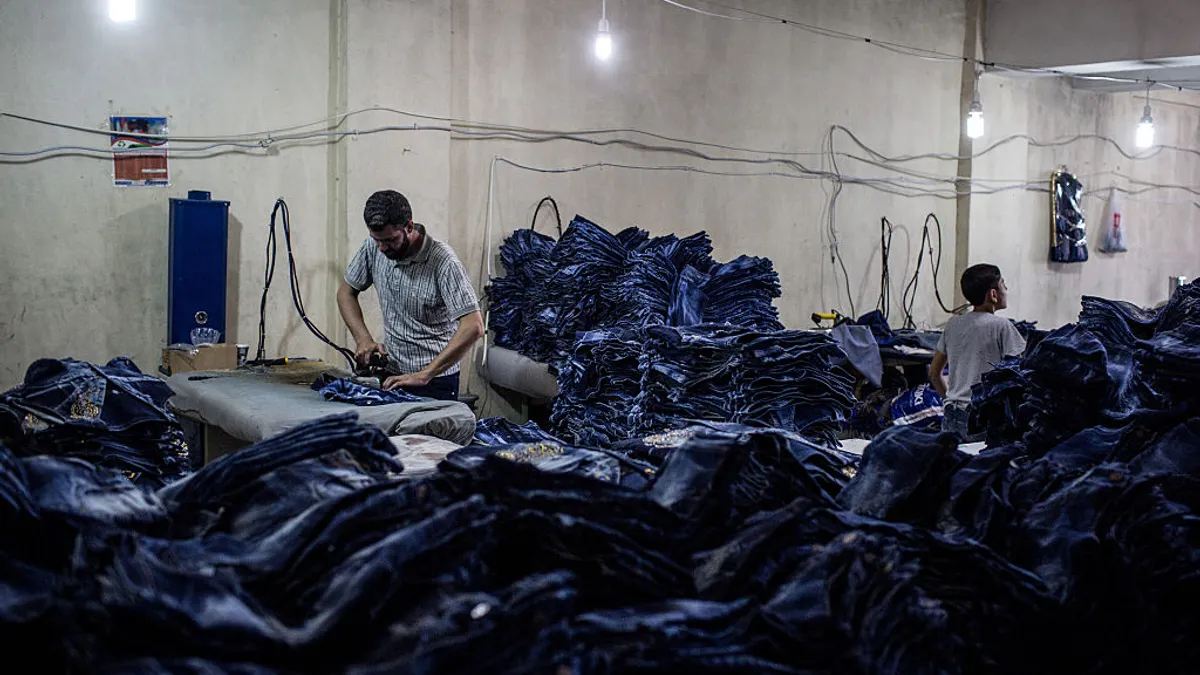
TURKEY — Turkish textile and apparel manufacturer Eroğlu Giyim is facing allegations of interfering with workers’ union activities after protests over factory closures and the move of production to Egypt. Eroğlu Giyim is a supplier to major fashion groups including H&M Group, Inditex and PVH.
The company makes clothes for brands such as H&M, Zara, Calvin Klein and Tommy Hilfiger. Union workers of the garment workers’ union Öz İplik İş have called on brands to assume responsibility for alleged violations of workers’ rights in their supply chain.
Thousands of jobs at risk as factories close
According to the union, Eroğlu Giyim has closed two manufacturing facilities in Turkey in recent years.
In 2025 a factory was closed in Aksaray, and another one in Çorlu in 2026. The closures are said to have cost more than 3,000 jobs.
The union said the closures were part of a wider structural problem in Turkey’s textile and ready-to-wear sectors, with producers moving operations to countries where the cost of doing business is lower.
Eroğlu Giyim has manufacturing plants in Turkey and Egypt. Supply chain data suggests that its current production activities are focused in Egypt, including the Suez Canal Economic Zone and Ismailia.
Union row is heating up
The quarrel erupted at the company’s Avcılar plant in Istanbul where employees had entered into collective bargaining with management.
According to Öz İplik İş, the union was then barred from talking to workers at the facility and talks with the employer “virtually collapsed.”
The factory shutdowns and production changes have led to a strike by workers on April 30. Workers involved in the strike have been threatened with the sack, the union says.
“Workers should not be discouraged from exercising their legal rights to organize and take industrial action,” said Rafi Ay, president of Öz İplik İş.
The union argues that companies transferring production away from Turkey still have responsibilities toward employees affected by those decisions, particularly regarding employment conditions and collective bargaining rights.
Fashion brands under supply chain scrutiny
The row also throws light on the responsibilities of global fashion brands who source from Turkish manufacturers.
H&M Group, Inditex and PVH have committed publicly to protecting labor rights in their supply chains. The brands’ ties to Eroğlu Giyim therefore place them under pressure to evaluate the allegations and ensure respect for workers’ rights at supplier facilities.
Such disputes illustrate the growing challenges that global apparel companies face in managing labor standards across complex international supply chains.
When manufacturers reorganize their production networks and relocate capacity from one country to another, workers and unions increasingly demand that employment and collective bargaining rights be protected in these transitions.
The Eroğlu Giyim case shows that the transfer of production can create not only conflicts over costs and jobs, but also over labor rights, as well as union representation and accountability along the supply chain.