Land Nov 3, 2026
Holiday Parcel Deliveries Set to Rise 4% as Amazon Gains Ground on UPS
ShipMatrix forecasts 2.4 billion package deliveries during the peak season, while shifting shipping volumes and rising transportation costs reshape the competitive landscape.
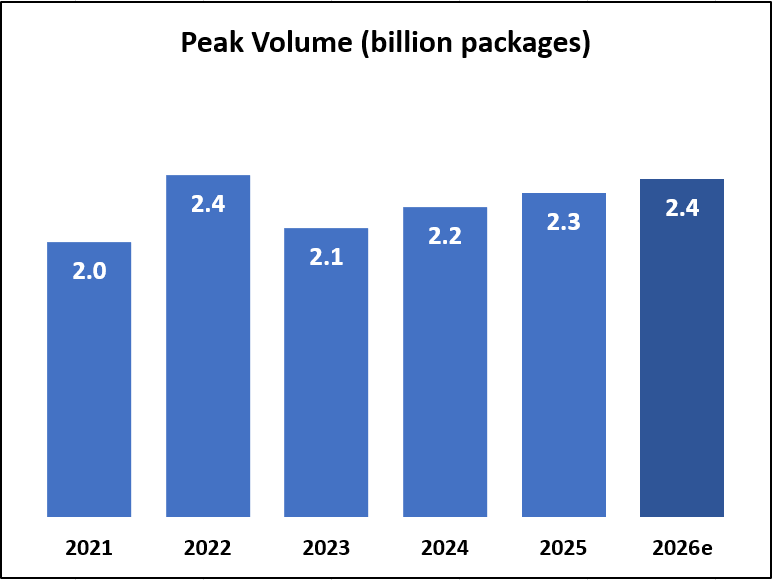
Parcel delivery companies are gearing up for another busy holiday season, with some 2.4 billion packages expected to move through their networks this peak period. This is a 4% increase from the same period last year, according to a forecast by ShipMatrix, despite ongoing inflation and growing pressure on household spending.
Part of the growth forecast reflects an additional shopping day during the holiday season. ShipMatrix, which helps shippers maximise their agreements with FedEx, UPS and regional parcel operators, said, “We expect the industry to achieve its highest seasonal delivery volume since 2022, when the pandemic-driven e-commerce boom peaked.”
Parcel growth continues despite economic pressures as consumer spending supports
Consumers have been resilient throughout the year, even as higher fuel prices and broader inflation have affected the discretionary spending they have available.
Analysts, however, are still cautious about the outlook. They warn that the cumulative effect of tighter household budgets could hurt retail sales and slow parcel demand eventually.
At the same time, retailers are also facing a huge surge in delivery costs. Parcel shipping rates have increased by about 16% year-over-year, mainly because of fuel surcharges, extra fees and overall rate hikes.
The fuel surcharge is now some 30% of the transportation rates. A lot of the increase is due to changes carriers have made to the formulas used to calculate these charges, not the actual increase in fuel prices, according to the newest TD Cowen/AFS Freight Index.
Both FedEx and UPS imposed 5.9% general rate increases this year and have already announced similar increases for 2027.
Source: ShipMatrix
As delivery costs rise, retailers change free-shipping policies
The rising cost of moving parcels is also impacting the commercial strategies of retailers. Some businesses have responded by raising the minimum purchase amount that customers must meet to qualify for free delivery.
In the meantime, major carriers are scaling back operations in anticipation of the seasonal surge.
UPS said this week it has been upgrading its delivery infrastructure with more automation and RFID tracking technology across its network. The investments are designed to help the company process higher package volumes and speed shipments through its facilities.
The company will use 100,000 seasonal workers during the peak season, down from 109,000 last year.
Other big operators are doing things differently. Amazon plans to hire 300,000 seasonal workers, a 20% increase from last year's hiring. The U.S. Postal Service, which also says it is ready for the coming peak season, plans to hire about 10,000 temporary workers.
UPS cuts back on e-commerce delivery exposure as Amazon grows
Those different seasonal hiring trends are a mirror image of bigger changes going on in the wider parcel delivery market.
UPS has decided to give up 50% of its Amazon business after finding that providing last-mile delivery services for the e-commerce giant was not profitable enough. The move is also part of a broader operational transformation that includes more investment in automated sorting equipment.
Business-to-consumer (B2C) parcel volumes are increasingly moving away from traditional carriers and into delivery networks run directly by major retailers.
Therefore, UPS has been focusing more on higher margin, end-to-end logistics solutions for customers in several industry sectors. But this strategic repositioning has raised questions about the long-term economics of its parcel network.
UPS has been cutting back its exposure to big e-commerce customers, and some industry watchers have wondered if it can keep up the density it needs to deliver packages efficiently and make enough profit.
Amazon, FedEx increase domestic volumes, while UPS, USPS decline
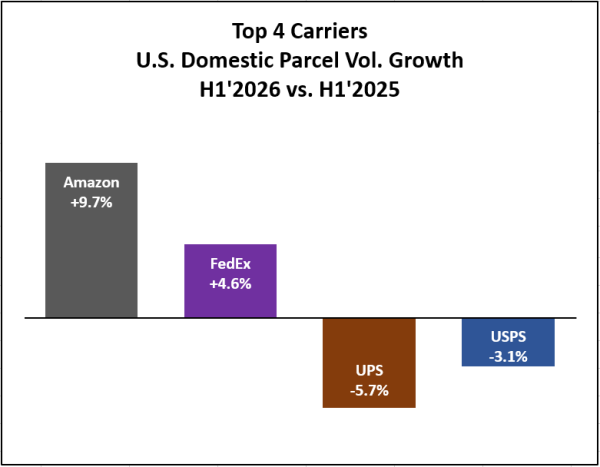
ShipMatrix notes that the U.S. domestic parcel market is experiencing a competitive shift in the first half of 2026.
Amazon said its domestic parcel volumes rose 9.7%, driven by its split from UPS and the continued expansion of its own delivery operations into rural areas. FedEx also reported growth with volumes up 4.6%.
Traditional operators did not do well. UPS saw a 5.7% decline in domestic parcel volumes and the U.S. Postal Service saw a 3.1% drop in domestic parcel volumes.
ShipMatrix said UPS and USPS had bigger total volume losses than the additional volume picked up by Amazon and FedEx.
About 145 million packages were rerouted to alternate delivery networks. These included the private logistics operations of large retailers such as Walmart and independent and regional carriers.
Companies that have benefited from this redistribution include GoFo, Uni-Uni, SpeedX, DoorDash, Jitsu, Veho, OnTrac and Better Trucks. And in the past two years, these operators have extended their geographic reach, providing shippers with more options outside the legacy parcel networks.
Source: ShipMatrix
FedEx, UPS head in different directions on third-quarter numbers
The latest quarterly performance numbers illustrate the divergence between FedEx’s and UPS’s positions in the domestic parcel market even more clearly.
FedEx’s earnings report said average daily U.S. domestic package volume rose 2% in the third quarter.
In terms of performance in the last two quarters, average daily volume for priority and deferred domestic services increased 2.16% year-on-year. Its more economical ground residential and commercial delivery services did even better, with average daily shipments up 3.5%
UPS, meanwhile, said its average daily package volume fell 3.3% in the third quarter.
Its longer-term performance was also under continued pressure. Average daily package volume for the nine months ended September decreased 4.9% year to date compared to last year.
A parcel market undergoing structural change
The expected 4% increase in holiday deliveries points to continued demand for parcel transportation, but the distribution of that growth is becoming increasingly uneven.
Amazon's expanding delivery infrastructure, the development of alternative regional carriers and the strategic repositioning of established operators are reshaping the competitive landscape.
For traditional parcel companies, the challenge is no longer simply handling higher seasonal volumes. Maintaining network efficiency, controlling transportation costs and protecting profitability are becoming equally important as retailers and consumers face more expensive delivery services.
With 2.4 billion packages forecast for the holiday peak, the coming weeks will provide another indication of which operators are best positioned to capture the industry's evolving shipping demand.
END OF REPORT