Land Nov 20, 2026
Home Depot strengthens its Pro business with a dedicated last-mile logistics network
Through new flatbed distribution centers, strategic acquisitions and technology investments, the home improvement retailer is expanding its delivery capabilities to provide contractors with faster, more efficient and direct-to-job-site services.
“Pros,” as Home Depot refers to its professional contractor customers, depend on reliable deliveries right to job sites. However, the U.S. home improvement retailer had yet to build out a full last-mile delivery network dedicated to this customer segment despite its deep product assortment and distribution capabilities.
And that gap has become a strategic imperative. Home Depot has spent almost a decade building out its logistics infrastructure for professional customers through new distribution centres, acquisitions and technology investments.
“We had the product, we had the depth, the breadth, the assortment, but we didn’t have the delivery capabilities,” Chip Devine, senior vice president of Pro Sales, told Supply Chain Dive.
The company’s contractor offering has been more like a convenience store than the grocery store that can deliver directly to customers’ doorsteps in the past. Home Depot is now trying to become more than just a supplier of products, but a key logistics partner to professional customers.
“Home Depot has about 9 million Pros shopping its stores,” Devine says. Typically, each contractor will work with 20 to 30 suppliers for their projects. Home Depot hopes to reduce the number of transactions contractors have to deal with by consolidating more purchasing and delivery functions with one supplier.
Less logistical disruption for these professionals means more time on job sites and more chances to make money.
“And time is how the Pros make money,” Devine emphasised.
Building out distribution infrastructure to accelerate deliveries
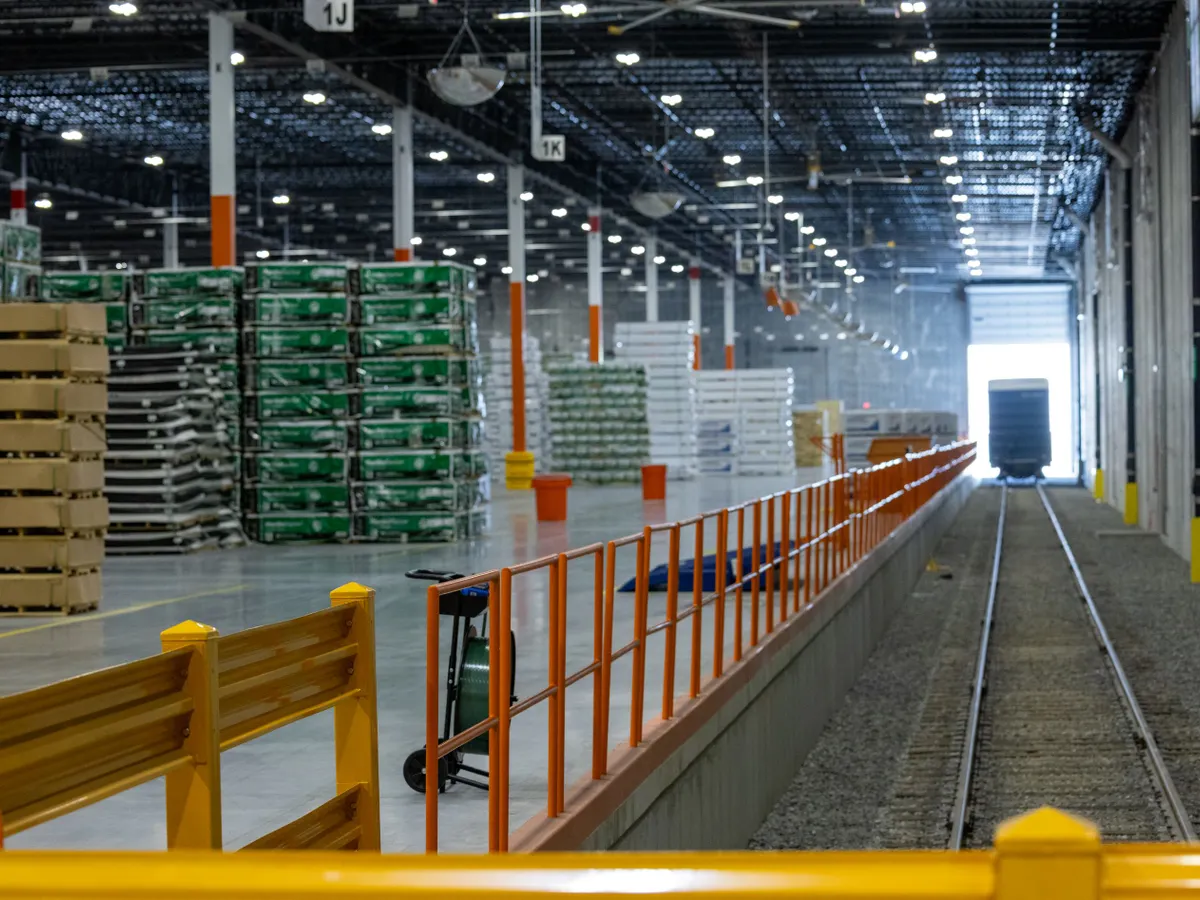
Home Depot’s strategy is heavily based on the expansion of its specialised distribution network. Today, the company operates 21 flatbed distribution centres (FDCs) and 22 direct fulfilment centres (DFCs). Those were the numbers, respectively, when Devine joined the organisation nearly five years ago.
Flatbed distribution centres are designed to handle large and heavy products, such as lumber, construction materials, concrete, drywall and roofing shingles. Home Depot can also dedicate facilities to such categories, streamlining its picking, packing and shipping operations and cutting delivery times.
Direct fulfilment centres are for something else. They process online orders of products like plumbing equipment and faucets and windows and ship to customers or retail stores.
These facilities are part of a wider infrastructure programme that includes the construction of 150 new delivery centres across the United States, supported by an investment of $1.2 billion. In 2020, Home Depot announced it would deliver to 90% of U.S. customers same day or the next day.
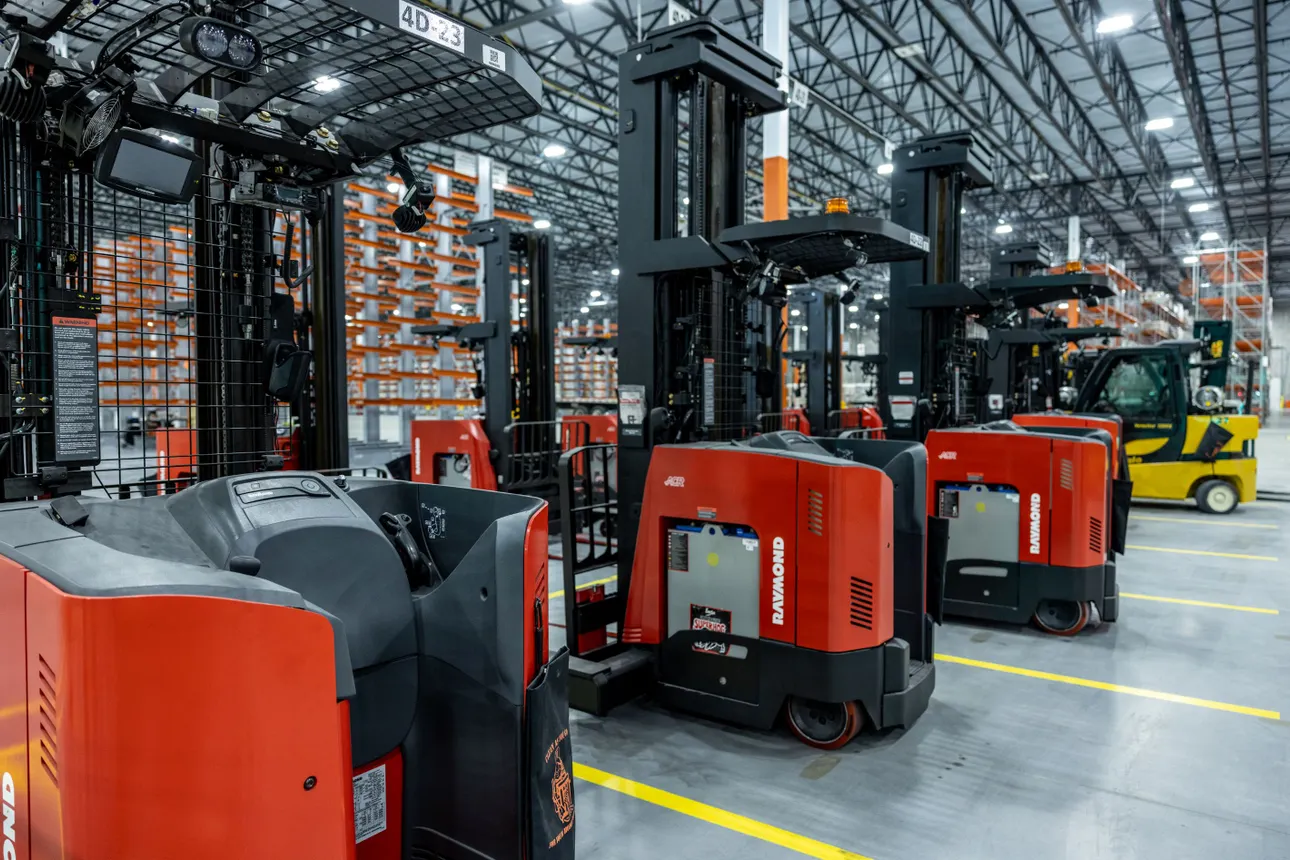
Individual Home Depot stores can also accept delivery requests, but the company is increasingly routeing large-volume orders and oversized items through its specialised distribution facilities.
“Retail stores aren’t always set up to efficiently handle these operations because their primary function is to operate as retail warehouses,” Devine said. Delivering bulky orders to dedicated facilities allows the retailer to better organise deliveries and improve service to professional customers.
Technology is also important for this transformation. Home Depot’s mobile app and websites let customers track truck deliveries and see what’s in stock at its stores and distribution centres.
The company also developed an order management platform to orchestrate the full order lifecycle, which launched in 2023. The system allows Home Depot to receive, plan, organise and consolidate orders, arrange deliveries and manage customer billing.
This represents a major change in its commercial and logistical model. In the past, Home Depot was a supplier of products, where the customer had to pay before the product was delivered. The new platform also provides customers with the option to pay on delivery.
Home Depot expands logistics network with acquisitions
Home Depot has also accelerated the build-out of its distribution capabilities through strategic acquisitions, besides building its own infrastructure.
The retailer bought SRS Distribution in 2024 and GMS in 2025. Both businesses are distributors of construction and building materials including drywall, ceiling products and steel framing.
These deals also added a lot to Home Depot’s physical logistics capabilities, with some 1,300 distribution centres and 13,000 delivery vehicles added to the network.
The next challenge is to integrate these newly acquired resources into the retailer’s supply chain and create a more interconnected distribution system.
The integration was a “key part of the strategy” for the company, Devine said, especially as Home Depot tries to serve different product categories across the U.S.
The goal is a coordinated network where distribution facilities, fulfilment centres and retail stores are operated as complementary assets, not independent operations.
This is expected to enhance direct-to-job site and direct-to-customer delivery capabilities. Big and bulky products will be shipped from dedicated fulfilment centres, while retail stores will continue to manage products that don’t require heavy-duty logistics operations.
a strategy aimed at the top 40 U.S. markets
The expansion of logistics is ultimately targeted at improving service coverage and delivery efficiency, particularly in the country’s 40 largest markets.
As the company continues to build out its supply chain network to support growing demand and to integrate acquired businesses, it may need to make additional infrastructure investments.
Devine is not focused on adding more distribution facilities or delivery vehicles, but rather on linking these resources into a coordinated system that can support contractors through their projects.
Home Depot is building out its Pro business with a more complete logistics offering that includes dedicated distribution centres, expanded transportation capacity, acquisitions and digital resources.
The hope is to be more than just a place where contractors go to buy building materials. The retailer wants to be an accountable supply chain partner that can get the right products to job sites, allowing professional customers to save time and run their businesses more efficiently.
END OF REPORT