Maritime Nov 3, 2026
IMO Net Zero Framework faces a critical test as divisions threaten its future
A growing dispute over the proposed Net Zero Fund is putting the IMO's decarbonisation strategy at risk, with political opposition raising the prospect of fragmented regional regulations and a weakened global maritime framework.
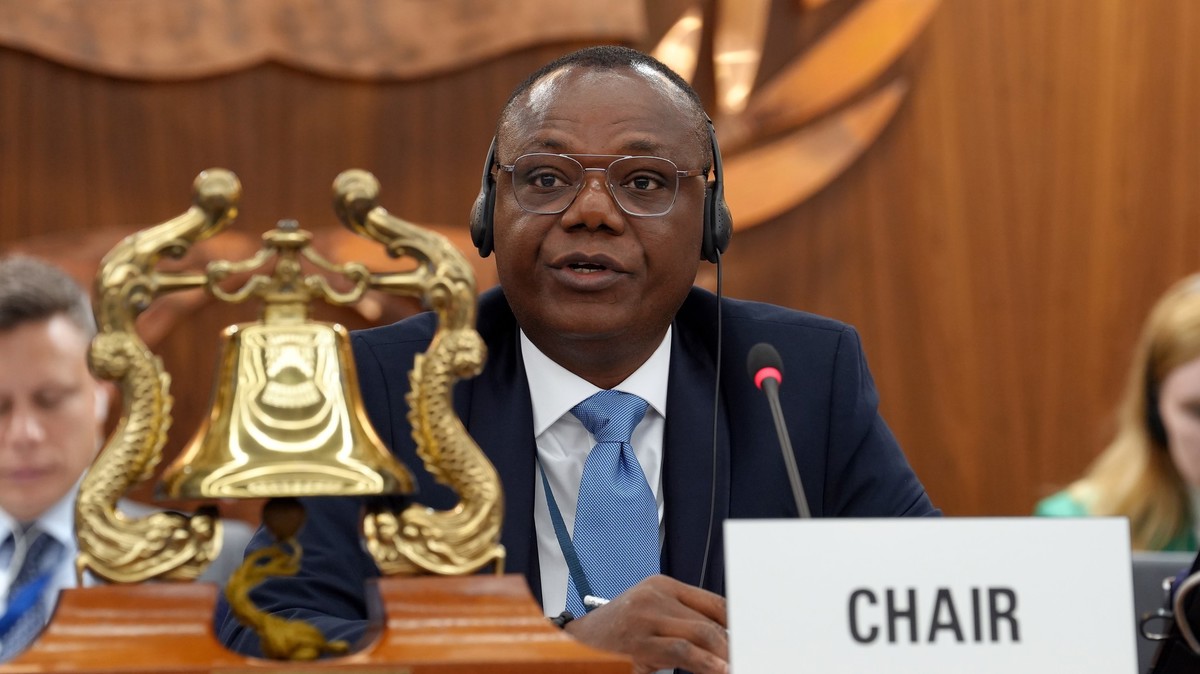
As the maritime industry is increasingly polarized, the International Maritime Organization (IMO) is at a critical juncture, with divisions over its proposed Net Zero Framework (NZF) threatening the future role of the organization in regulating international shipping emissions.
An industry observer involved in IMO debates has warned that the next meetings of the Marine Environment Protection Committee (MEPC) could have existential consequences for the UN agency, if a significant number of member states vote against the framework.
The NZF will be resumed during the 85th session of the Marine Environment Protection Committee (MEPC 85) when the second extraordinary session (ES.2) is resumed.
Such a vote - 70 countries in favor and 20 against - could expose deep divisions within the organization, the observer said. This could, in the end, result in fragmentation of international maritime regulation with individual regions setting up their own carbon pricing systems. Under such arrangements, little, if any, of the revenue collected via carbon penalties might be redirected to support the shipping industry's transition.
The effects could spill over into the regulatory framework itself. If the NZF is passed amid strong opposition, the IMO could be reduced to a largely technical body, the source said.
“Another possibility might be the departure of the United States and other key member states. These departures could fundamentally change the institution and could destroy the IMO as it exists today.
Regional regulation is becoming more important
Shipping is particularly worried about the prospect of fragmented rules. But regional regulators could find ways to take emissions into account, and their willingness to redistribute carbon revenues could be all over the map.
One industry leader mentioned the European Union as a relatively good example. “The rules that the EU just adopted,” he said, “send 50% of the carbon costs of shipping back to the industry.” Other regional authorities may not have similar arrangements.
The debate also involves whether the shipping sector can afford decarbonization.
Former Clarksons director Martin Stopford told last month’s Capital Link conference in London that shipowners made $3.1 trillion since 2020. That amount would more than cover the estimated $1.7 trillion needed to decarbonize shipping by 2050, according to calculations by University Maritime Advisory Services (UMAS).
But the regulatory process is still unclear following a failure to reach agreement at last year's extraordinary MEPC meeting.
And it's more than just the financial challenges. There have been major obstacles in terms of political pressure and competing national interests. In talks last year, US delegates reportedly warned individual member states that their countries would be subject to economic sanctions if they supported the NZF.
Political opposition makes the Net Zero Fund a bargaining chip
MEPC 85 is scheduled for the end of next month and ES.2 is to resume in early December, but negotiations are deadlocked.
The framework has the backing of the United States but is opposed by countries with large fossil fuel interests, including Saudi Arabia and the United Arab Emirates, and major flag states such as Liberia and Panama.
Washington has always been resistant to the idea that the IMO should be responsible for managing a financial fund. It has also challenged the UN agency levying what it calls taxes in the form of carbon penalties.
But the proposed Net Zero Fund is viewed as a key part of the framework for two important reasons.
First, it would increase the cost of dependence on fossil fuels, thus helping to make alternative energy sources more commercially attractive and speeding the shift to cleaner maritime fuels.
Secondly, a substantial part of the funds raised would be allocated to support small island developing states (SIDS) and least developed countries (LDCs). These countries have contributed little to the problem, but need financial help to reduce their own emissions and to cope with the impacts of climate change.
Central to the NZF was the objective of supporting these countries to achieve a Just and Equitable Transition (JET).
Japan's alternative proposal raises concerns over funding mechanisms
In an effort to break the deadlock, member states have been exploring alternative arrangements that could attract opponents of the framework without sacrificing its decarbonisation ambitions.
One proposal attracting considerable attention was submitted by Japan in August. However, Tristan Smith, professor of energy and transport at University College London and a member of UCL's Shipping and Oceans Research Group, believes the approach could have potentially disastrous consequences.
Under the Japanese proposal, the Net Zero Fund would effectively be replaced by a system based on surplus units and direct payments to projects approved by the IMO.
Smith warned that allowing shipowners to decide where their compliance payments are directed could undermine the entire surplus-unit market.
Under this arrangement, vessel owners would simply select the projects receiving their money and report the payments to the IMO. According to Smith, such a mechanism could effectively eliminate the market for surplus units.
The NGO Opportunity Green (OG) has also raised concerns about the proposal. Japan subsequently expanded its original submission through another document presented to the Intersessional Working Group on Greenhouse Gases. However, OG argues that the revised version does not materially change the consequences of the original approach.
The organisation identifies four interconnected concerns, beginning with the removal of the Net Zero Fund and the transfer of greater control over collected revenues to private entities.
This arrangement would provide no reliable guarantee that the money would support a just and equitable transition.
Opportunity Green also warned that direct payments could allow major fleet operators to channel compliance revenues back into their own supply chains rather than supporting broader decarbonisation objectives.
The proposed surplus-unit mechanism raises further questions. These units are intended to reward reductions in greenhouse gas emissions, but OG believes Japan's latest proposal weakens the relationship between emissions performance, demand for surplus units and the financial value of reductions achieved.
The organisation warned that this could create a pay-to-pollute system, undermining the NZF's central objective of reducing greenhouse gas emissions.
Removing the Net Zero Fund would also eliminate an important financial incentive for shipowners using low-emission fuels. It would simultaneously reduce a potential source of investment for developing and deploying lower-carbon fuel technologies.
Funding is a sticking point, but there is still room for compromise
Industry observers who spoke to Seatrade Maritime News remain of the view that a deal on greenhouse gas fuel intensity (GFI) requirements can still be reached.
But finding agreement on the Net Zero Fund looks far tougher.
Many observers expect the GFI requirements to be diluted in the course of negotiations. Still, the general assumption is that the final provisions will not stray far from the framework already on the table.
Gavin Allwright, secretary general of the International Windship Association (IWSA), said: “We welcome the contribution of all parties involved in the discussions, but all elements ultimately adopted should reflect the highest possible level of ambition.
The main stumbling block is the Net Zero Fund, particularly as some member states are trying to find alternative arrangements that can break the current political impasse.
This is where the concept of a third-party institution administering the fund in Japan could be a potential compromise. One senior industry source said the proposal could be a framework for a deal that both sides could live with.
Smith also sees another administrator as more realistic than putting the responsibility directly with the IMO.
It would be a massive task to administer individual payments from a fund that could be worth billions. He said the IMO does not have the organizational capacity to operate such a financial mechanism at present.
Therefore, institutions such as the World Bank, the International Finance Corporation or another multilateral development bank might be better suited to hold and administer the money.
But Smith acknowledged it was not clear if the U.S. and other dissenting member states would go along with such an arrangement.
In any compromise developing countries risk losing out
Martin Crawford-Brunt, founder of consultancy Lookout Maritime, believes there is not sufficient support for the creation of a Net Zero Fund.
This lack of enthusiasm could leave small island developing states and least developed countries disappointed with the final agreement.
He also mentioned difficulties in enforcing carbon penalties worldwide, especially in the current geopolitical climate.
“Money is on the mind of the political leaders,” said Crawford-Brunt, “but it will be difficult to get a consensus among member states.”
Another point of tension is the position of the shipping industry itself. Some shipowners, especially in Greece, argue that they are like taxi drivers at sea: they transport goods but do not produce the fuels that cause emissions.
“What we are seeing here is part of a broader argument that the regulations are aimed at the wrong part of the supply chain and should be aimed more at the fuel producers,” said Crawford-Brunt.
Fuel producers may be under more pressure in the end
There is some merit to this point, but regulators might also want to consider imposing carbon-related charges on fuel producers which could go toward funding the broader decarbonization effort needed to meet the goals of the Paris Agreement.
Such a measure could spread the financial burden beyond shipowners and distribute it throughout the energy supply chain.
But any additional costs imposed on fuel producers will likely be passed down to customers. In conjunction with higher costs for maritime transport this could ultimately mean consumers pay more.
With negotiations at yet another critical juncture, the IMO faces a tough challenge to maintain a globally coordinated emissions approach, to garner sufficient political will and ensure that the financial instruments that are put in place to accelerate the decarbonization of the maritime sector do not leave the most vulnerable countries behind.
END OF REPORT