Land Nov 6, 2026
Teamsters claim another Amazon workforce victory in Indiana as company challenges unionization announcement
The union says Transportation Operations Management (TOM) drivers at Amazon’s OIL9 facility in Merrillville have joined its ranks, marking a third such organizing effort among directly employed W-2 workers. Amazon disputes the claim, while the legal process behind the initiative faces growing uncertainty.
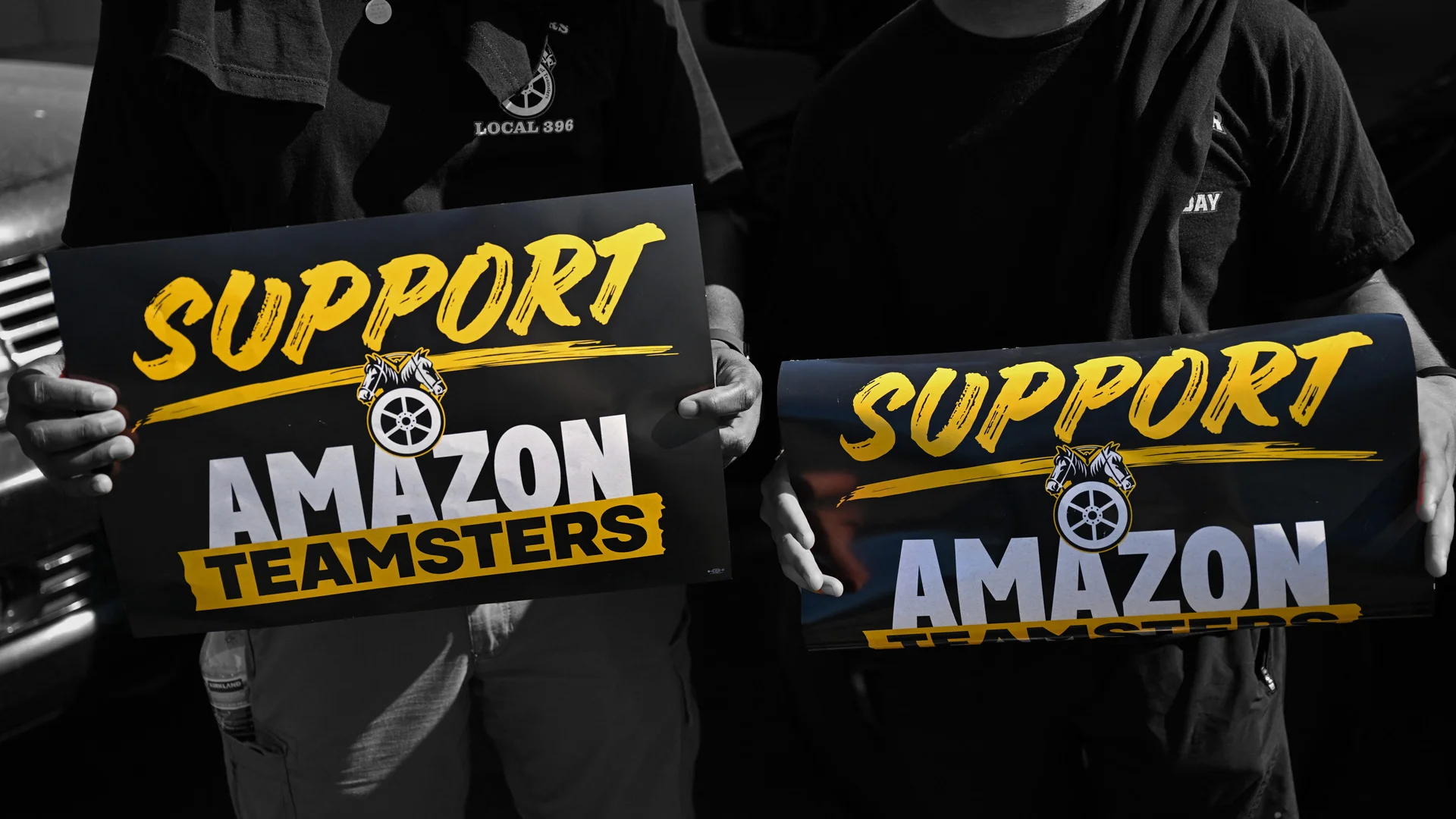
Teamsters are expanding their organizing drive within Amazon’s logistics network and announced that Transportation Operations Management (TOM) drivers at the OIL9 property in Merrillville, Indiana have voted to join the union. The announcement is made with a demand that Amazon recognize the workers’ representation and enter negotiations to reach a collective bargaining agreement.
But Amazon rejected the union's version of events, stating that no such organizing had occurred at the facility. The spat again underscores the contentious relationship between the e-commerce giant and the union, especially over the procedures for setting up union representation.
A third group of Amazon drivers, who work directly for the company,
The announcement that workers had marched on management to demand negotiations said TOM employees at the OIL9 facility in Merrillville had organized with the union. The Indiana site is near the Illinois border in the south.
The union said the development was its third successful organizing effort involving TOM employees, following previous drives at Amazon’s SDF9 facility in Shepherdsville, Kentucky and its MCI9 facility in Liberty, Missouri.
TOM drivers are a very specific breed of driver in Amazon's logistics operations: They drive trucks inside the confines of the company's facilities. Unlike most other drivers who work in the Amazon delivery network, they are Amazon employees and receive W-2 tax forms from the company.
This work arrangement sets them apart from delivery drivers who work for Amazon’s Direct Service Providers (DSPs). Those drivers are actually employees of third-party contractors and get their W-2s from those companies.
But the Teamsters have disputed this distinction, arguing that Amazon exerts so much control over DSPs’ operations that it should be considered their de facto employer. The union took that case to the National Labor Relations Board (NLRB). But Amazon already had scored a big victory in the fight over whether it could be considered a joint employer.
Amazon denies Teamsters’ claims
Amazon has vehemently refuted the announcement regarding the Indiana facility.
The company responded to questions from FreightWaves with a statement that characterized the Teamsters’ latest pronouncement as part of what it called a “false narrative.”
The union had knowingly misrepresented itself as the bargaining representative of company employees and drivers who were delivering on behalf of the company, Amazon said. It also questioned the credibility of the announcement, pointing to what it said was a history of misrepresentation of facts.
To conclude its response, the company declared the Teamsters are not a certified bargaining representative at any Amazon facility.
The dispute means the fate of the alleged organizing effort is still unclear, as the union points to it as a new benchmark while Amazon refuses to recognize the development.
The Card-Check Process That Was Used In The Organizing Campaign
The newest announcement seems to be the latest step in a process known as “card check” that has become a central part of the Teamsters’ organizing strategy at Amazon.
In this procedure employees sign authorization cards indicating their desire for a particular union to represent them. If the majority of workers in the appropriate bargaining unit sign the cards, the union can present the cards to the employer and request to be recognized as the employees’ collective bargaining representative.
In practice, Amazon and its direct service providers have largely ignored card-check petitions, apparently following strict directions from the e-commerce company.
However, the procedure received a big legal boost in August 2023 when the NLRB established the Cemex precedent in a case involving Cemex Construction Materials Pacific.
The ruling opened up another avenue for unions to win recognition without having to first file a traditional representation petition.
Administrative Law Judge Michael Silverstein outlined the significance of the ruling in a prior NLRB case involving Amazon and the Teamsters. “The board has now opened a new route for labor unions to be recognized without having to file a representation petition,” he said.
When most of the employees in a bargaining unit sign cards authorizing the union, the union believes it can make a formal demand for recognition to the employer. That decision was a win for the Teamsters.
FreightWaves emailed the union about its latest announcement of organizing, but the Teamsters did not respond.
A march on management instead of a normal election
The language of the Teamsters’ announcement also gives some idea of the approach at Merrillville.
The union said its TOM drivers marched on management to demand Amazon recognize their union and negotiate a union contract.
Similar language has been used in other Teamsters statements announcing organizing drives at Amazon, including campaigns involving DSP delivery drivers. In those cases, the union also appeared to use card check to organize employees.
The latest statement doesn't mention the process directly, but the absence of an election record gives a critical hint at how the Indiana campaign was run.
The NLRB maintains a public database of union representation elections that it has supervised. No record of a standard NLRB-supervised unionization vote exists at the OIL9 facility.
The difference matters because a card-check organizing announcement is not synonymous with a successful election under the auspices of the NLRB.
Teamsters record four election victories in two months
Despite the controversy surrounding its card-check strategy, the union has also recorded several successes through conventional representation elections.
According to the NLRB's published election records, the Teamsters participated in five elections over the preceding two months, winning four of them.
The successful campaigns took place at:
Shelby Transport in Indianapolis.
DP World Contract Logistics in Detroit.
Comprehensive Logistics in Philadelphia.
MV Transportation in Raleigh, North Carolina.
The union's only unsuccessful result during this period came at U.S. Foods in Arizona.
These outcomes demonstrate that the Teamsters' organizing activities extend beyond the disputed recognition procedures used in some of their Amazon campaigns.
The legal foundation of Cemex faces growing challenges
The strategy built around the Cemex precedent could become more difficult to sustain. The legal framework supporting this approach has encountered two significant challenges in recent months.
In August, NLRB General Counsel Crystal Stowe Carey circulated a memorandum to colleagues indicating that she intended to ask the board to reconsider certain legal precedents. The Cemex decision was among those identified for review.
A separate challenge emerged in March, when a divided panel of the Sixth Circuit Court of Appeals ruled in a dispute involving the Teamsters and liquor producer Brown-Forman.
The court concluded that the NLRB had exceeded its authority when establishing the Cemex precedent. The decision marked the first time a federal court had rejected the ruling.
Together, these developments have raised questions about the future legal standing of the procedure on which the Teamsters appear to rely in their latest Amazon organizing efforts.
Nevertheless, the union made no reference to these legal uncertainties in its announcement concerning Merrillville.
Randy Korgan, director of the Teamsters' Amazon division, welcomed the OIL9 TOM drivers into the union's national movement, describing their decision as an important step in expanding the organization's presence.
He acknowledged the challenges faced by workers who become the first group in their state to join a union, praising their determination and willingness to organize.
The statement also included comments from TOM driver Charles Hurd. He said Amazon had not been willing to listen to employees acting individually, leaving collective action through the Teamsters as their only option. Hurd added that the workers were looking forward to securing their first union contract.
Staten Island experience highlights the challenges ahead
Even if the Teamsters succeed in establishing representation among the Merrillville drivers, securing an actual collective bargaining agreement with Amazon could prove considerably more difficult.
Workers at Amazon's Staten Island facility in New York provide a clear example. Unlike the disputed organizing efforts currently being discussed in Indiana, those employees secured their unionization through an official NLRB-supervised election, achieving a landmark victory.
However, that result did not lead to a quick agreement with the company.
The NLRB subsequently ordered Amazon to bargain with the Staten Island workers, but the dispute moved into federal court. Despite the union's successful election and the subsequent board order, negotiations have remained difficult.
Amazon has still not signed a collective bargaining agreement with any union.
For the TOM drivers at OIL9, the announcement therefore represents only one stage in a much longer process. Recognition of their organizing effort, the legal validity of the procedure used and the eventual conclusion of a first collective bargaining agreement remain separate challenges in the ongoing labor dispute between Amazon and the Teamsters.
END OF REPORT