Business Nov 23, 2026
J.B. Hunt faces continued legal scrutiny over broker liability after court rejects part of its defence
An Arizona federal court has dismissed one of J.B. Hunt’s arguments in a fatal truck accident lawsuit but refused to clear the company of negligent carrier selection claims. The decision could become an important reference point for freight brokers navigating liability risks following the Montgomery ruling.
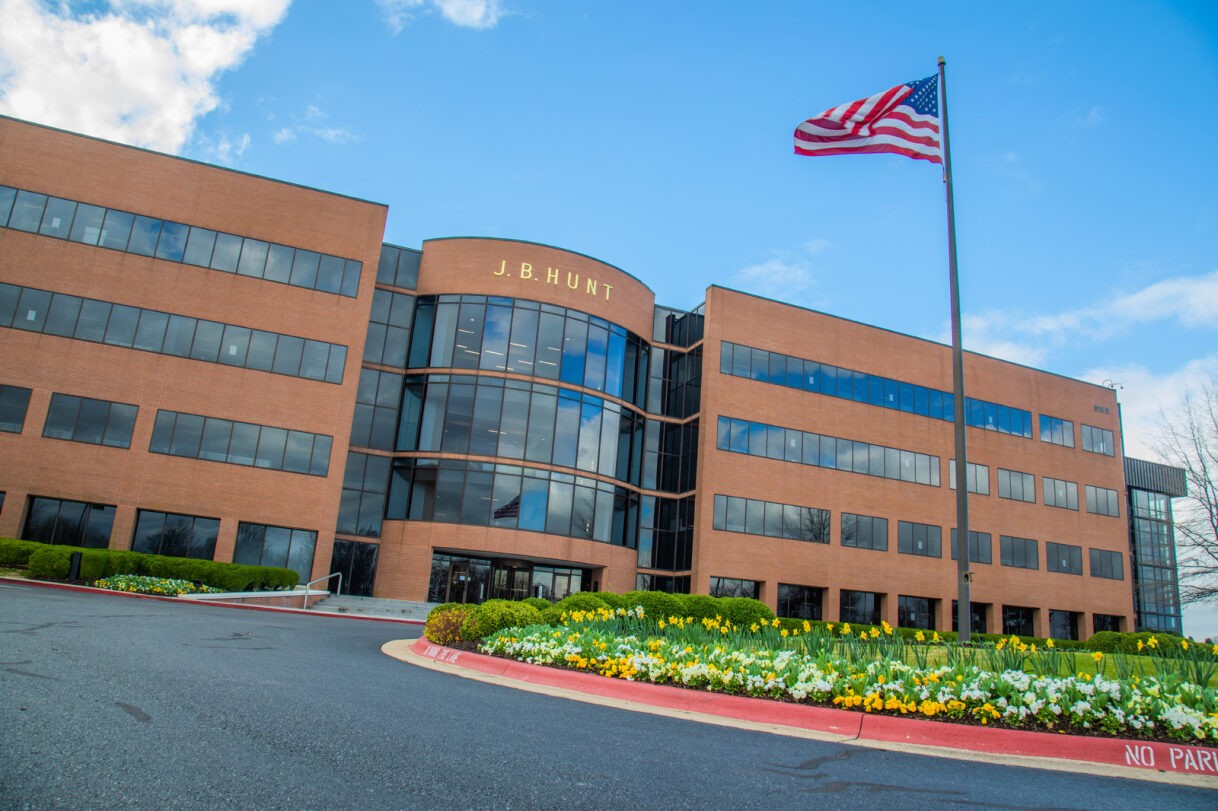
A federal court in Arizona has split the decision in the legal battle over J.B. Hunt’s brokerage unit, clearing the way for a big broker liability case to proceed. The court granted one of the company’s motions for summary judgment but denied another, leaving J.B. Hunt vulnerable to a negligence claim over its decision to hire a carrier involved in a fatal road accident.
The ruling, issued Thursday by the U.S. District Court for the District of Arizona, is especially significant for the freight brokerage industry. Crystal Gee et al. v. J.B. Hunt et al. is emerging as a key test case of the obligations brokers may face in selecting transportation providers after the Supreme Court’s decision in Montgomery v. Caribe Transport II that has shifted the legal landscape for broker liability.
Crystal Gee, the guardian for the children impacted by the incident, is bringing the claim following a crash that killed the children’s parents and left all three children severely injured.
Fatal collision involving a load arranged by J.B. Hunt
The crash occurred in October 2023 on U.S. Route 160, a two-lane highway. Judge Stephen McNamee’s account describes how Shokhijakhon Bekmuradov, a driver for Borderlanders Inc., went into the lane meant for oncoming traffic. He did not go back to his normal lane immediately after.
Then a vehicle traveling in the opposite direction rounded a bend and crashed head-on into the truck. His partner Lindsey Watson and their three children were also in the vehicle. Cox and Watson were killed in the crash and their children were seriously injured.
The shipment consisted of medical equipment from Lincare. The company had contracted J.B. Hunt's brokerage division to arrange for the transportation of its products from Denver to Phoenix. The load, valued at $1,350, was secured by Borderlanders through J.B. Hunt’s online brokerage platform.
J.B. Hunt scores a partial victory in court
J.B. Hunt offered two main arguments in favor of summary judgment.
First, the company challenged the plaintiffs’ effort to impose vicarious liability for Bekmuradov’s conduct, including the claim that the driver was a statutory employee of J.B. Hunt. Second, it asked for dismissal of the negligent hiring claim, arguing that its choice of Borderlanders was not a failure to exercise reasonable care.
The court sided with J.B. Hunt on the first issue, but denied the company’s motion to dismiss the second claim in its entirety. Therefore, there will be litigation as to whether the broker should have spotted potential safety issues before handing the shipment over to Borderlanders.
J.B. Hunt, which trades on the Nasdaq under the ticker JBHT, declined comment because of the litigation.
The company initially cited the Federal Aviation Administration Authorization Act (F4A), particularly a provision that prohibits states from taking certain actions that would impact prices, routes or services. J.B. Hunt also argued in its response to the lawsuit, originally filed in March 2024, that brokers are not covered by the safety exception in the law that allows states to take action regarding motor vehicle safety.
But the Supreme Court’s decision in Montgomery undercut that legal strategy. J.B. Hunt therefore was forced to rely on other arguments to defend against the plaintiffs' claims.
The contention centers on carrier selection and safety record
The negligent hiring claim survived largely because Judge McNamee determined the plaintiffs had submitted enough evidence to support a finding that a reasonable jury could conclude J.B. Hunt knew or should have known of potential safety risks in hiring Borderlanders.
The plaintiffs say the carrier had a troubling history, including a history of using inexperienced and what they claimed were incompetent drivers, creating risks of catastrophic accidents and fatalities to other road users.
They say J.B. Hunt should have seen these red flags before assigning the load to the company.
While Borderlanders is no longer a defendant in the Arizona proceedings, its prior participation is relevant to the dispute. The court’s decision stated that the carrier reached a settlement with the plaintiffs. That separate action against Bekmuradov also was voluntarily dismissed with prejudice, ending that claim.
J.B. Hunt then used these developments to attack the remaining negligence claim. The company contended the plaintiffs could not establish a necessary element of their case against the broker because there was no tort claim against Borderlanders in the first place.
But the judge wasn’t convinced that was reason enough to throw the case out.
J.B. Hunt also challenged the plaintiffs' characterization of Borderlanders' safety record, arguing they had not adequately demonstrated a troubled history.
Another problem, Judge McNamee noted, was that the plaintiffs offered evidence that J.B. Hunt failed to check several publicly available safety records when it picked the carrier.
This included Borderlanders’ crash and accident history, its safety scores from the Federal Motor Carrier Safety Administration (FMCSA), safety assessment alerts and history of inspection violations.
The court held that there were issues of fact as to whether J.B. Hunt exercised reasonable care in selecting the carrier. Accordingly, it denied the company’s motion for summary judgment on the negligent hiring claim.
Why the federal leasing rules don’t apply
J.B. Hunt fared better in trying to break the idea that it could be vicariously liable under federal leasing rules.
The company said the regulations could not create liability because there was no lease agreement between J.B. Hunt and Borderlanders.
The court accepted that interpretation.
The shipment had been pulled by Borderlanders under its own operating authority, with its own equipment and driver, Judge McNamee said. The evidence also showed that J.B. Hunt did not supply equipment to the carrier.
In the absence of a valid lease agreement, the relationship between the two companies could not be subject to the federal leasing regulations. The court accordingly granted J.B. Hunt’s motion for summary judgment on this issue.
Lawyers query brokers' defenses
Gregory Reed, a partner at law firm Hanson Bridgett and head of its transportation practice, shared his take on the decision with FreightWaves.
He said J.B. Hunt’s arguments were familiar positions in the brokerage and logistics sectors but he questioned their effectiveness in the current legal environment.
Reed noted two central points in the company’s defense.
One was that the FMCSA still allowed the Borderlanders to operate as a carrier even when it had no safety rating. In this regard, brokers should be allowed to deal with federally licensed carriers without the automatic imposition of claims of negligence.
And that argument is symptomatic of a bigger problem that has plagued the freight brokerage industry since Montgomery. Industry representatives have repeatedly pointed to the lack of clear federal guidance on exactly what checks brokers must do when selecting carriers to lower their risk of being sued for negligent hiring.
This is a sensitive issue, especially in light of the big verdict in Texas against C.H. Robinson. The company was ordered to pay more than $600 million over a 2021 crash that killed three people. Unsurprisingly, the carrier involved in that crash had a Satisfactory safety rating from the FMCSA.
The J.B. Hunt case was a different set of circumstances. References in the various legal filings indicate that Borderlanders had a less favorable safety record, making the question of whether the broker should have identified potential risks particularly relevant.
Reed also noted J.B. Hunt’s second argument, that the carrier’s safety and performance record was not enough to show that the broker had notice of the potential risks. From this standpoint, the number of negative incidents was relatively low in relation to the total driver workforce and the shipment volume of Borderlanders.
Ultimately, a jury could decide what the boundaries of broker responsibility are
The court refused to throw out the negligent hiring claim against J.B. Hunt, meaning the dispute could eventually go to a jury trial.
For Reed, the significance of the ruling is what standard of care is expected of freight brokers. Both of J.B. Hunt’s arguments are concerned with what a company should reasonably have known in selecting a transportation provider and what it reasonably should have done with information available to it.
The court's refusal to remove the case from the judicial process at this stage shows that judges may be unwilling to decide such questions without allowing a jury to decide whether the broker's conduct was reasonable, he says.
That means the case poses a fundamental question for the logistics industry: How far must a freight broker investigate a carrier's safety history before trusting it with a load?
The J.B. Hunt litigation’s results could offer further insight into the level of due diligence courts expect brokers to take in their selection of carriers as the legal fallout from Montgomery v. Caribe Transport II continues to play out.
END OF REPORT