Maritime Nov 19, 2026
LA-LB port strike threat intensifies as negotiations between employers and ILWU remain deadlocked
A final round of negotiations is scheduled for Friday, as a dispute involving approximately 250 union watchmen threatens to disrupt cargo operations at the ports of Los Angeles and Long Beach from Saturday. The potential impact could extend across the wider US supply chain if other dockworkers refuse to cross picket lines.
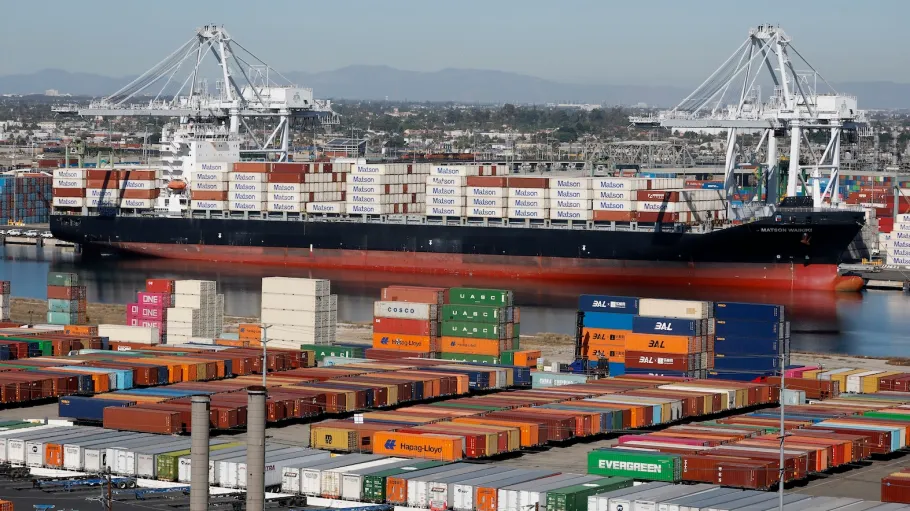
The risk of a labour disruption at the ports of Los Angeles and Long Beach is increasing, with negotiations between the Pacific Maritime Association (PMA) and International Longshore and Warehouse Union (ILWU) Local 26 showing little progress. The dispute, involving approximately 250 union watchmen, could begin affecting cargo operations as early as Saturday if the two sides fail to reach an agreement before the current contract expires.
In a statement issued Wednesday, the PMA said discussions concluded Tuesday without significant movement from the union on the proposals put forward by the employers' association. The ILWU has already conducted a strike vote and, according to the PMA, has indicated that it does not intend to extend the existing agreement beyond its expiration at 12:01 a.m. Saturday.
Both parties are expected to resume negotiations on Friday, leaving only a limited amount of time to prevent a potential work stoppage.
One of the main concerns for port operators is the possibility that other ILWU dockworkers could respect picket lines established by Local 26 members. Such a response could bring substantial parts of cargo operations to a standstill, extending the consequences well beyond the workers directly involved in the dispute.
Employers highlight compensation and benefits offer
The PMA says its latest proposal includes a one-time bonus of $3,200 for every Local 26 member, alongside a wage package designed to raise average annual earnings for full-time watchmen from more than $170,000 to $198,000.
The offer also предусматри maintains fully employer-funded healthcare coverage for both active employees and retirees. The association estimates the annual value of this benefit at more than $62,000 per worker. In addition, the proposed agreement would increase annual pension benefits to as much as $93,200 for employees with the longest service records.
According to the PMA, negotiations have been ongoing for more than a year, with the most recent discussions receiving support from the Federal Mediation and Conciliation Service. The employers' association previously agreed to a contract extension lasting several weeks to provide additional time for negotiations. However, it claims that the union took part in bargaining sessions on only three days during that extension.
The PMA also maintains that Local 26's demands have not undergone any material changes since discussions began. The union had not provided a comment at the time of publication, although FreightWaves said it had contacted the organisation for a response.
A small workforce with a significant operational footprint
Although Local 26 represents only around 250 workers, its members perform security functions across six container terminals serving the Los Angeles and Long Beach port complex.
These unarmed watchmen are responsible for checking identification documents and access credentials at terminal entrances, carrying out routine security patrols and reporting potential safety or security incidents.
Their relatively small workforce has an operational presence at terminals handling a substantial proportion of the cargo moving through the two ports. According to the PMA, these facilities account for more than half of their combined cargo volumes, including approximately 85% of Long Beach's cargo and 33% of Los Angeles' cargo.
The potential disruption therefore extends well beyond the direct consequences of a strike involving a limited number of security personnel.
The PMA expects thousands of other port employees, including longshore workers, marine clerks and foremen who are not part of the current contractual dispute, to honour any picket lines established by Local 26. If that happens, cargo-handling activities could be interrupted across a much wider section of the port complex.
Supply chains and the wider US economy face potential disruption
A prolonged stoppage could have consequences throughout the logistics network. Truck drivers could be left waiting without work, rail freight movements could be interrupted and warehouse employees could face reduced working hours.
Export-oriented businesses, particularly agricultural producers and manufacturers, could experience shipping delays. Retailers and small businesses preparing for the holiday season could also face postponed deliveries and increased operating costs.
The economic significance of the six affected terminals is underlined by research cited by the employers' association from Martin Associates, a maritime and aviation analysis firm.
According to the figures presented by the PMA, the terminals where Local 26 members work handled approximately 6.2 million containers in 2025. Their activity generated around 50,000 direct jobs and supported nearly 4.2 million jobs across the United States.
The same analysis associated these cargo movements with $885 billion in national economic activity, $48 billion in federal tax revenue and $190 billion in personal income.
Martin Associates also warned that the financial consequences of a strike could increase exponentially the longer operations remained suspended. With vessels unable to discharge their cargo and containers already inside terminals unable to leave, congestion and operational disruption would continue to accumulate.
The outcome of Friday's negotiations will therefore be critical. While the contractual disagreement directly concerns approximately 250 watchmen, the possibility of wider solidarity action among dockworkers places a much larger share of cargo activity at the nation's busiest port complex at risk.
END OF REPORT