Maritime Nov 18, 2026
Shipping Leaders Urged to Commit to a Zero-Suicide Goal Across the Industry
Dr Grahaeme Henderson calls for stronger leadership, improved onboard working conditions and an industry-wide framework to address mental health challenges and prevent suicide among seafarers.
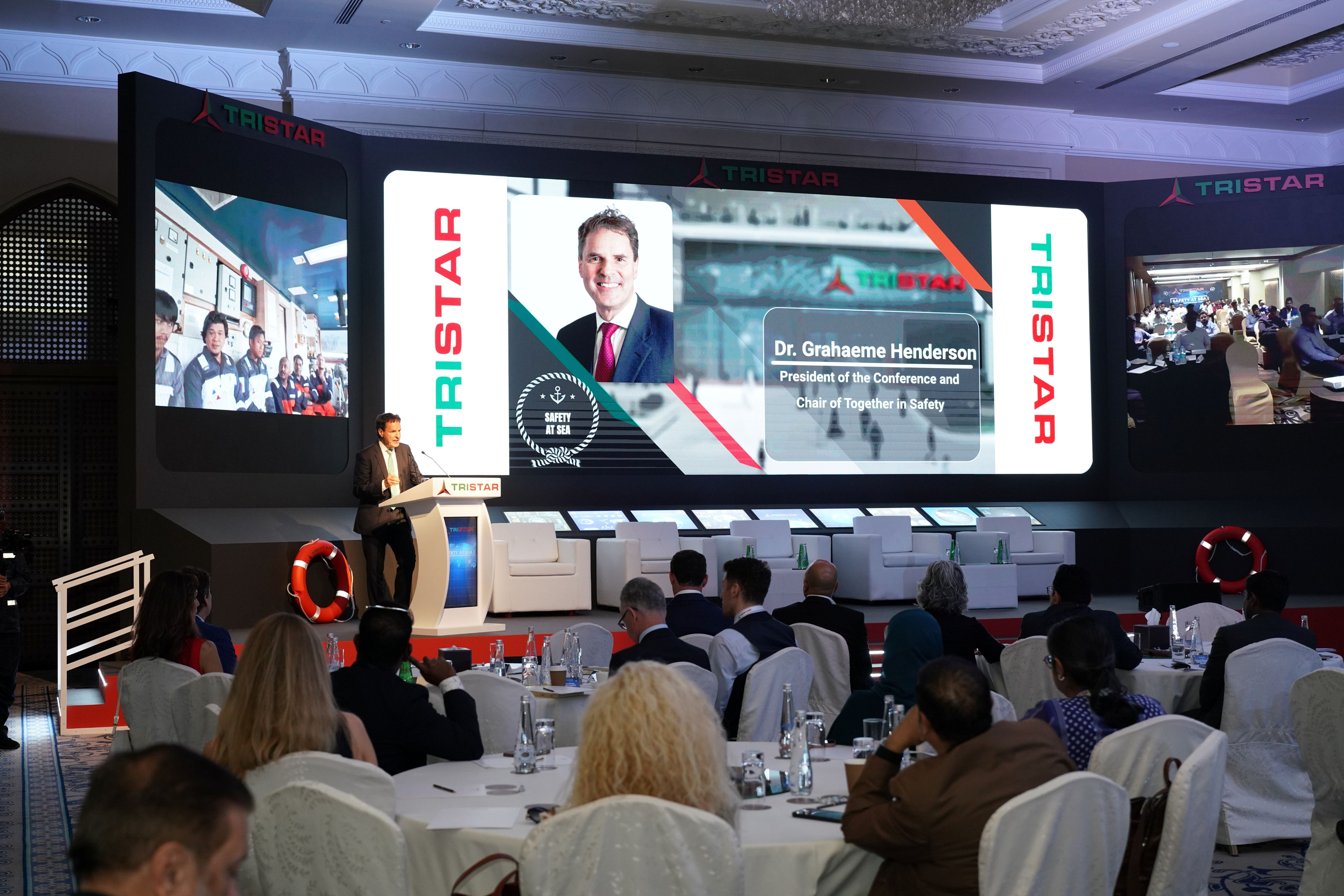
The global shipping industry must take collective action to prevent suicide at sea, with seafarer mental health recognised as a fundamental business priority rather than an optional welfare initiative. This was the central message delivered by maritime safety expert Dr Grahaeme Henderson OBE FREng during the opening keynote of the Tristar Safety at Sea Conference in Dubai.
Speaking on 9 November at the event, organised in conjunction with Seatrade Maritime, Henderson addressed industry executives, dignitaries and seafarers following the conference remotely from vessels around the world. Opening the session alongside Eugene Mayne, Founder and CEO of Tristar Group, he stressed that effective leadership and genuine concern for crew wellbeing are directly connected to operational safety and commercial performance.
"Wellbeing and mental health aspects are not a nice to have, but are vital to success and are a business imperative," Henderson stated.
Although the maritime sector has access to extensive research on crew welfare, Henderson pointed to a persistent gap between existing knowledge and its practical implementation onboard ships. He argued that the industry needs a coordinated approach capable of translating established findings into everyday working practices.
A model for transforming awareness into action
To tackle this challenge, the Together in Safety Coalition, founded by Henderson and comprising shipowners, flag states, insurers and classification societies, has developed the Human Performance Strategic Framework.
The project being trialed on ships is being led by Anna Myrilla. Short teaching sessions are used together with practical resources and anonymous feedback from crew members and specific follow-up actions.
The framework covers ten key areas relevant to the improvement of human performance and better safety at sea. During the conference four pillars were stressed:
Visible Leadership: ensuring leaders visibly demonstrate commitment to crew welfare.
Social Climate and Cohesion on Board: a supportive work environment and better relationships amongst seafarers.
Workload Management and Digital Boundaries: The challenge of excessive workloads and the impact of digital demands on crew wellbeing.
Mental Health Access: enhance access to appropriate mental health support.
Henderson emphasized that success of this initiative had to be measured in terms of real improvements, not just words of intention.
He told delegates: "We will not be judged by the words we utter today. “It will be measured by the changes we make … tomorrow, next month and next year.
A personal tragedy highlights the subtle signs of struggle
The most poignant moment in Henderson’s speech came when he shared a personal story about a young sailor who had died and profoundly affected the speaker. He has spoken publicly about the incident for the first time, referring to the man as "John".
The bright young seafarer took his own life on board after privately suffering from severe and unfounded fears that he had made a mistake and would be arrested at the next port of call. Inside, he was in turmoil, but to his colleagues he seemed to be doing well.
The tragedy, says Henderson, demonstrates that psychological distress can be invisible in the maritime workplace, even when a person appears outwardly composed and continues to work.
He urged shipping companies and industry leaders to create environments in which seafarers can talk about personal difficulties without fear of professional consequences, loss of respect or damage to their employment records.
“Mental health issues are not always seen through tears, withdrawal or marked change in behaviour,” he said. “Sometimes they look like a smile. Sometimes, they look like someone saying, 'I’m fine' when they’re struggling to cope.
Responsibility for the future of shipping – together
In his keynote, Henderson ended with a direct appeal to the International Maritime Organization (IMO), flag states, shipowners, insurers and maritime training providers. He urged these stakeholders to embrace the Human Performance Strategic Framework and turn the industry’s common commitment into practical measures to safeguard the welfare of seafarers throughout their careers.
His message was clear: awareness campaigns are not enough to improve mental health at sea. It requires continuous leadership, supporting onboard cultures, accessible help and measurable action across the maritime value chain.
“Behind every seafarer is a human being…and behind every human being is a person that matters,” Henderson said.
He ended with a call for the international shipping community to work together to achieve an ambitious but vital goal – zero suicides in the industry.
END OF REPORT