



The Lego Group is set to invest more than $400 million to expand its manufacturing operations in Monterrey, Mexico, adding new packing and warehousing capabilities as the company continues to strengthen its regional supply chain network across the Americas.
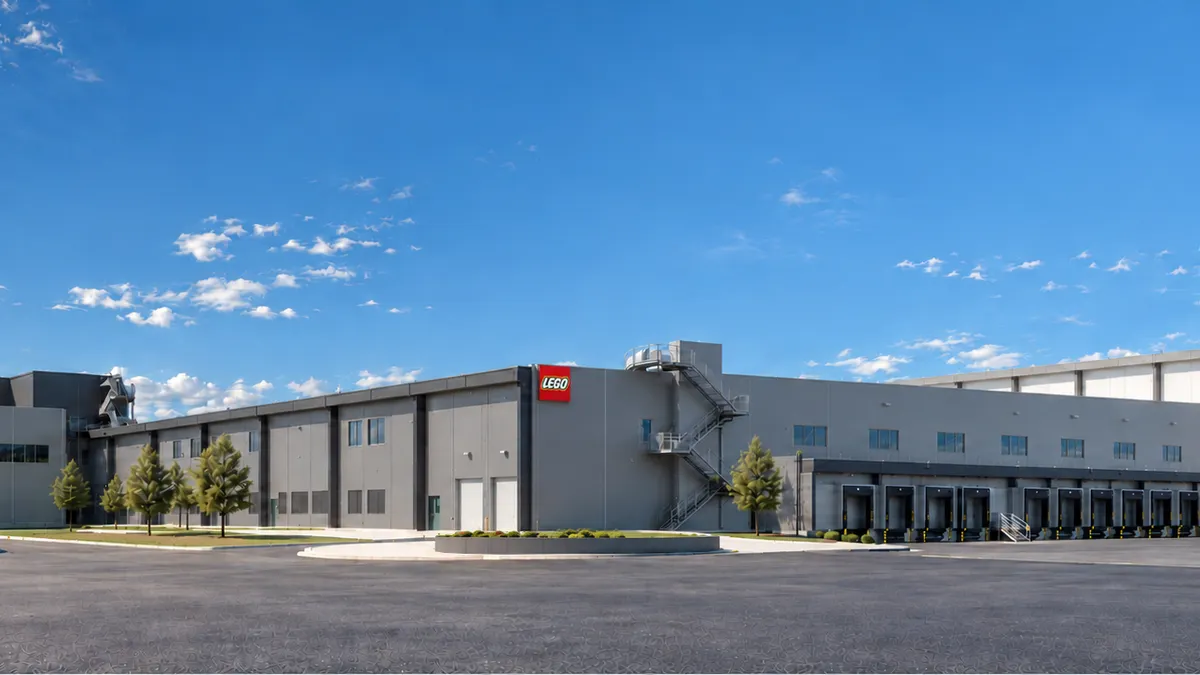
The investment, announced Thursday, will expand the Monterrey site by more than 667,000 square feet. The project includes the construction of a new packing hall and a fully automated high-bay warehouse capable of storing stacks ranging from 40 feet to more than 150 feet high.
Construction is expected to begin in early 2027, with completion scheduled for 2029. The expansion will also create approximately 1,300 new jobs at a facility that currently employs around 7,300 people.
The Monterrey factory handles several stages of Lego’s production and packaging operations, including element molding, processing, decoration and the packing of boxes. The facility supplies customers throughout the Americas.
Nancy Sánchez, general manager of Lego Factory Monterrey and senior vice president of Americas manufacturing at the Lego Group, said the company operates a flexible and resilient, regionally based global supply chain designed to manufacture products closer to its major markets.
According to Sánchez, this approach has been a central part of Lego’s strategy for more than 15 years. It enables the company to respond to changes in demand while supporting long-term growth.
Since beginning operations in 2008, the Monterrey facility has undergone a series of expansions, increasing both its manufacturing footprint and workforce. The site has consequently become the Lego Group’s largest manufacturing plant.
The latest project is part of what COO Carsten Rasmussen described as Lego’s long-standing commitment to Mexico and recognition of the Monterrey facility’s importance within the company’s global manufacturing network.
Rasmussen said the new investment is intended to support continued long-term growth and help Lego meet demand for its play experiences for years to come.
Beyond expanding physical capacity, the project is also expected to create additional opportunities for employees in technical training, professional development and long-term careers, Sánchez said.
Lego is working with technical schools, Mexico’s Ministry of Education and industry partners to develop workforce training programs based on the skills currently required by the manufacturing sector.
Future and existing employees will have access to training designed to help them operate sophisticated software, improve problem-solving and continuous improvement capabilities, develop leadership behaviors and build expertise in a modern manufacturing environment, according to Sánchez.
Sustainability remains part of the expansion
The expansion comes as Lego continues efforts to reduce the environmental footprint of its global operations, including measures aimed at lowering greenhouse gas emissions.
The company began phasing out single-use plastic from its packaging in 2022, replacing plastic bags with paper-based alternatives for its toy bricks. Lego remains on track to complete that transition in 2027, Sánchez said.
Sustainability initiatives are also being implemented directly at the Monterrey site. Many of its buildings are equipped with rooftop solar panels, while other measures include water reuse systems, waste reduction programs and ongoing efforts to achieve zero waste to landfill.
Monterrey remains central as Lego expands in North America
The Monterrey operation was Lego’s first manufacturing facility in North America. The company is now developing a second major site in Chesterfield, Virginia.
Lego is investing more than $1.5 billion in a manufacturing plant and regional distribution center in Virginia. Both projects remain on track to open in 2027.
While construction continues, Lego is already operating a temporary packing facility in Chesterfield.
The expansion of Monterrey, combined with the new Virginia production and distribution infrastructure, reflects Lego’s broader strategy of strengthening a regionally based supply chain capable of supporting demand across the Americas while bringing production and packaging capacity closer to key markets.