


• Latest
  • Trending
Low-GHG methane may become necessary for LNG-fuelled ships within just a few years

Low-GHG methane may become necessary for LNG-fuelled ships within just a few years

April 21, 2026
Why Air Cargo’s Pricing Process Is Emerging as a New Target for Cargo Fraud

Why Air Cargo’s Pricing Process Is Emerging as a New Target for Cargo Fraud

July 28, 2026
Beehive Industries to Invest $70 Million in Ohio Aerospace Expansion

Beehive Industries to Invest $70 Million in Ohio Aerospace Expansion

July 28, 2026
ADVERTISEMENT
Global Airfreight Rates Extend Weekly Decline Despite Rising Fuel Costs

Global Airfreight Rates Extend Weekly Decline Despite Rising Fuel Costs

July 28, 2026
CMHC Lowers 2026 Housing Forecast as Sales, Prices and Construction Slow

CMHC Lowers 2026 Housing Forecast as Sales, Prices and Construction Slow

July 28, 2026
Canada’s Next Wave of Infrastructure Depends on Building a Stronger Skilled Workforce

Canada’s Next Wave of Infrastructure Depends on Building a Stronger Skilled Workforce

July 28, 2026
British Columbia Invests More Than $1 Million to Strengthen Workforce Training in the Nechako Region

British Columbia Invests More Than $1 Million to Strengthen Workforce Training in the Nechako Region

July 28, 2026
Virtual Trades Brings Immersive Skilled Trades Training to Alberta and Saskatchewan

Virtual Trades Brings Immersive Skilled Trades Training to Alberta and Saskatchewan

July 28, 2026
Asia–U.S. Ocean Freight Rates Jump 234% Since February as Market Begins to Cool

Asia–U.S. Ocean Freight Rates Jump 234% Since February as Market Begins to Cool

July 28, 2026
New Guilty Plea Advances Investigation Into $1.5 Million Cargo Theft Network

New Guilty Plea Advances Investigation Into $1.5 Million Cargo Theft Network

July 28, 2026
DSV Expands Air Cargo Operations with New Seoul–Rockford Charter Route

DSV Expands Air Cargo Operations with New Seoul–Rockford Charter Route

July 28, 2026
TC Energy Commissions Two Natural Gas Infrastructure Projects in Western Alberta

TC Energy Commissions Two Natural Gas Infrastructure Projects in Western Alberta

July 28, 2026
Canadian Forestry Industry Warns New U.S. Tariffs Will Deepen Sector Challenges

Canadian Forestry Industry Warns New U.S. Tariffs Will Deepen Sector Challenges

July 28, 2026
  • Home
  • About Us
  • Press Room
  • Podcasts
  • Media Kit
  • Contact Us
  • Careers
Tuesday, July 28, 2026
  • Login
  • Register
The Logistic News
  • Logistic
  • Air
  • Maritime
  • Land
  • World
  • Business
  • Tech
  • Events
  • Advertise
No Result
View All Result
  • Logistic
  • Air
  • Maritime
  • Land
  • World
  • Business
  • Tech
  • Events
  • Advertise
No Result
View All Result
The Logistic News
No Result
View All Result
Home Logistic

Low-GHG methane may become necessary for LNG-fuelled ships within just a few years

A new DNV study suggests some LNG-powered vessels may need to shift to biomethane or e-methane as early as 2029, depending on future regulation.

The Logistic News by The Logistic News
April 21, 2026
in Logistic, Maritime, Tech
Reading Time: 2 mins read
0
Low-GHG methane may become necessary for LNG-fuelled ships within just a few years
ADVERTISEMENT

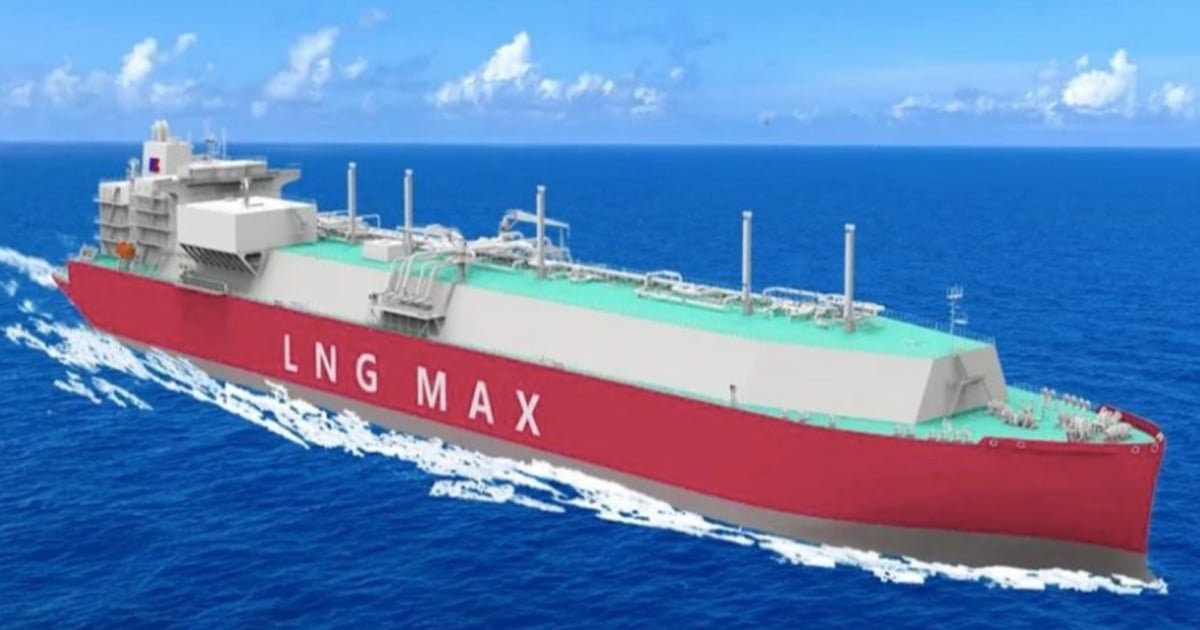
Tighter emissions rules could soon require ships using LNG as fuel to switch to lower-carbon forms of methane, such as biomethane and e-methane, according to a new study from DNV.

In its report, “Methane in Shipping – LNG-fuelled ships and the switch to low-GHG methane,” the classification society notes that there are already around 800 LNG-capable ships in service, in addition to 700 LNG carriers using boil-off gas as fuel. There are also approximately 600 more LNG-capable ships and nearly 300 additional LNG carriers currently on order.

Even so, conventional LNG may not remain compliant for much longer. Depending on engine type and the timing of future rules, continued use of fossil LNG could conflict with proposed fuel regulations within as little as three years in the most aggressive scenario, or by 2035 in the latest case.

ADVERTISEMENT

DNV notes that LNG still has support among many owners and operators as a bridging fuel, while others argue the sector should move more decisively away from fossil fuels toward electrification, hydrogen, and hydrogen-derived fuels such as ammonia and methanol.

The report says the uptake of low-GHG methane depends on three pillars: the ship technology needed to use it, the production and availability of the fuel itself, and the bunkering infrastructure required to deliver it onboard.

DNV also assesses the compliance horizon for three different engine configurations against both FuelEU Maritime and the proposed IMO Net Zero Framework (NZF). Although the NZF is not yet finalised, DNV says it still provides an important signal about the likely direction of future IMO greenhouse gas regulation.

Under FuelEU Maritime, assuming the rules remain unchanged, LNG-fuelled ships may be able to continue operating until around 2035, depending on engine type, without needing to adopt low-GHG methane. Under the IMO NZF, however, if a framework became effective from 2029, the compliance window would be shorter.

A key uncertainty is the well-to-tank (WtT) greenhouse gas intensity factor that will ultimately be applied. With a low WtT factor, many LNG-fuelled ships might not need low-GHG methane until 2031 or 2032. With a high WtT factor, some could need it as early as 2029.

DNV also points out that WtT intensity can vary substantially between LNG suppliers. Using source-specific WtT values rather than generic defaults would improve accuracy and encourage producers to reduce upstream emissions.

The same applies to methane slip. Real shipboard or testbed measurements, rather than default factors, could benefit newer dual-fuel engines. Several manufacturers have already reported lower methane slip emissions than those assumed in current default values, particularly for low-pressure dual-fuel 2-stroke and 4-stroke engines. That could help extend the compliance horizon for some ships.

Overall, DNV concludes that LNG still appears to offer a credible bridging pathway toward low-GHG methane, with a potentially longer compliance horizon than fuel oils. Production of low-GHG methane is already more advanced than that of many other low-carbon fuel candidates. However, future uptake will depend heavily on whether the shipping industry is prepared to pay for it.


Previous Post

Seaspan orders four multipurpose vessels in strategic step for Sumec Marine

Next Post

After CBS report, C.H. Robinson pushes safety responsibility back toward the FMCSA

Next Post
After CBS report, C.H. Robinson pushes safety responsibility back toward the FMCSA

After CBS report, C.H. Robinson pushes safety responsibility back toward the FMCSA

Leave a Reply Cancel reply

Your email address will not be published. Required fields are marked *

A D V E R T I S E M E N T

Popular News

  • Drone Delivery Takes Flight: Amazon Partners with UPS for Trial Program

    Drone Delivery Takes Flight: Amazon Partners with UPS for Trial Program

    0 shares
    Share 0 Tweet 0
  • Rail Cargo Group Strengthens European Network with Captrain Netherlands Acquisition

    0 shares
    Share 0 Tweet 0
  • Automotive Inbound Logistics Market: Navigating Future Challenges

    0 shares
    Share 0 Tweet 0
  • Global Inflation Cools to Target After Three Years, Central Banks Face Policy Dilemma

    0 shares
    Share 0 Tweet 0
  • Dubai Mercantile Exchange Rebrands as Gulf Mercantile Exchange Following Saudi Tadawul Group Acquisition

    0 shares
    Share 0 Tweet 0

Recent News

Why Air Cargo’s Pricing Process Is Emerging as a New Target for Cargo Fraud

Why Air Cargo’s Pricing Process Is Emerging as a New Target for Cargo Fraud

July 28, 2026
Beehive Industries to Invest $70 Million in Ohio Aerospace Expansion

Beehive Industries to Invest $70 Million in Ohio Aerospace Expansion

July 28, 2026
Global Airfreight Rates Extend Weekly Decline Despite Rising Fuel Costs

Global Airfreight Rates Extend Weekly Decline Despite Rising Fuel Costs

July 28, 2026

Discover a new era of logistics reporting with The Logistic News, your go-to platform for breaking news, insightful features, and exclusive interviews shaping the global logistics and freight landscape. Trust us to deliver accurate, timely, and relevant information that empowers professionals and enthusiasts alike in navigating the intricacies of this vital sector.

Navigation

  • Home
  • About Us
  • Press Room
  • Podcasts
  • Media Kit
  • Contact Us
  • Careers
  • Privacy Policy
  • Terms of Use

© 2024 - thelogisticnews.com

Welcome Back!

Login to your account below

Forgotten Password? Sign Up

Create New Account!

Fill the forms below to register

All fields are required. Log In

Retrieve your password

Please enter your username or email address to reset your password.

Log In

SIgn Up Newsletter

This will close in 20 seconds

Manage Cookie Consent
We use technologies like cookies to store and/or access device information. We do this to improve browsing experience and to show (non-) personalized ads. Consenting to these technologies will allow us to process data such as browsing behavior or unique IDs on this site. Not consenting or withdrawing consent, may adversely affect certain features and functions.
Functional Always active
The technical storage or access is strictly necessary for the legitimate purpose of enabling the use of a specific service explicitly requested by the subscriber or user, or for the sole purpose of carrying out the transmission of a communication over an electronic communications network.
Preferences
The technical storage or access is necessary for the legitimate purpose of storing preferences that are not requested by the subscriber or user.
Statistics
The technical storage or access that is used exclusively for statistical purposes. The technical storage or access that is used exclusively for anonymous statistical purposes. Without a subpoena, voluntary compliance on the part of your Internet Service Provider, or additional records from a third party, information stored or retrieved for this purpose alone cannot usually be used to identify you.
Marketing
The technical storage or access is required to create user profiles to send advertising, or to track the user on a website or across several websites for similar marketing purposes.
Manage options Manage services Manage {vendor_count} vendors Read more about these purposes
View preferences
{title} {title} {title}
No Result
View All Result
  • Logistic
  • Air
  • Maritime
  • Land
  • World
  • Business
  • Tech
  • Events
  • Advertise

© 2024 - thelogisticnews.com