Maritime Nov 5, 2026
Maersk raises annual earnings outlook after strong third-quarter performance in ocean shipping
Subheading: AP Moller-Maersk increases its full-year EBIT forecast to between $8 billion and $8.5 billion, as container shipping profits surge amid higher freight rates and strong global trade demand.
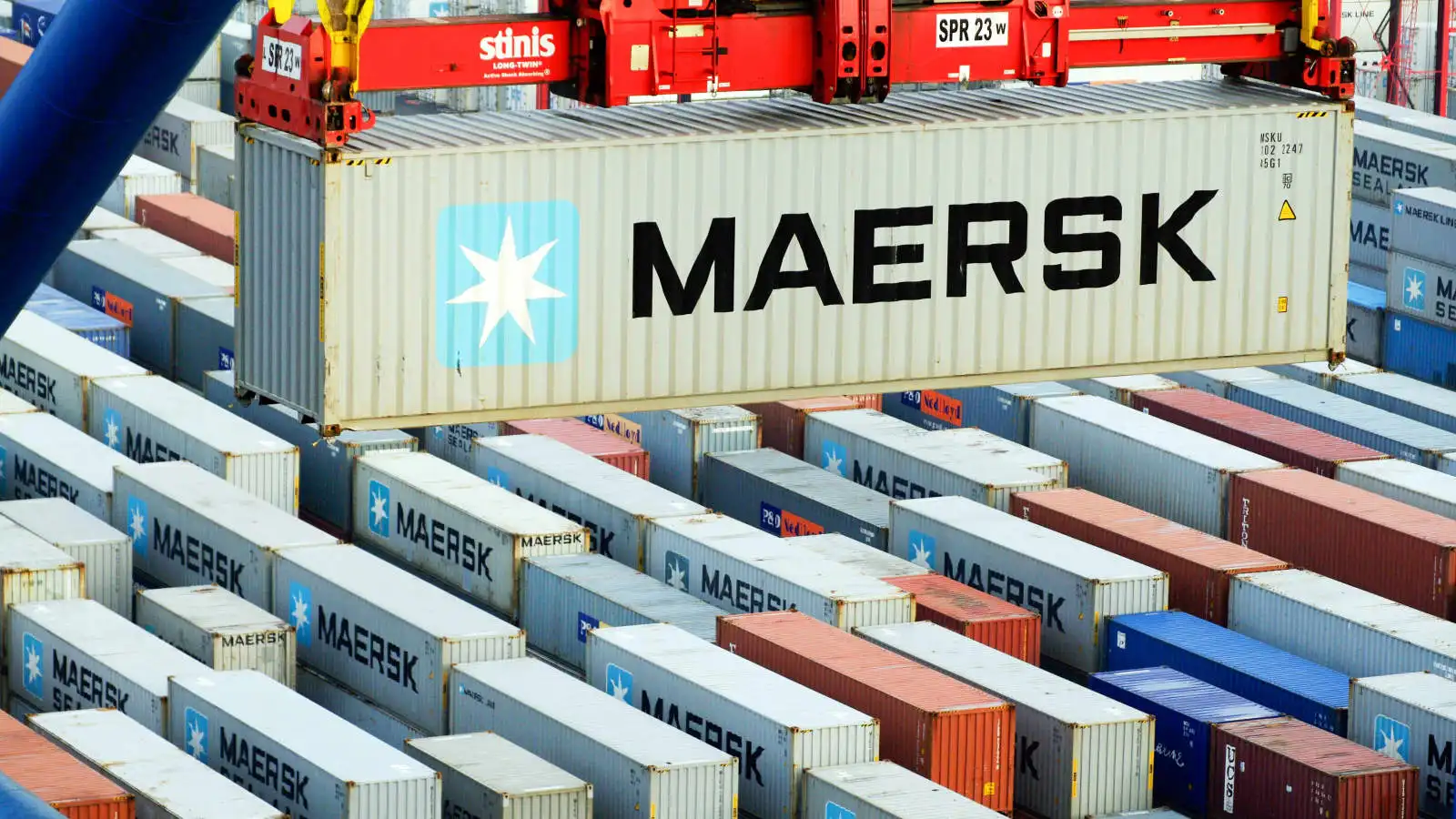
AP Moller-Maersk has raised its full-year outlook sharply after a strong third-quarter performance led by its ocean shipping division. The Copenhagen-based group said third-quarter EBIT was $3.27 billion, up from $1.28 billion in the same period in 2025.
Group revenue also rose sharply to $18.1 billion from $14.2 billion in the previous year.
These results have prompted Maersk to upgrade its full-year EBIT guidance to $8 billion-$8.5 billion, from a previous forecast of $4 billion-$6.5 billion. The revised outlook is premised on a projected 4% growth in global container volumes for the full year.
Chief Executive Officer Vincent Clerc said he was pleased with the group's performance, adding that international trade had proven resilient in the face of ongoing geopolitical uncertainty and operational challenges.
We had a strong quarter across our businesses. “Global trade has demonstrated surprising resilience in the midst of ongoing geopolitical uncertainty and disruptions,” he said.
Maersk’s improved financial results were helped by disruptions impacting maritime operations. Export flows were affected by typhoon disruptions across Asia in July and August, which also caused severe congestion at ports, limiting vessel capacity availability in the global shipping network.
Maersk said average global port waiting times hit a peak of 16.6 hours during the height of the disruptions – the longest wait since January 2023. Capacity constraints resulting supported higher freight rates, with the Shanghai Containerised Freight Index (SCFI) up 46% in Q3 versus the prior quarter.
Most directly the ocean division benefited from these market conditions. EBIT in the third quarter was $2.6 billion, up from $576 million in the same period last year.
The group's performance in its other activities was more mixed. APM Terminals, Maersk’s ports business, posted EBIT of $493 million, down from $571 million in Q3 2025. In the meantime, the logistics and services division reported EBIT of $259 million, up from $218 million in the comparable year-ago period.
Looking ahead, Clerc was optimistic about the prospects for container shipping, citing a wider range of industries contributing to cargo demand. He also pointed out that in addition to consumer spending, rising investment in electrification, energy projects and the fast development of artificial intelligence infrastructure were increasingly significant drivers of industrial freight volumes.
“We have been well placed to capture this demand, with our fleet of vessels operating at full capacity and demand outstripping available space on certain routes,” said the Maersk CEO.
The latest results underline the significance of ocean shipping to the group's financial performance, but also show how strong cargo demand and limits on vessel capacity are underpinning profitability across the container transport market.
END OF REPORT