Business Nov 17, 2026
Manufacturers urged to strengthen resilience ahead of unprecedented El Niño conditions
With extreme weather expected to intensify across the United States and global impacts forecast to peak around December, experts recommend comprehensive risk assessments, stronger infrastructure, backup energy systems and more flexible supply chains to limit operational disruptions.
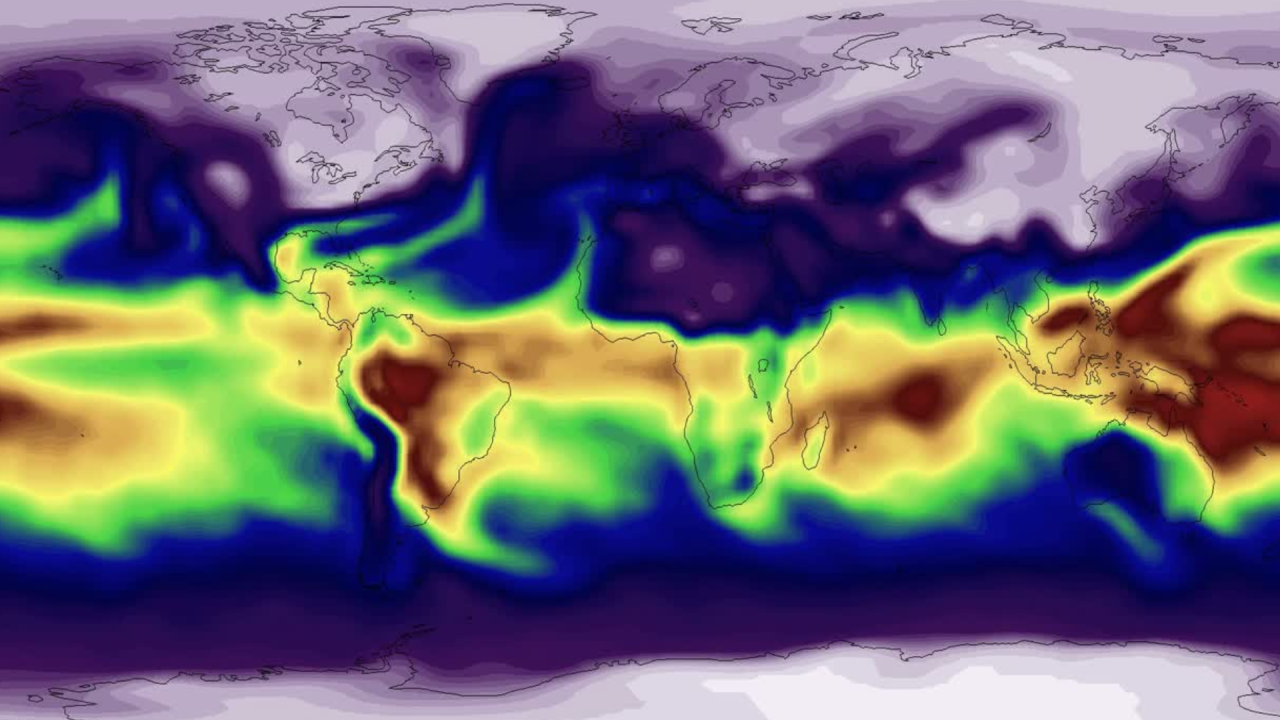
The largest El Niño on record is starting to impact the U.S., sparking concerns about potentially extreme weather and the ramifications for manufacturing activity and supply chains. The World Meteorological Organization (WMO) has said the peak of the phenomenon’s global impact is expected to be around December.
What fuels El Niño is the warming of ocean waters in the central and eastern tropical Pacific. Such a temperature increase would alter long-standing weather patterns, creating very different conditions across important US manufacturing areas. Other possibilities are above-normal rainfall along the Gulf Coast and below-normal rainfall in the Pacific Northwest.
Given this, experts are urging manufacturers to ramp up their preparedness, warning the scale and unpredictability of this year's event could put businesses at risk for unprecedented operational disruptions.
“Ocean temperatures at present are exceptional and are a key factor in determining the intensity of El Niño episodes,” said Josephine Tucker, Americas Head of Energy Advisory and Sustainability.
“I’ve never seen temperatures at the surface of around four degrees as someone who has worked in sustainability and this space my entire career,” she said of the ocean-surface temperature anomalies.
It is hard enough to forecast what will happen after such events without the added complication that each El Niño event brings different conditions. That means manufacturers can no longer assess their operational vulnerabilities based solely on historical weather data.
“Extreme weather events that we used to think were exceptional are happening more and more,” said Firas Saleh, director of North American flood models at Moody’s.
“We are seeing things that never happened happening all the time,” he said.
Weather-related disruptions can quickly exceed the risk expectations that have been set, as shown by the 2011 floods in Thailand and Hurricane Harvey in 2017. These events also show why businesses need to rethink what they consider to be an ordinary weather event.
Site-specific assessments are key
Manufacturers can tap into local information and geographic information system (GIS) tools, from free software to enterprise platforms, to build a first picture of their exposure. But Tucker and Saleh note that businesses must look beyond traditional flood-risk maps and do assessments for each individual facility.
“The exposure levels are changing all the time,” Saleh said. Insurance claims may not reflect areas previously impacted by storms, hail or wildfires if they were unoccupied or undeveloped at the time of the events.
Therefore a full assessment should consider a range of factors, including the location and vulnerability of equipment, exposure to salt or fresh water, potential floodwater velocity and the potential for mudslides and debris flows.
Other threats may be less immediately visible. For instance, heavy rainfall on land that has already been damaged by wildfires can increase surface runoff and make surrounding areas much more prone to mudslides.
Some major resilience investments, such as installing onsite power generation or upgrading facility infrastructure, would ideally have been implemented months in advance. Although the opportunity to complete certain large-scale projects may have passed, manufacturers can still introduce practical measures to reduce the consequences of severe weather.
Begin with a comprehensive water and power audit
Tucker recommends that manufacturers start by examining their exposure to water and electricity disruptions and identifying where critical failures could occur.
Businesses operating multiple facilities should establish a risk-based ranking of their sites, prioritizing those facing the greatest potential exposure. Each location should then undergo individual testing of backup systems, including an assessment of fuel availability and the ability of emergency power equipment to operate under actual load conditions.
Testing under realistic production conditions is particularly important because it can reveal weaknesses that might remain undetected during routine inspections.
Stormwater drainage is another area where companies frequently underestimate their exposure, Tucker noted.
While facilities located directly along coastlines are generally more aware of the need to prepare for hurricanes and other water-related emergencies, inland sites should not assume they are protected. These locations may have inadequate drainage infrastructure or other vulnerabilities that become critical during periods of exceptionally heavy rainfall.
Preparedness shouldn't be dictated by flood zone maps
“Just because you’re outside of an official high-risk flood zone does not mean you’re safe from extreme weather,” Saleh said.
Evidence of this limitation is clear from previous disasters. Flooding across Thailand in 2011 caused tens of billions of dollars in damage and severely disrupted global hard-drive and automotive manufacture. The effects were not confined to the immediate areas but spread far wider, demonstrating the international dimension of local disasters.
Hurricane Harvey also caused an estimated $125 billion in damages across Texas and Louisiana in 2017, which at the time was the most expensive tropical cyclone on record. Both disasters occurred in places that had been thought to be relatively low-risk places.
Such experiences underscore the advantages of investing in stronger resilience systems, even when the initial costs appear steep.
Tucker says that such investments should not be considered as “nice to haves” but rather as a necessity for business continuity.
She calls on decision-makers to think about the economic consequences of losing electricity or water, or suffering catastrophic flooding. The consequences of a two-hour power cut can be very different from a two-day power cut, particularly for facilities where the production process needs to run continuously.
Hence the possible cost of downtime should be an important element in the decision regarding the appropriate level of protection.
Supply chain flexibility, strategic priority
Resilience in the wider supply chain beyond individual manufacturing facilities will be key to limiting disruption.
Brian Harold, managing director at APM Terminals, says connectivity and alternative transport routes are becoming ever more important for supply chain resilience.
Reliable port infrastructure, efficient links to inland manufacturing and distribution centers and multiple routes through their supply networks to move cargo place businesses in a better position to withstand disruption.
Manufacturers also need to hold regular forecasting and demand-planning discussions with key suppliers. Packaging maker Sonoco issued an industry report recommending companies maintain safety stock to cover transportation delays of four to six weeks.
But increasing inventory levels alone is not the solution.
“Companies need to know where extra inventory offers the greatest protection, which parts of their supply chains are too concentrated, and whether there are alternative domestic production or logistics options that can be deployed when needed,” said John Pontrello, Vise President of Consumer Packaging North America at Sonoco.
An example of this approach is Sonoco’s domestic network of metal-can manufacturing. "With the use of domestic production capacity, the company is not as dependent on ocean freight and specific maritime corridors, such as the Panama Canal.
“This doesn’t eliminate weather risk,” Pontrello said, “ but it can reduce the number of variables between the supplier and the customer’s operation.”
Insurance also can play an important part in limiting financial exposure. Saleh suggests business leaders look at contingent business interruption insurance, which covers the situation where a supplier, rather than the manufacturer, is unable to deliver the equipment or other products it has been hired to provide.
Microgrids and onsite power can protect essential operations
Other resilience measures include building capacity to generate power onsite, connecting facilities to microgrids, and implementing load-shedding strategies to ensure that essential operations can continue to run during disruptions to the main electricity network.
Microgrids are small, local power grids that get their electricity from nearby energy sources. They can enable companies to run independently of the wider grid in an interruption, potentially meeting all their electricity needs through local generation.
Technological advances are also helping to make them more responsive.
“Some of the newer microgrid systems can switch into so-called island mode in as little as 20 milliseconds, versus about 30 seconds for more conventional systems,” Tucker said.
This difference can be especially important for advanced manufacturing environments in which even a short interruption may require expensive production lines to be restarted.
Tucker pointed out the implications for facilities that operate clean rooms or robotic assembly lines. He said a change measured in milliseconds, not seconds, can prevent costly resets and the resulting loss of operations.
However, the financial scale of such investments means manufacturers need to balance these against the potential cost of business interruption.
Alternative funding mechanisms can lower initial investment.
Service-based financing models provide another option for implementing resilience measures for companies facing capital constraints or conflicting investment needs.
The so-called “as-a-service” approach means that microgrid infrastructure or energy services are supplied by external providers in return for regular payments.
Such an arrangement can remove or dramatically lower the need for upfront capital expenditure, and allow businesses to turn what would normally be capital expenditure (CapEx) investments into ongoing operating expenditure (OpEx).
“The model lets you avoid a large upfront cost and instead pay a fixed amount each month for the service,” Tucker said.
Such arrangements could enable greater access to cutting-edge energy resilience solutions for manufacturers that otherwise may not be able to afford to make significant infrastructure upgrades.
Ultimately, experts agree, preparedness should be more than predicting when and where extreme weather will strike. Companies require operational alternatives that enable them to respond when forecasts go wrong or disruptions occur in unexpected places.
“The strength of the supply chain is not in trying to predict every possible disruption, but rather in being prepared with alternatives when a disruption does happen,” said Ernest Haynes, president of global consumer packaging at Sonoco.
END OF REPORT