Air Nov 9, 2026
Milwaukee invests $80 million in a new air cargo hub to capture more regional freight
Milwaukee Mitchell International Airport has completed a 337,000-square-foot cargo center designed to quadruple its freight volumes, attract additional cargo operators and offer Wisconsin businesses an alternative to congested Chicago-area airports.

Milwaukee Mitchell International Airport (MKE) is preparing to be a bigger player in the North American air cargo market following an $80 million investment in a new cargo facility. The project aims to bolster logistics infrastructure in southeastern Wisconsin and provide local manufacturers and shippers with another way to move international and domestic freight.
After five years of development, the 337,000-square-foot complex, a public-private partnership between Milwaukee County and Dallas-based real estate developer Crow Holdings, officially opened Oct. 14, 2026.
“The partnership with Crow Holdings represents a substantial investment in the airport and the broader southeastern Wisconsin economy,” Harold Mester, director of public affairs and marketing at Milwaukee Mitchell International Airport, told Cargo Facts.
It will offer a valuable alternative to Chicago O’Hare International Airport (ORD) for regional businesses moving goods in and out of the region, he said.
Airport officials believe the project could quadruple the amount of air cargo handled in Milwaukee.
A major boost to Milwaukee’s freight-handling capability
MKE has operated a smaller cargo complex since 1989, with activity traditionally focused on FedEx and UPS operations. The development will significantly enhance the airport’s capacity to handle bulk shipments for manufacturers bringing in raw materials or shipping out finished goods across southeastern Wisconsin and beyond.
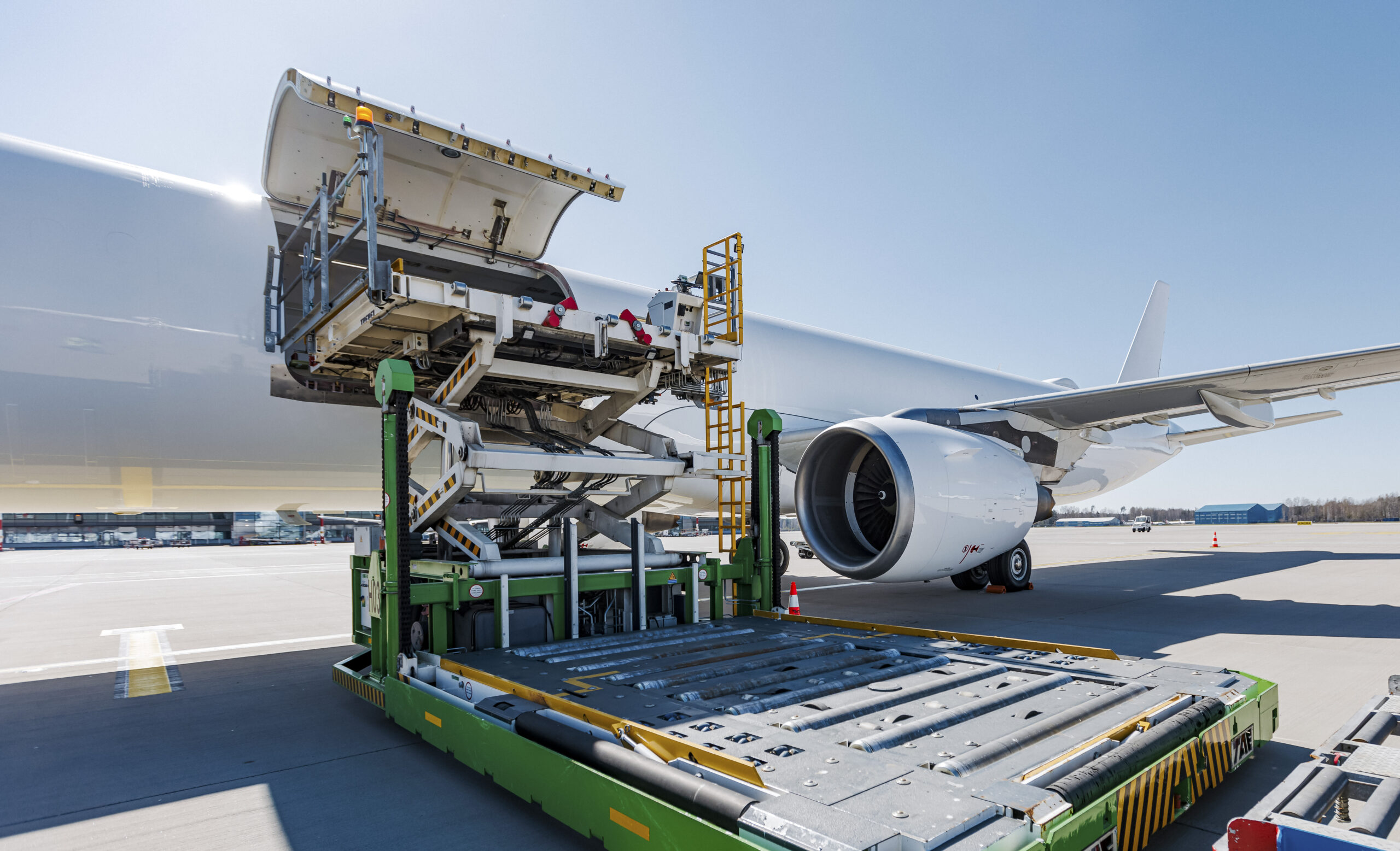
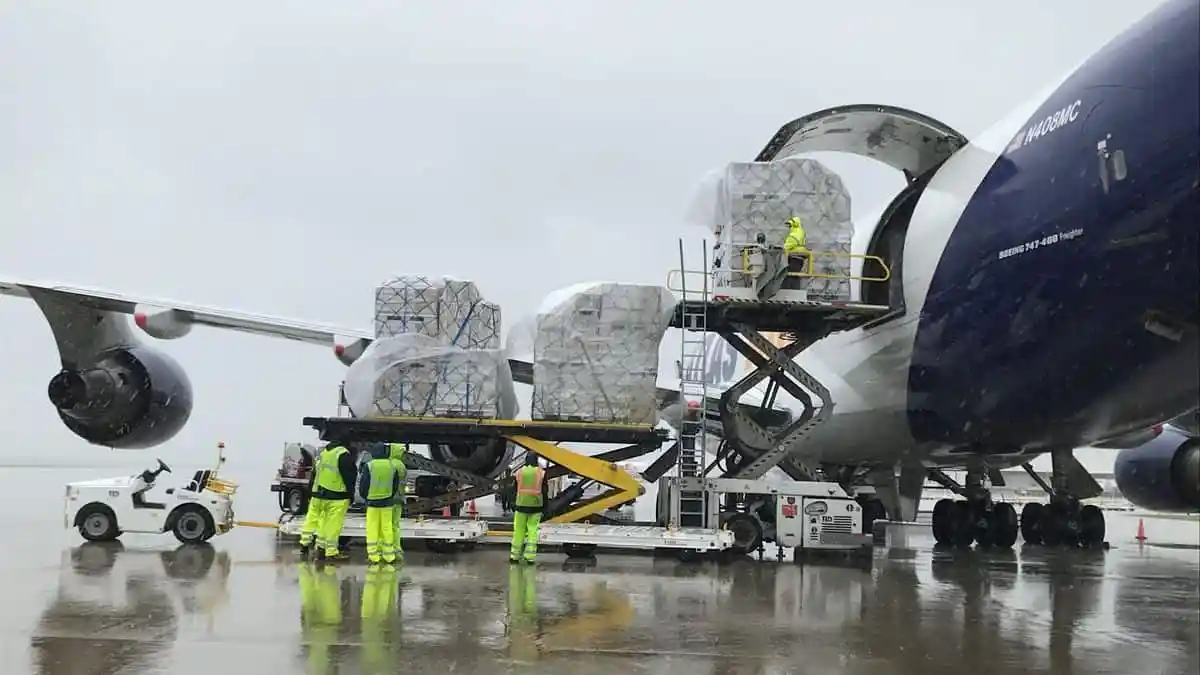
Its importance lies especially in the capacity to handle aircraft. The facility has the capacity to handle five Boeing 747-400 freighters at the same time, each with a maximum revenue payload capacity of 112.5 tons.
UPS and FedEx already fly widebody aircraft into Milwaukee daily, but the expanded facilities are designed to lure more cargo operators and offer a wider range of freight services at the airport.
But no new airline commitments have been officially confirmed so far.
“We are talking to all the major freighter operators,” Jack Rabenn, managing director at Crow Holdings told Cargo Facts. Initial growth could come from charter flights diverted from Chicago-area airports, he said.
Among the operators cited in connection with these discussions were National Airlines, Atlas Air and Challenge Group.
Chicago freight congestion on Milwaukee radar
A major objective of the investment is to seize a greater portion of Wisconsin's freight business, instead of having shipments regularly routed through Chicago O'Hare and Chicago Rockford International Airport (RFD), two primary cargo hubs in the Midwest.
The size of these neighboring airports gives some indication of the competitive environment in which Milwaukee is entering.
According to the Federal Aviation Administration's latest annual cargo airport rankings, published in June 2026, O'Hare ranked fifth nationally for landed cargo weight in 2025, recording 8.5 billion pounds. Rockford occupied twelfth place, with 3.4 billion pounds.
The new Milwaukee facility is not intended to replace either airport or compete directly with their established operations. Instead, both the airport and Crow Holdings describe the project as additional capacity that can help relieve pressure on the wider regional freight network.
Rabenn explained that the objective is to provide an additional option for widebody cargo rather than displace existing Chicago gateways. He also stressed the importance of diversifying supply chains instead of concentrating freight movements through a single port of entry.
Until now, Wisconsin shippers have had limited alternatives within the immediate region, a gap the new center is intended to address.
Chicago delays strengthen the case for an alternative gateway
Congestion at O'Hare is another factor supporting Milwaukee's ambitions.
According to Rabenn, taxiway delays alone at Chicago O'Hare typically average between 40 and 45 minutes. These figures do not include additional waiting times associated with aircraft pushbacks, ground stops and wider airport congestion.
Such operational disruptions can have a much broader impact on freight movements, potentially contributing to shipment delays lasting several weeks.
By offering another entry and departure point for cargo aircraft, Milwaukee hopes to provide shippers with greater flexibility and reduce their exposure to congestion at neighbouring airports.
Specialised cargo capabilities target Wisconsin's industrial economy
Beyond increasing aircraft capacity, the new center is designed to handle a broader range of specialised shipments.
Its capabilities include pharmaceutical products, temperature-controlled and cold-chain freight, livestock and other cargo requiring dedicated handling infrastructure.
These services are particularly relevant to Wisconsin's industrial and manufacturing base. According to the U.S. Bureau of Labor Statistics, the state has one of the highest concentrations of manufacturing employment per capita in the country.
The development is therefore more than a traditional airport extension. It adds more logistics infrastructure for companies whose supply chains rely on dependable freight handling, specialized storage and access to air transportation.
Milwaukee Mitchell International Airport has completed construction and is looking to translate its $80 million investment into new cargo operations, more freight volumes and a stronger position within the Midwest’s logistics network.
END OF REPORT