



OTTAWA – Canada’s parliamentary budget watchdog is raising concerns about how the federal government distinguishes between day-to-day operating spending and capital-related measures under its new fiscal framework.
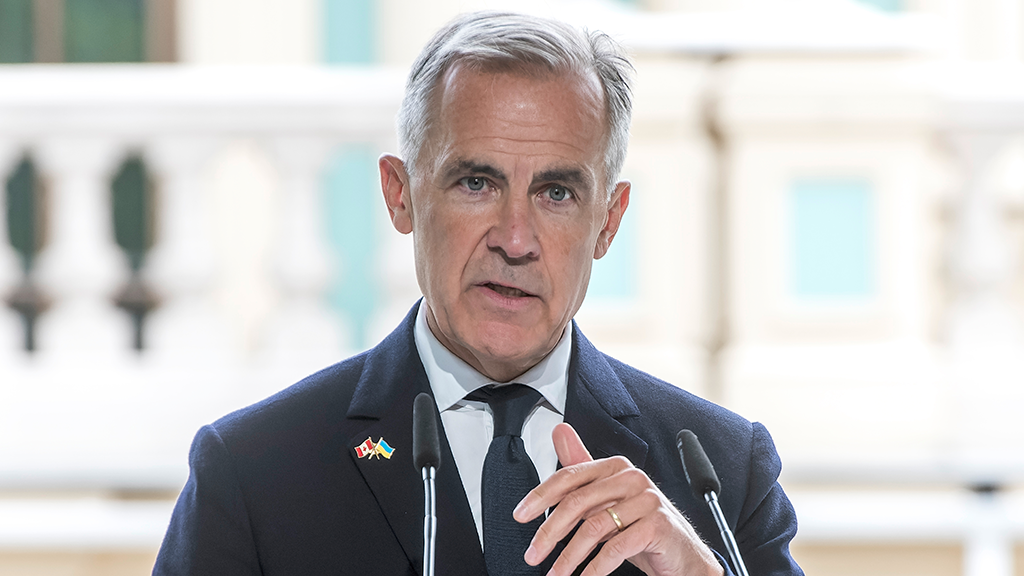
The Liberal government under Prime Minister Mark Carney introduced the framework to separate regular operating expenses from measures intended to support capital investment. One of its key fiscal anchors is to bring operating spending into balance with government revenues.
In a report published Sept. 24, the Office of the Parliamentary Budget Officer (PBO) examined the government’s progress toward that target and the methodology used to classify individual spending measures. The PBO found that the detailed treatment of certain tax and spending initiatives as either operating or capital can appear contradictory and would benefit from a more formal methodology.
The budget office also acknowledged that the framework improves fiscal transparency in some respects. Ottawa has provided additional explanations showing how tax incentives, loan guarantees and other measures that would normally fall outside traditional definitions of capital spending are being counted toward the fiscal anchor.
However, the PBO said the Canadian approach is less stringent than frameworks used in other jurisdictions with similar fiscal rules, including the United Kingdom and Singapore. The British framework, for example, combines a capital definition aligned with international national accounts standards with a separate debt rule.
The report points to Agriculture and Agri-Food Canada as one example of the difficulty created by the classifications.
The department’s Agricultural Clean Technology program is treated as a capital transfer, while the Agricultural Climate Solutions program is classified as day-to-day operating expenditure. Both programs support farm-level investments aimed at reducing greenhouse gas emissions, yet only one is treated as contributing to capital formation under the federal framework.
The PBO said it identified a wider pattern of programs where the distinction between operating and capital spending could reasonably be interpreted in more than one way.
Without a “consistent, published rationale” explaining how individual initiatives are assigned to each category, the office said it is difficult to determine how future spending decisions will be classified.
“Classification-based fiscal rules like the operating budget fiscal anchor do not limit overall government borrowing, and there is a risk that the classification definition can be arbitrary or change over time,” the report states.
The PBO’s analysis also has implications for the federal government’s timeline for balancing its operating budget.
Budget 2025 established a target of balancing operating spending with revenues by fiscal 2028-29. Based on information available through the Spring Economic Update 2026, the PBO projected that the government would fall slightly short of that target and reach balance in 2029-30 instead. The office noted that the projected operating deficit in 2028-29 would be relatively small.
Prime Minister Mark Carney announced on Sept. 15 that the federal government was on track to balance its operating budget in fiscal 2027-28, one year earlier than the commitment made in Budget 2025. The PBO noted that its projection predates spending announcements and revenue changes made over the summer, meaning the government’s upcoming Budget 2026 will provide additional information on what has driven the improvement in the operating balance.
John Fragos, spokesperson for Finance Minister François-Philippe Champagne, said the government remains committed to balancing the operating budget a year ahead of schedule.
“A persistent commitment to fiscal prudence, discipline, and spending efficiency underpinned by the government’s $60 billion in savings has moved up balancing the operating budget agenda by a whole year despite today’s report purporting otherwise,” he said in a statement.
The federal government’s expenditure review and related savings measures were designed to generate a total of $60 billion in savings and revenues over five years, beginning in 2025-26.
Fragos also argued that keeping a tighter focus on operating expenditures represents a “stricter guardrail” for federal finances than measures such as the debt-to-GDP ratio.
Canada’s second fiscal anchor is a declining deficit-to-GDP ratio.
The PBO said the relatively small projected operating deficit in 2028-29 illustrates how the government’s decisions about whether spending is classified as capital or operating can affect its ability to meet its fiscal targets.
The office argues that even a relatively modest reclassification could alter the trajectory of the operating budget without any underlying change in fiscal policy.
“Classifying even a modest amount of spending as capital rather than operating, without any actual change in fiscal policy, may have been relevant to balance the initial operating budget fiscal track,” the report says.
The PBO’s assessment therefore focuses not only on the government’s projected fiscal balance, but also on the methodology used to determine which measures count toward the operating spending target.