



China is preparing to bring the Pinglu Canal into service, with the new waterway expected to significantly strengthen trade links between the country’s southwestern regions and Asean markets.
Ahead of its official opening, China has released dedicated nautical charts covering the canal’s seaward approaches and completed the installation of navigation aids along its coastal section.
Together, these milestones establish a comprehensive maritime safety system combining chart services with channel navigation markers. They also clear the way for the canal’s official inauguration on 16 September.
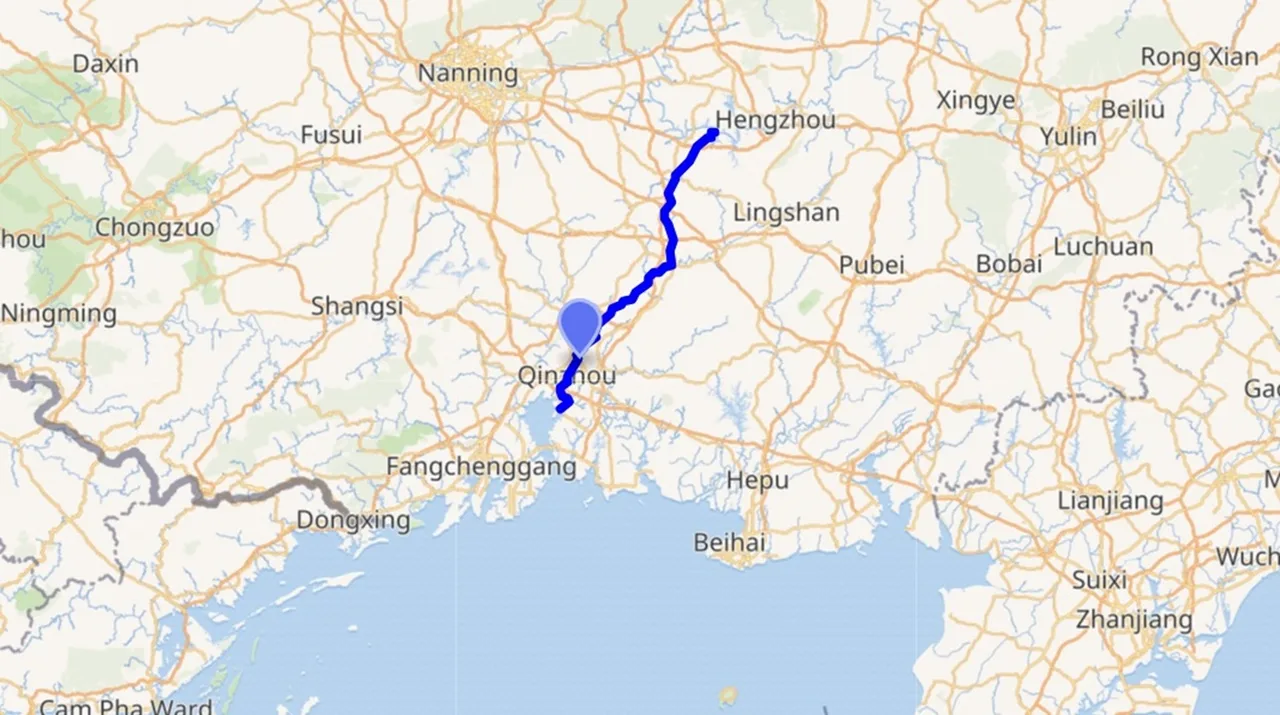
Stretching 134.2 kilometres, the Pinglu Canal is China’s first nationally planned river-to-sea canal since 1949. It forms a key part of the New International Land-Sea Trade Corridor, linking the inland shipping network of the Xijiang River with the Beibu Gulf in Guangxi Zhuang Autonomous Region.
The canal has been designed to accommodate vessels of up to 5,000 metric tons. Once officially commissioned, it is expected to shorten the traditional shipping route between southwest China and Asean markets by 560 kilometres, while cutting regional logistics costs by between 18% and 30%.
The infrastructure is also designed to overcome long-standing geographical constraints that have limited river-sea intermodal connectivity in Guangxi. Its opening could therefore alter the geography of trade and economic cooperation between China and Asean countries.
At the southern end of the canal, Beibu Gulf Port has developed into a major gateway for China-Asean trade. Its container throughput has expanded dramatically, rising from 2.28 million teu in 2017 to 10 million teu in 2025. This growth has been supported by an established shipping network connecting the port with major Asean hub ports.
The canal comes as trade and industrial ties between China and Asean continue to deepen. The two sides have remained each other’s largest trading partners for six consecutive years. At the regional level, Asean has also maintained its position as Guangxi’s top trading partner for 26 consecutive years.
That relationship continued to gain momentum in 2026. During the first half of the year, total trade between China and Asean reached RMB4.34 trillion ($640 billion), representing an 18.2% year-on-year increase.
With its combination of shorter shipping distances, lower logistics costs and improved river-sea connectivity, the Pinglu Canal is positioned to become a major transport link between China’s inland economy and the rapidly expanding Asean market.