Land Nov 12, 2026
Retail returns: ITF links part of the $850 billion bill to freight management failures
According to ITF Group, inadequate carrier selection and poor freight handling can generate hidden costs for retailers, from damaged merchandise and delivery penalties to product returns that surface months later.
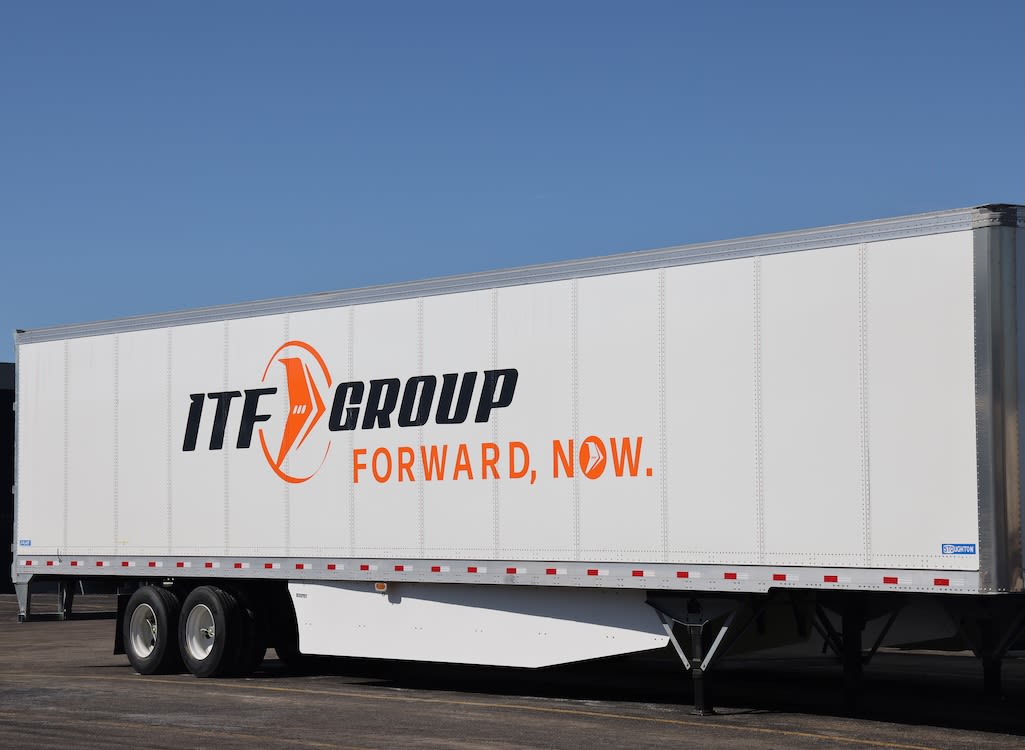
Retail returns are increasingly becoming a major financial and operational challenge for the industry. While retailers traditionally concentrate their efforts on moving merchandise from manufacturers to warehouses, store shelves and consumers, the logistics decisions made along the way can have consequences long after delivery.
According to the National Retail Federation (NRF), consumers were expected to return $849.9 billion worth of merchandise in 2025. The projection, published in the 2025 Retail Returns Landscape report produced with Happy Returns, represents 15.8% of total retail sales. Although substantial, the figure is below the $890 billion recorded in 2024, when returns accounted for 16.9% of retail sales.
For ITF Group, a third-party logistics provider headquartered in Hazelwood, Missouri, part of this financial burden originates much earlier in the supply chain than retailers may realize. In its Retail Reality Check Report, released on September 30, the company argues that carrier selection, transportation execution and freight management deserve greater attention when investigating the causes of merchandise returns.
The issue is particularly relevant as retailers prepare for the holiday peak season, a period when transportation expenses are already under pressure. Contract truckload rates reached a 52-week high of $2.72 per mile, excluding fuel, on October 9, representing an 18% increase compared with the previous year, according to FreightWaves SONAR data.
Against this backdrop, ITF warns that choosing a carrier primarily because of a lower quotation can prove more expensive in the long run. Savings negotiated during procurement may eventually be offset by missed delivery appointments, chargebacks, damaged merchandise and additional reverse-logistics expenses.
“We’ve accepted a false premise in this industry. We talk about returns as if they’re a customer service issue, something e-commerce has to deal with,” said Sam Agyemang, ITF's vice president of business development and sales, in the report. He argues that many returns are actually the consequence of execution problems occurring further upstream in the supply chain.
When transportation handling affects the customer's experience
Agyemang's previous experience working on the retail shipper side has shaped his perspective on the relationship between freight operations and product returns.
In an interview with FreightWaves, he explained that problems identified during the logistics process are not necessarily created at that stage. Transportation and supply chain operations can simply reveal weaknesses that originated earlier in the product's journey.
To illustrate the issue, he described the journey of a popular holiday toy. After leaving the manufacturing facility, the product may be palletized for domestic or international transportation, unpacked and placed on a retail shelf before being packaged again for final delivery to the consumer.
At every stage, merchandise passes through multiple handling operations and different parties. Even relatively minor damage can affect the customer's perception of a product, particularly when an item arrives looking used or showing visible imperfections.
“There are lots of hands that touch these goods along the way,” Agyemang explained, emphasizing the importance of understanding the processes and relationships involved throughout the supply chain.
These conditions can contribute to returns even when the original reason for the purchase remains valid.
Consumer expectations add another layer to the problem. A survey conducted by Kenco among more than 350 North American consumers found that 47% expect returns to be free of charge.
Consequently, retailers frequently absorb the cost of reverse logistics, including transportation back to distribution facilities, product inspection and the operational work required to restore returned merchandise to inventory.
Agyemang points to a disconnect between procurement decisions and their eventual consequences for customer service. A transportation contract that appears financially attractive when negotiated may create additional expenses when mishandled merchandise reaches consumers.
The financial impact remains fragmented across departments
One of the central issues identified in ITF's report is the way retailers organize their internal operations.
Freight expenses, merchandise returns and profit margins are often monitored by different departments, each working with its own performance indicators and financial objectives. This separation makes it difficult to establish a direct connection between transportation decisions and losses recorded elsewhere in the business.
For example, damage occurring during warehouse or transportation handling may only become visible several weeks later, when a customer requests a refund or a returns department records the merchandise.
By that point, the original freight decision may no longer be part of the discussion.
Agyemang believes this organizational fragmentation prevents companies from understanding the full financial consequences of their transportation strategies.
“We’re organized, especially in the West, for very segmented structures and departments. They’re not necessarily always talking about their P&L amongst each other,” he said.
However, the available industry figures do not establish precisely how many retail returns originate from freight-related problems.
The NRF reported that fraudulent returns accounted for 9% of returns in 2025, but its published findings do not specify how many of the remaining returns involved products damaged during transportation. ITF's report also does not quantify the proportion directly attributable to freight handling.
The connection presented by ITF therefore highlights a potential source of avoidable costs rather than establishing that freight is responsible for a defined share of the industry's total returns.
Carrier performance should be more than on-time delivery"
ITF also questions the performance indicators shippers often use to measure transportation providers.
Traditional carrier scorecards are often focused on on-time delivery, but the company says this measure alone provides an incomplete view of transportation performance if merchandise condition and the resulting return rates are not considered.
ITF chief executive Sam Burkhan asks in the report how many shippers measure the success of their transportation by whether deliveries are on time – rather than by how it might impact product returns.
Retailers should reconsider five areas of freight management strategies, the report urges:
If they track the effect of transportation operations on merchandise return rates.
Whether carrier bids are evaluated on the basis of total operational risk rather than just price.
Whether they understand where liability lies throughout the transportation process.
Whether carriers are continuing to be properly checked after the initial onboarding.
If freight relationships and carrier networks are established long before the peak season begins.
The issue of carrier liability has gained added importance following a US Supreme Court ruling in May.
In Montgomery v. Caribe Transport II, the Supreme Court unanimously ruled 9-0 that freight brokers can be sued at the state level for negligent hiring based on the carriers they select. The decision specifically dealt with brokers and did not address whether shippers have the same legal exposure.
For Agyemang, the ruling highlights the need for stronger carrier selection and verification processes across the industry.
He also warns against leaving these checks to the busiest time of the year. It can be particularly difficult to rebuild a transportation network or replace unsuitable providers in a matter of weeks once peak season is under way.
ITF demonstrates operational performance
ITF supports this with its own operational figures as evidence of the importance of carrier oversight and preventative controls.
The company reports handling more than 100,000 loads annually with an on-time performance rate of 98%.
ITF also says fraud-related incidents and exposure fell by around 90% after the implementation of further fraud-prevention measures and turnaround controls.
According to the company, the damage rate of cargo during transportation is approximately 0.004%.
However, the report does concede that not all of the damage is down to ITF’s own handling operations. Factors like poor loading or driver error also play a role in accidents during transit.
These are self-reported company performance indicators, provided by ITF to demonstrate its operating approach.
Holiday returns cost may not be seen until January
The financial consequences of transportation choices frequently emerge well after the most bustling retail seasons have concluded.
Retailers anticipated that about 17% of holiday sales would be returned in the NRF’s 2025 survey, which is largely in line with previous years.
For retailers, decisions made in carrier selection and freight movement organization ahead of the holiday season can continue to impact operating budgets well into the following year.
“Having solid, well-vetted carrier relationships in place ahead of peak season can help minimize the chances of problems cropping up in other departments later on,” says Agyemang.
“If you can have good vetted carrier relationships from the start, I do think you will remove a lot of the risk that you will see that will show up in different departments in January,” he said.
The ITF report poses a broader issue over how companies calculate freight costs as transportation rates rise and retailers face mounting pressure to control operating costs.
The lowest transportation quote is not necessarily the lowest total cost. When delivery failures, cargo damage, chargebacks and reverse logistics are viewed collectively, an ostensibly inexpensive carrier can lead to costs that aren't apparent at the time of original purchase.
So, for retailers preparing for peak season, the challenge is not just to shift goods at the lowest possible rate, but to ensure that transportation choices are protecting product quality, delivery performance and profitability across the supply chain.
END OF REPORT