Land Nov 12, 2026
Maersk Sees Rising Demand for Saudi Landbridge Services Amid Gulf Shipping Disruptions
Operational constraints at Khor Fakkan and disruptions in the Strait of Hormuz are driving greater use of alternative land-based routes to Saudi Arabia and other Gulf markets, with Maersk expecting the trend to continue into November 2026.
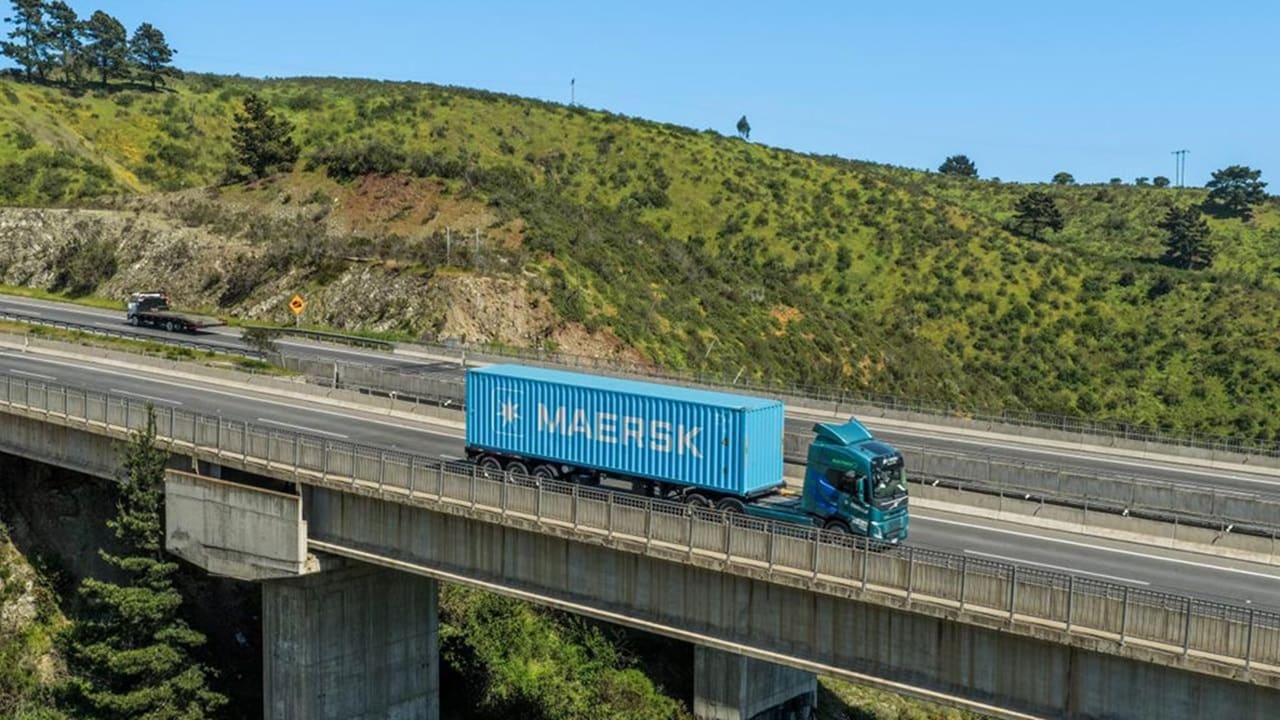
Demand for Maersk’s Saudi Landbridge services is soaring, following an increase in the services’ utilization in October 2026. “This trend will continue up to November as customers look for alternative transport solutions amid growing operational difficulties along key shipping routes in the Gulf.”
Maersk said in a regional update for India, Middle East and Africa on November 9 that disruptions in the Strait of Hormuz and operational constraints at Khor Fakkan port have led customers to consider alternative routes for shipments destined for Saudi Arabia and other Gulf countries.
Landbridge is a generic term for a number of Maersk services where containers are transported by road for part of the way. They provide an alternative to conventional maritime linkages when port operations or shipping routes are disrupted.
Maersk changes regional cargo routes to stay connected
Maersk, in its Operational Update No. 53, released 6 November 2026, confirmed Saudi Arabian import and export cargo continues to flow via Jeddah, on the Red Sea coast.
The agreement also includes shipments to Riyadh and Dammam through the company’s existing Jeddah Landbridge solution that combines maritime transport with inland container movements.
Some shipments originally booked into Khor Fakkan are discharged at Fujairah instead. The containers are then shipped by road under customs bond to Jebel Ali and other places in the United Arab Emirates.
Shipments to Kuwait, Iraq, Qatar, Bahrain and the UAE have a different routing arrangement. These cargo flows are now following a sea-land-sea model, transiting Salalah and Khor Fakkan, before continuing by road to Sharjah. Shipments then connect with maritime services which run between ports in the Gulf.
Under the new arrangement, these shipments are no longer passing through Jeddah.
It is important to point out that these operational services are separate from the Saudi Landbridge rail project. The proposed rail infrastructure will link Jeddah to Riyadh, and extend the network toward Dammam. The planned date of entry into service is 2034.
Alternative ports under strain due to limited capacity
While these alternative routes offer more flexibility, the ports used to diversify cargo flows are themselves experiencing significant capacity limitations.
Maersk's 6 November update at Khor Fakkan showed limited berth availability, very full container yards and growing queues of trucks. The conditions are causing delays in cargo collection and container evacuation.
To reduce pressure on the terminal, some of the containers are being shifted to the Sajja Inland Container Depot (ICD), helping reduce congestion at the port.
Fujairah is also facing operational constraints, with high container-yard density limiting available space. Some full containers scheduled for Jebel Ali are being shifted to the external depot at Al Hayl for storage until onward movement.
These are the sort of developments that highlight the logistical challenges of diverting cargo to other ports when normal sea lanes become less reliable.
Many inland bookings still suspended
As well as the changed routing arrangements Maersk is still not taking bookings for a number of land-based connections across the region.
The impacted movements are:
Cargo from UAE and Qatar through Jeddah and Omani ports.
Shipments in transit from Jeddah to UAE, Oman and Qatar.
Cargo from Salalah and Sohar to UAE, Saudi Arabia, Kuwait, Bahrain & Qatar
The suspensions further limit the options for routing of goods for customers shipping across the Gulf.
Longer transit times and extra costs for the shippers.
The use of alternative routes may lead to longer transit times and additional logistics costs. Additional costs might include inland carriage, handling charges, customs clearance and storage.
So Maersk is advising customers to check on available capacity and confirm customs and border procedures before deciding on alternative routing arrangements.
This is especially true for urgent shipments and large volume cargo movements where restricted terminal capacity, extra handling and border formalities can have a substantial impact on delivery schedules.
As demand for Saudi Landbridge services increases and pressure mounts on operations at key ports in the region, the availability of reliable alternative transport corridors is becoming increasingly important to ensure the flow of cargo across Saudi Arabia and the wider Gulf region.
END OF REPORT