Maritime Nov 18, 2026
Maersk and Hapag-Lloyd prepare full return to Suez route on Asia-Europe services
Three Gemini Cooperation services will progressively resume transits through the Suez Canal and Red Sea between December 2026 and January 2027, with potential implications for global vessel capacity and freight costs.
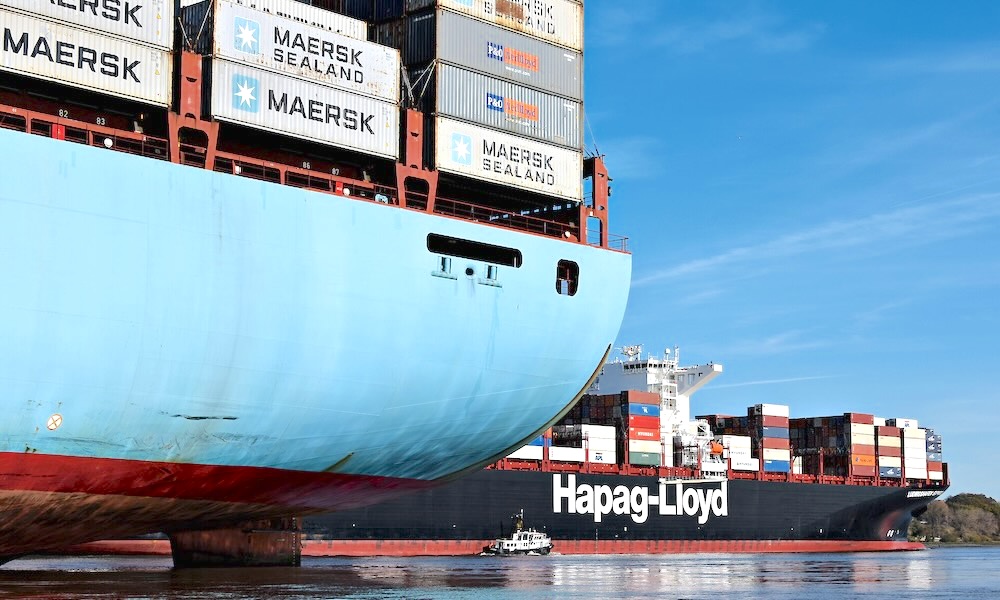
Maersk and Hapag-Lloyd will re-open three more Asia-Europe shipping services operated under their Gemini Cooperation, to transit the Suez Canal. The AE1, AE2 and AE3 services will gradually abandon the longer route around the Cape of Good Hope and choose the Red Sea corridor, making another big move towards the return of the traditional shipping routes between Asia and Europe.
The switch will begin in December 2026 and run into January 2027. The immediate impact is on Asia-to-Europe trade, but the subsequent changes to vessel deployment could have implications for shipping capacity on other global routes, including those serving the United States.
The three services will restart transits through the Suez Canal and will no longer go around Africa via the Cape of Good Hope, Maersk confirmed in a customer advisory.
The decision follows a gradual reevaluation of maritime operations since late 2023 following security disruptions affecting the Red Sea. Maersk, Hapag-Lloyd and a number of other major container shipping companies had diverted their vessels at the time after Houthi rebels in Yemen attacked commercial shipping in support of Gaza.
Carriers have been reconsidering their routeing strategies as the frequency of Houthi attacks has dropped. However, longer voyages around Africa have continued to boost operating costs, lengthen transit times and make it more difficult to schedule ships.
Phased return beginning in December
None of the three Gemini services will be back transiting Suez all at the same time. They will transition on a set schedule based on the first departure from their respective load ports.
The process will be led by the AE2 service. The Mary Maersk will make her maiden voyage on the updated route, voyage 650W, departing Ningbo December 4, 2026.
AE3 service will continue on December 20 with Alette Maersk, voyage 652W, which will start its rotation in Shanghai.
And finally, the AE1 service will complete the transition. Its first listed sailing is Damietta Express, voyage 702W, sailing out of Shanghai January 14, 2027.
The dates are departures from first loading ports and should not be considered as the vessels' expected dates of transit through the Suez Canal.
Under the new service rotations vessels will transit the Suez Canal in both directions. “Maersk will implement these changes to improve the transit time, but only to the extent the situation in the Red Sea remains stable,” the company said, adding it will continue to closely monitor the security situation in the region.
The announcement also marks an important milestone for the wider Gemini Cooperation network. Hapag will be able to return the AE1, AE2 and AE3 services to operation. Lloyd was the first shipping alliance to revert all its Asia-Europe services to the Suez route, following earlier adjustments to other Gemini services.
Potential impact on U.S. shipping capacity
The operational changes are largely about trade on Asia-Europe routes, but their effects could ripple beyond these corridors.
Carriers could be able to release vessels that had to be kept on longer routes around Africa by shortening voyage distances. This could give more flexibility to fleet deployment and allow shipping lines to re-deploy capacity across their international networks.
The shorter routes could provide opportunities to rebalance vessel availability, said Maersk. This is something US importers, retailers and manufacturers should be watching, as changes in global fleet deployment can affect the availability of shipping capacity on other trade lanes.
But the return to the Suez Canal should not be read as an immediate prospect of lower ocean freight rates.
DHL Global Forwarding has also flagged the potential for further capacity to emerge as carriers abandon longer African diversions. But the company said port congestion and major network adjustments could continue to pressure supply chains through 2027.
Recent violent incidents affecting maritime transport in several strategic areas, including the Black Sea, the Strait of Hormuz and the Somali coast, further contribute to uncertainty surrounding international shipping operations. These risks may continue to support high freight rates, even as shorter routes are gradually brought back on stream.
Recovery could be hampered by congestion and regional security
Returning to Suez routeing does not automatically mean immediate improvement in vessel availability or schedule reliability.
DHL Global Forwarding said it could take another six to 12 months to see the wider reorganisation of shipping networks as carriers reposition vessels and adjust their service rotations. This estimate is based on the assumption that security conditions will remain stable enough to prevent further operational disruptions.
Another major bottleneck is congestion at ports. DHL estimates that delays in ports around the world are still affecting more than 10% of the global container fleet.
This creates a disconnect between the potential release of vessel capacity and the actual improvement that cargo owners experience. Although the distances sailed are shorter, congestion and imbalances in the network can still affect the availability of equipment and vessels and delivery schedules.
Also the security situation is a determining factor . In its announcement, Maersk also explicitly reserved the right to make further changes to the planned rotations should the situation in the Red Sea deteriorate.
What a Suez re-run means for global trade
The move by Maersk and Hapag-Lloyd is a development with potential big implications for the broader container shipping market for U.S. importers, retailers and manufacturers.
The revival of three major Asia-Europe services could gradually relieve pressure on global vessel supply by reducing the amount of capacity used on longer voyages around Africa. It could also provide carriers more flexibility in how they allocate their fleet between international trade corridors.
But how much of those benefits will flow through U.S. shipping routes is less clear. The outcome will be driven by port congestion, regional demand, network restructuring and persistent maritime security risks.
The transition is thus a step towards the normalisation of Asia-Europe shipping operations, but a full recovery in global capacity and schedule reliability is expected to take considerably longer.
END OF REPORT