




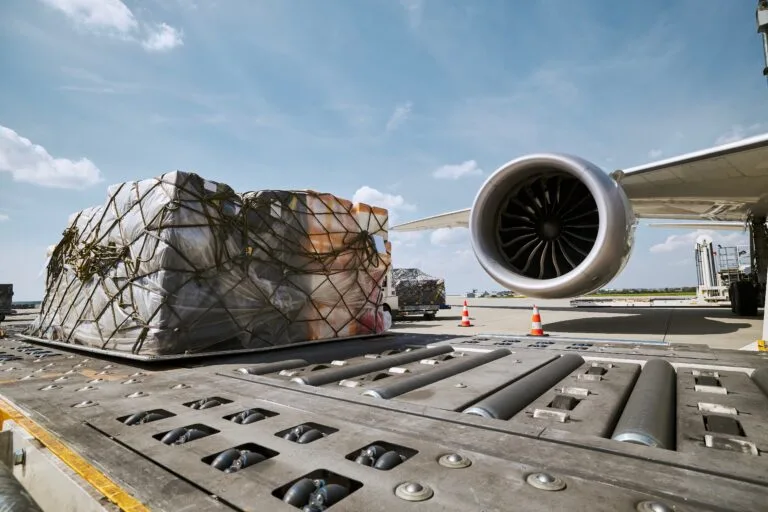
Aircraft engines are among the most valuable and technically sophisticated assets in any airline or MRO inventory. Their importance is obvious at the point of purchase, but the real financial burden extends far beyond acquisition. Over the course of an engine’s life, routine maintenance, material replacement, transport, storage, handling and operational disruption can generate costs that are both significant and difficult to control without careful planning.
Modern turbofan engines illustrate this clearly. Built with advanced materials, precision machining and integrated digital systems, they are designed to improve performance, fuel efficiency and emissions. But those same advances also make them more expensive to acquire, maintain and operate.
New engines for regional aircraft such as the PW1500 typically cost between $10 million and $15 million each. Narrow-body engines, including the PW1100 and LEAP-1A/1B, fall in a similar range. For wide-body aircraft, costs rise substantially: engines such as the Trent 700, PW4000-94 and GEnx-1B can exceed $40 million per unit.
Leasing is often used instead of outright purchase, but that also comes at a price. Narrow-body engines are typically leased for $60,000 to $150,000 per month, while wide-body models can command $160,000 or more, depending on engine type, utilization, demand and contract structure.
The engine’s financial significance only grows over time. On a new aircraft, it represents around 25% of total asset value. As the aircraft ages, that share can rise to 90% or more, making disciplined maintenance planning, reliable support and careful handling essential to preserving both value and operational continuity.
Maintenance itself is one of the largest recurring cost categories for airlines, accounting for roughly 10% to 15% of total operating costs. Engine maintenance represents the biggest slice of that spend, often making up 35% to 40% of all maintenance expenditure.
Within a typical engine shop visit, material replacement is the dominant cost driver, representing around 60% to 70% of the total bill. If life-limited parts need to be replaced, the expense increases sharply. A full LLP stack for a wide-body engine can cost between $8 million and $12 million. Labor generally accounts for 20% to 30% of a shop visit, while repairs and associated activities make up another 10% to 20%.
As a result, a performance restoration shop visit for a narrow-body engine usually costs between $500,000 and $1.5 million. For a wide-body engine, that range climbs to $3 million to $5 million, excluding LLP replacement.
Handling costs are another critical piece of the equation and are often underestimated. Every time an engine is removed, installed, transported or stored, new cost and risk are introduced. Removal and installation can range from $8,000 to $30,000 per event depending on aircraft type. Airfreight for a large commercial turbofan such as the Trent 700 or GEnx-1B may cost between $10,000 and $50,000, depending on the route and urgency.
On top of that come specialized cargo handling fees, customs documentation, permits and ground handling charges, which can add another $3,000 to $8,000. High-value cargo insurance typically amounts to 0.2% to 0.5% of the engine’s declared value — or around $20,000 to $50,000 for a $10 million asset. Climate-controlled storage averages about $540 per day per engine, though some facilities charge more.
One key element in reducing handling risk is the engine stand. These structures protect the engine’s alignment and structural integrity during transport, storage and maintenance. Leasing an engine stand can cost between $100 and $1,100 per day, while purchasing an OEM-certified stand typically requires $45,000 to $120,000 in capital expenditure.
EngineStands.com positions itself as a solution provider in this area, offering OEM-certified stand leasing for a wide range of engine types, from wide-body platforms such as the Trent 700, GEnx-1B and PW4000-94 to narrow-body models including the CFM56 family, PW1100, PW1500, V2500 and LEAP variants. The company also highlights integrated support for secure storage, shipping, customs clearance and insurance, aimed at turning a complex process into a more controlled workflow.
Yet the largest costs are often indirect. Aircraft-on-ground events caused by engine mishandling can cost between $10,000 and $30,000 per hour, and prolonged groundings may exceed $180,000 per hour. Lost aircraft revenue alone can reach $240,000 per day depending on aircraft type and route profile.
Passenger compensation under EU261 and similar regimes can add between $15,000 and more than $100,000 per incident, while rebooking passengers and adjusting crew schedules can cost another $6,000 to $35,000. Regulatory fines for non-compliance may range from $20,000 to $120,000 or more, and wider network disruption can push total daily losses beyond $300,000.
Recent examples illustrate the scale of the problem. airBaltic cancelled 4,670 flights due to Pratt & Whitney engine maintenance delays, affecting an estimated 67,160 passengers. Wizz Air, meanwhile, reported a 61.7% drop in operating profit because of grounded aircraft linked to engine-related issues.
Beyond those direct losses, repeated technical disruption can also damage an airline’s brand, reduce customer confidence and influence future booking behavior.
The conclusion is clear: the true cost of engine maintenance cannot be understood only through shop visits or acquisition values. It stretches across the entire lifecycle, from direct repair costs to handling risk and operational disruption. For airlines and MRO providers alike, controlling that cost requires both technical discipline and reliable support infrastructure.