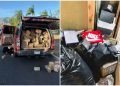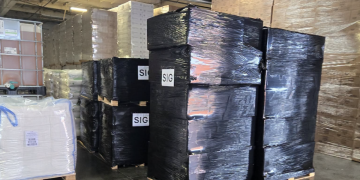




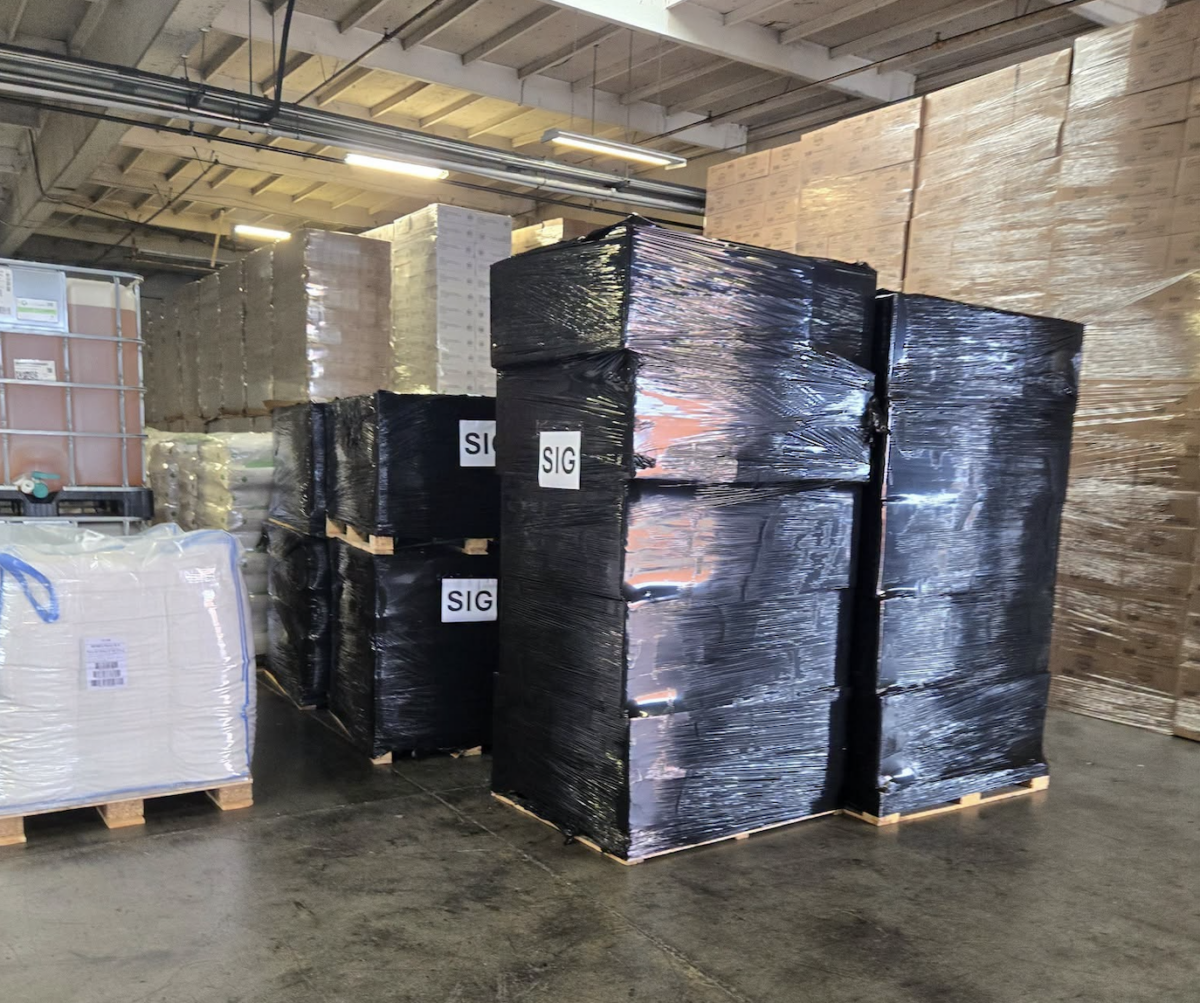
Criminals allegedly obtained SIG Sauer firearm parts and accessories worth approximately $500,000 via a fake warehouse pickup, and the shipment has been recovered in Southern California. Authorities say two men were arrested in connection with the incident and all of the stolen merchandise has been returned to its owner.
The Los Angeles County Sheriff’s Department (LASD) announced the arrests and recovery on October 27, 2026, following an investigation that began after authorities received information about the theft on October 12. The incident happened at a warehouse in Torrance, California, near the 4200 block of West 190th Street.
The investigation was led by detectives from the department’s Cargo Criminal Apprehension Team, or CCATS, a specialised unit within the Major Crimes Bureau. The shipment contained firearm parts and accessories made by SIG Sauer, a major supplier to the civilian, law enforcement and military markets.
The two suspects, Arman Mnatsakanyan, 26, and Ashot Yesayan, 23, are from Glendale, California. Both were arrested on Oct. 12 and booked that afternoon on suspicion of grand theft cargo, booking records from the Los Angeles County Sheriff’s Department show.
The case will be sent to the office of the district attorney of Los Angeles County for possible filing of criminal charges. Suspects are presumed innocent until proven guilty in a court of law.
Southern California continues to be a major cargo theft hotspot
The theft happened in an area that has continued to see a lot of cargo crime. An Overhaul report looking at cargo theft trends across Southern California found that the surrounding 200-mile area accounted for 37% of the nation’s reported cargo theft incidents. Almost 70% of the region’s thefts occurred within 50 miles of Torrance, and deceptive pickups accounted for 28% of reported regional incidents.
These figures reveal how susceptible logistics operations are to schemes where criminals pose as authorised collection parties or otherwise trick warehouse staff into releasing freight.
The incident also underscores the need for specialised law enforcement teams to probe organised cargo theft and recover valuable shipments before the stolen goods vanish into black market supply chains.
Detectives recover the entire shipment
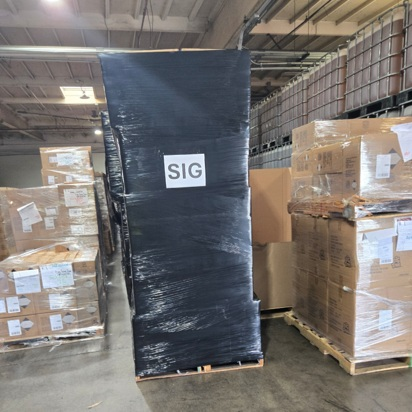
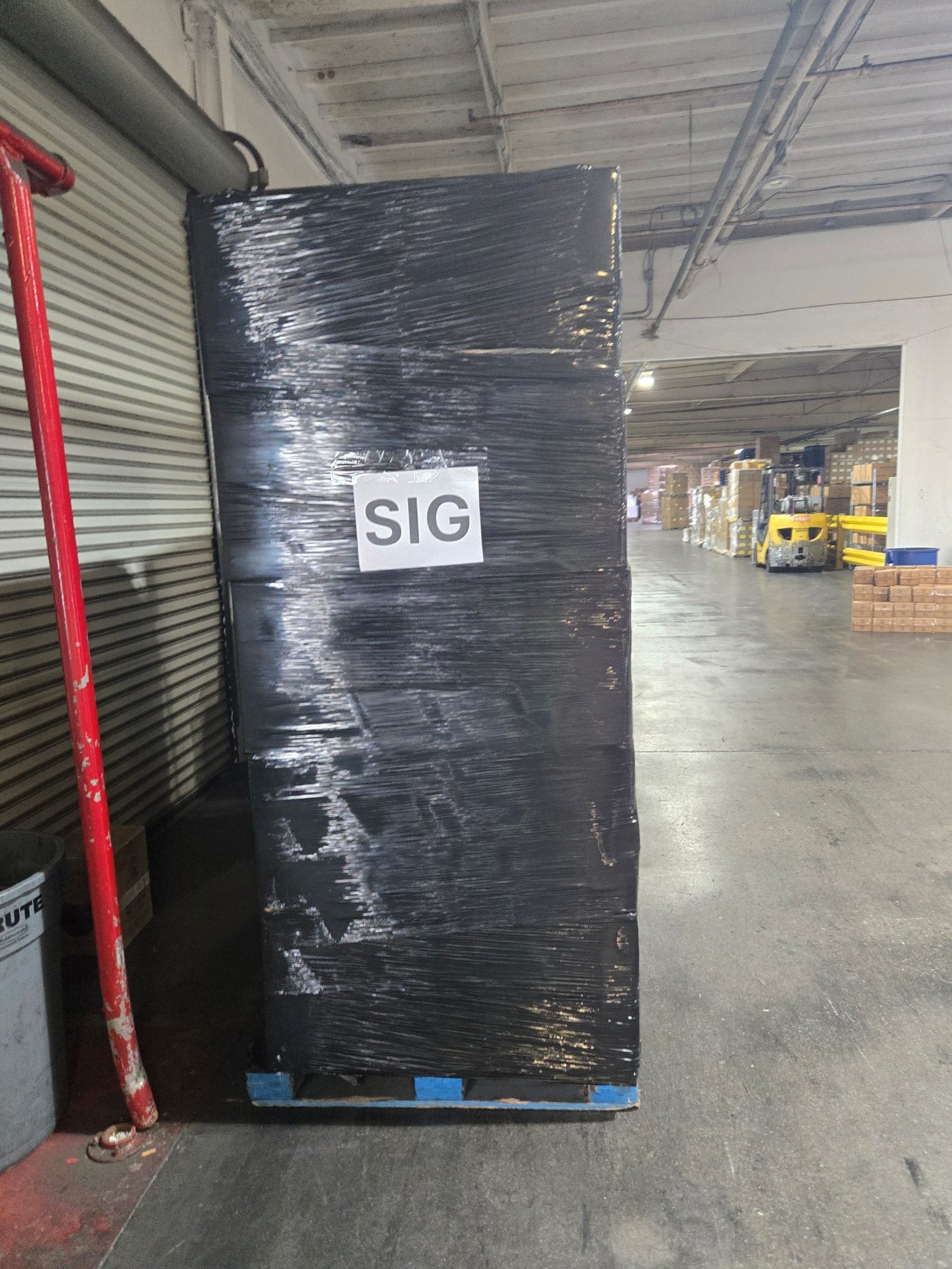
“Hundreds of thousands of dollars of stolen gun parts were taken off the streets,” said Los Angeles County Sheriff’s Department Detective Division Chief Jose G. Mendoza in a statement, stressing the importance of the recovery.
The department’s Cargo Criminal Apprehension Team, which collaborates with other specialised units to combat organised theft, played a role in the operation. In September 2023, LASD merged its cargo investigators and the Burglary and Robbery Task Force to create its Organised Retail Crimes Task Force.
These teams work with local law enforcement agencies, regional task forces and federal partners to investigate theft networks and pursue suspects who operate across jurisdictional lines.
The entire shipment has been recovered, but authorities have not said how investigators located the items or identified the people who arranged for their pickup.
It is not yet clear how the fraudulent collection was conducted.
A number of important details about the theft have yet to be disclosed. LASD has not said how the fake pickup was arranged, which transportation company was involved or where the stolen goods were eventually recovered.
The department’s announcement also did not include details on shipping documents, vehicles, equipment or how investigators followed the shipment.
FreightWaves has reached out to the Los Angeles County Sheriff’s Department and SIG Sauer for additional information. Neither had responded by time of publication.
The Torrance case is just one example of fraudulent collections activity impacting the freight industry in California.
In another case, Montclair police are investigating the theft of beer shipments worth about $70,000 from a distribution centre owned by Anheuser-Busch. Investigators looked at bogus pickup paperwork and discrepancies concerning the trucking company, driver, and vehicles involved in the collections.
A separate investigation in Southern California has uncovered a larger cargo theft ring. A Los Angeles jury convicted two defendants in a nationwide scheme involving about $2 million in stolen freight. In the case reported, the scheme used purchased trucking companies to obtain legitimate shipments prior to cargo theft. Prosecutors tied the defendants to thefts in a number of states.
Taken together, these cases illustrate how cargo thieves can exploit weaknesses in transportation arrangements, documentation, and the verification of parties authorised to take possession of commercial goods.
Improving warehouse gate controls
The return of the SIG Sauer shipment points to a key link in the supply chain: the transfer of possession from a warehouse to the company picking up the cargo.
Fictitious pickups can leave shippers, warehouse operators and logistics providers exposed to significant losses when goods are dispatched without proper confirmation of the carrier, driver and collection authorisation.
Some effective safeguards include independently verifying the carrier’s credentials, checking the driver’s identification, validating the pickup references and verifying that the assigned vehicle and transportation provider match the shipment’s authorised collection details.
The Torrance investigation demonstrates the financial results that can occur when these controls are bypassed. Law enforcement recovered the full shipment, but the circumstances of the pickup were not disclosed.
Verification remains a critical defence line
Cargo theft schemes often take advantage of the short time between when a shipment is ready to be picked up and when it actually leaves a facility. Once delivered to an unauthorised party, tracking and reclaiming freight becomes much more difficult.
Certified Fraud Compliance Officer (CFCO) This certification is for professionals who want to improve their approach to preventing and verifying fraud. It relies on independent checks of carriers, drivers and pickup authorisations before a shipment changes hands.
“As a bottom line for logistics operators moving high-value freight: collection credentials must be verified, not assumed to be bona fide.” Stricter controls at the point of origin can help reduce exposure to fraudulent pickups and help preserve the sanctity of the supply chain.