




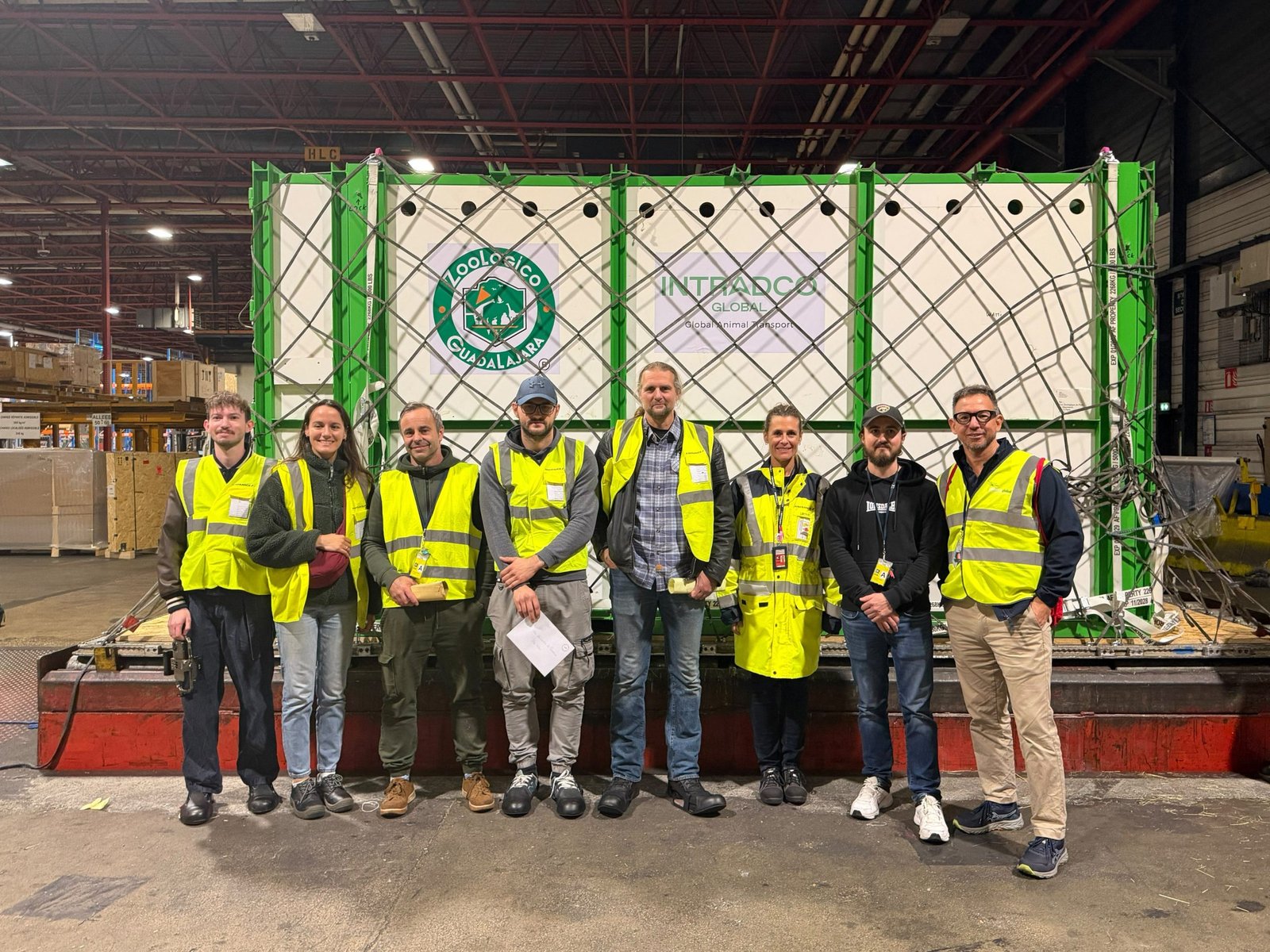
KLM has transported four white rhinos from France to Mexico as part of an international conservation program. The animals arrived in Guadalajara on October 21 after leaving Paris-Charles de Gaulle on the nite of October 20 on a dedicated cargo aircraft.
The transfer involves four animals from European zoological facilities: Wami, from Parc zoologique de Paris, Lewa, from Safari de Peaugres and Salma and Moana, from Serengeti-Park Hodenhagen. They will form a new breeding group in Mexico to increase genetic diversity and to help preserve the species in the long term.
Conservation and genetic diversity support
The operation is taking place against a backdrop of ongoing threats to white rhinos in Africa, where around 16,000 remain. The species remains under threat from poaching, highlighting the need for coordinated conservation efforts.
Zoos are part of this effort, maintaining genetically diverse populations and supporting structured breeding programs. The move to Mexico also solves a practical problem for facilities in Europe, where there’s a burgeoning white rhino population in a continent with little space to hold more animals.
One year in the making for one nite off the ground.
The flight itself lasted just one nite, but it took about a year of planning and training to prepare the animals for the trip. The rhinos were flown out by KLM in four specially built containers, each empty weighing about two tons. There are some logistical requirements in moving animals of this size – Wami alone weighs 2.4 tons.
“The preparation included veterinary care and animal welfare. Wami did daily medical training so that veterinary teams can do health checks without anesthesia. Quentin Richard was his goalkeeper all the way.
Special air cargo and international coordination
The transfer was conducted in close cooperation with teams from the zoos in France, Germany and Mexico, and animal transport specialist Intradco. Their joint work consisted in the coordination of the shipment and measures needed for the protection of the animals during the operation.
The mission highlights the ways specialist air cargo capabilities can benefit conservation projects that require meticulous planning, bespoke transport equipment and international cooperation. The four rhinos being moved between continents are not the only aspect of the operation, which is part of a larger effort to help support viable breeding populations and the future of the species.