Land Nov 27, 2026
U.S. rail freight advances 4.7% as intermodal traffic drives weekly growth
Grain and coal shipments fell sharply, but there were strong intermodal volumes and gains in several industrial sectors that helped boost overall rail freight volumes.
U.S. rail freight traffic increased 4.7% in the week ended Nov. 21, 2026, from a year earlier, the Association of American Railroads (AAR) said. The latest numbers indicate intermodal transportation is still going strong and was once again the main growth driver, offsetting weaker performance in some commodity groups.
Intermodal traffic, including containers and trailers, was up 8.3% compared to the same week in 2025. Meanwhile, a more modest 0.5% gain in traditional carload freight traffic pointed to diverging trends in different categories of rail shipments.
Of the 10 commodity groups tracked by the AAR, six posted positive results. The biggest gains were in metallic ores and metals used to make steel, which rose 17.9 percent. Forest products were up 11 percent despite ongoing problems in the real estate market. Petroleum and petroleum products increased 11.2 per cent.
Motor vehicles and parts rose 8.3 percent, with year-end sales promotions boosting shipments despite higher interest rates. Shipments of farm products except shipments of grain and food products, rose 6.2 percent. Shipments of chemicals rose a more modest 2.1 percent.
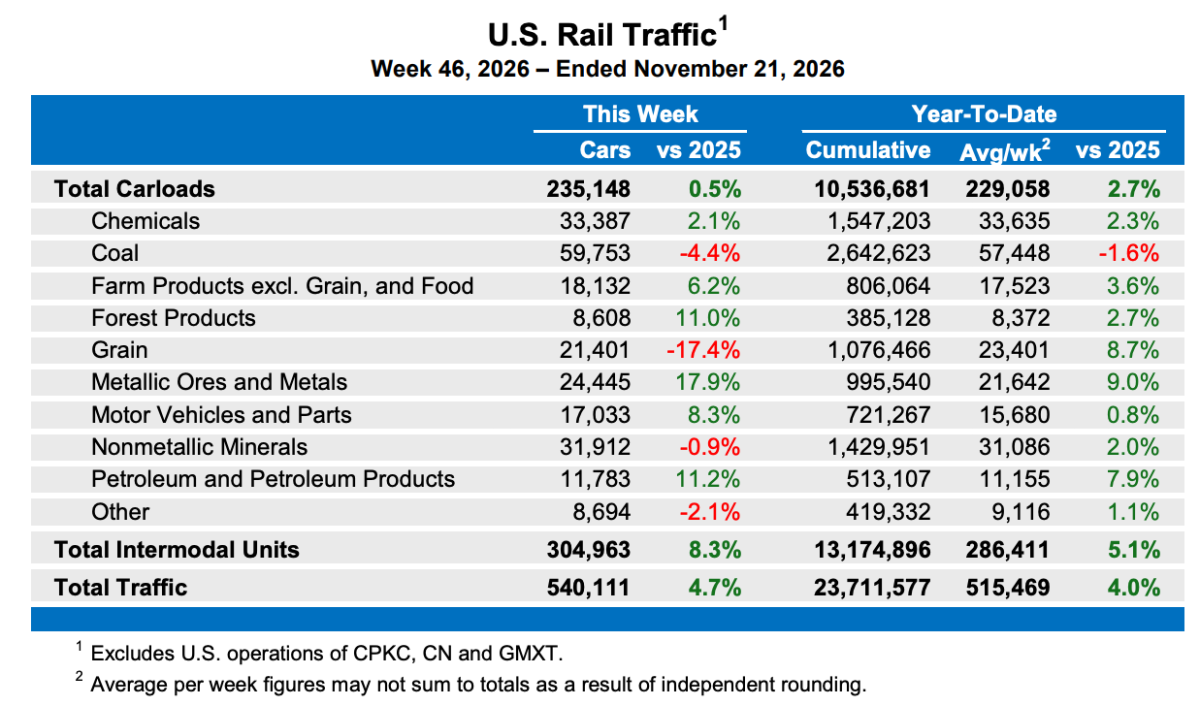
The other four groups of commodities fell. Grain shipments were off 17.4%, the largest year-over-year drop. Coal traffic was down 4.4 percent and unspecified carloads were down 2.1 percent. Nonmetallic minerals, such as sand and stone, declined more modestly, down 0.9%.
Year-to-date numbers still positive
Differences across commodity groups aside, U.S. rail freight performance remains on a positive longer-term path. Overall rail traffic was up 4% in the first 46 weeks of 2026 compared to the same period of 2025.
Carloads on conventional routes rose 2.7%. Intermodal units grew more strongly, up 5.1%. Among individual commodities, metallic ores and metals were the star performers, up 9% year to date. Grains came next, at 8.7%, while petroleum products jumped 7.9%.
Among the large commodity groups only coal recorded a year-to-date decline, down 1.6%.
North American rail traffic follows the same trend
The latest figures also showed continued growth across the wider North American rail network, although volumes of conventional freight were somewhat weaker.
For the week, carload traffic on the nine U.S., Canadian and Mexican railroads reporting to the Association fell 0.3%. However, intermodal shipments rose 8.4%, bringing combined North American rail traffic up 4.2% year-over-year.
Rail freight volumes in the three countries combined were 3.5% higher in the first 46 weeks of 2026 than in the same period in 2025.
What the numbers mean for logistics industry
The latest rail freight numbers suggest a mixed, but overall positive, transportation picture. “The continued growth in intermodal traffic is a sign of underlying strength in demand for consumer goods and continued activity in the retail supply chain, particularly as businesses prepare for the holiday shipping season.
"Also, gains in metal ores, motor vehicle shipments and petroleum products are indicative of fairly steady activity in a range of industrial sectors. But steep drops in grain volumes and continued weakness in coal loadings point to weaker demand or less activity in parts of the agriculture and energy sectors.
Numbers show a greater dependence on intermodal services to help boost the overall freight performance of rail operators, especially as traditional commodity shipments experience weaker market conditions.
END OF REPORT