



The Forward Seamen’s Union of India (FSUI) has urged Indian Prime Minister Narendra Modi to provide immediate support and protection for Indian seafarers following the death of wiper Shir Suraj Yadav in an attack on the bulk carrier Cape Dao.
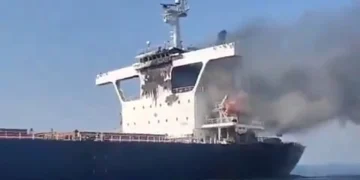
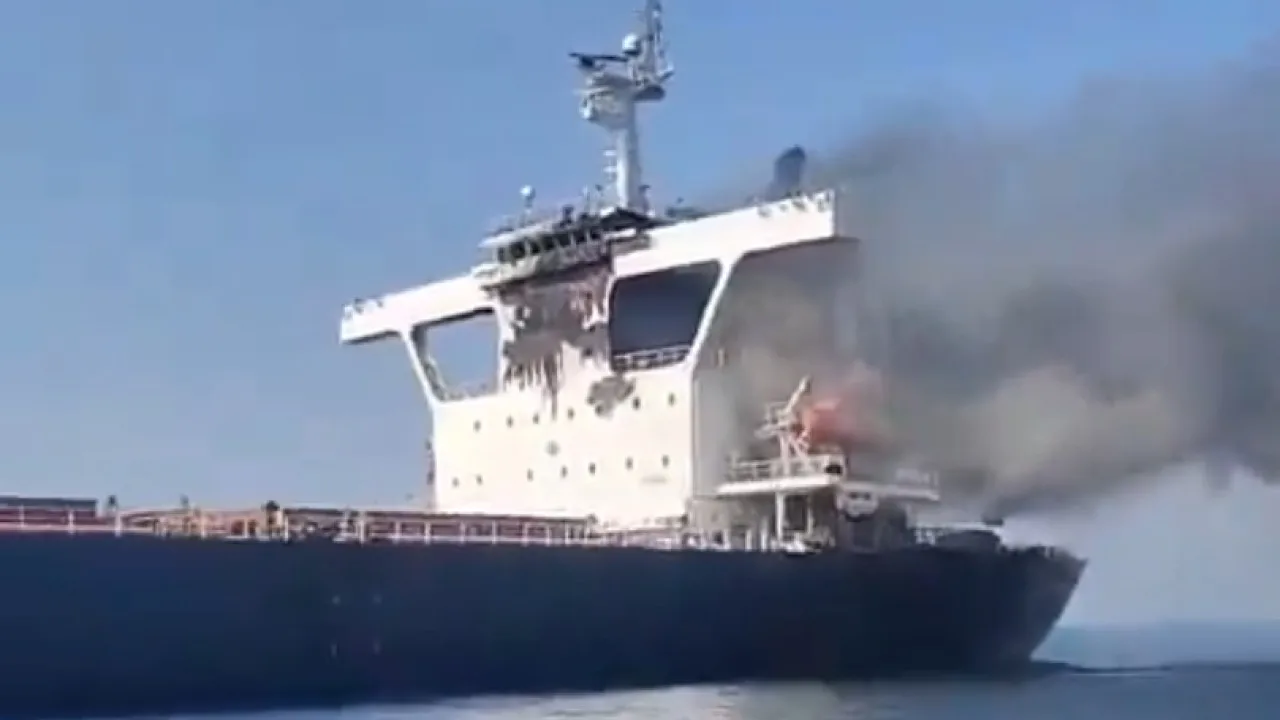
The vessel came under attack off the coast of Oman on 23 September, reportedly after being hit by torpedoes. Two impacts struck the engine room and the port-side accommodation area. Oman’s navy evacuated the surviving members of the 28-person crew, 20 of whom were Indian nationals.
In a letter dated 23 September, the FSUI told Modi that the incident should not be viewed as an isolated tragedy. The union said innocent seafarers continue to be killed, injured or reported missing in conflict zones, including the Strait of Hormuz, Gulf of Oman, Red Sea and Black Sea.
“This young civilian rating was not a combatant. He was killed on a merchant ship sailing to India. That death is not justified… Geopolitical and diplomatic approaches have not been taken on board by those prosecuting these conflicts. Assurances have not stopped the killing,” the union said.
The FSUI has once again called for the creation of a 24/7 national crisis management team operating under the Prime Minister’s Office. The proposed team would support all vessels carrying Indian seafarers, regardless of whether the ships are Indian- or foreign-flagged. The union described such a mechanism as “the need of the hour”.
It also called for a stronger naval presence, vessel escorts and rapid-response capabilities for Indian crews operating in the Strait of Hormuz, Gulf of Oman, Red Sea and Black Sea. In addition, the union is seeking safe-passage protocols for ships using the Oman corridor.
Reports from India have stated that Yadav is the 11th Indian seafarer killed in the region during the Hormuz crisis. If confirmed, that number would represent almost half of the 23 seafarer deaths included on the IMO’s list of confirmed Middle East incidents as of 23 September. At least nine Indian seafarers among those killed reportedly died in Omani waters.
Indian nationals account for a disproportionately large share of the casualties compared with their presence in the global maritime workforce. The ICS Seafarer Workforce Report 2026 identifies India as the world’s second-largest supplier of seafarers, with 140,718 officers and 171,218 ratings, representing around 12% of the global seafaring workforce.
The attack on the Antigua and Barbuda-flagged Cape Dao was the third incident reported in the Strait of Hormuz within five days, as Iran targets vessels transiting the waterway without Iranian approval.
The increase in Iranian attacks on merchant shipping comes amid widespread reports that Saudi Arabia has sold nearly 100 million barrels of oil to Asian buyers over the past week. TankerTrackers.com has reported that crude loadings on Saudi Arabia’s east coast rose sevenfold month-on-month, contributing to an increase in oil flows out of the Strait of Hormuz. Those flows had already accelerated following the attack on the Saudi East-West pipeline earlier this month.
Monitoring maritime traffic has also become more labour-intensive as a growing number of vessels are switching off their AIS transponders for security reasons.
On 24 September, security company Vanguard Tech reported that a vessel operating near Saudi Arabia’s west coast port of Yanbu had reported a missile attack or interception in the area.
Saudi Civil Defence subsequently issued warnings through the country’s national early warning system covering Yanbu, Jeddah, Tabuk, Mecca and Taif. Saudi-led coalition forces said they had intercepted six ballistic missiles heading towards Taif and the port of Yanbu.
“No confirmed impact against Saudi ports, merchant vessels or other maritime infrastructure has been reported at the time of writing,” Vanguard said.