



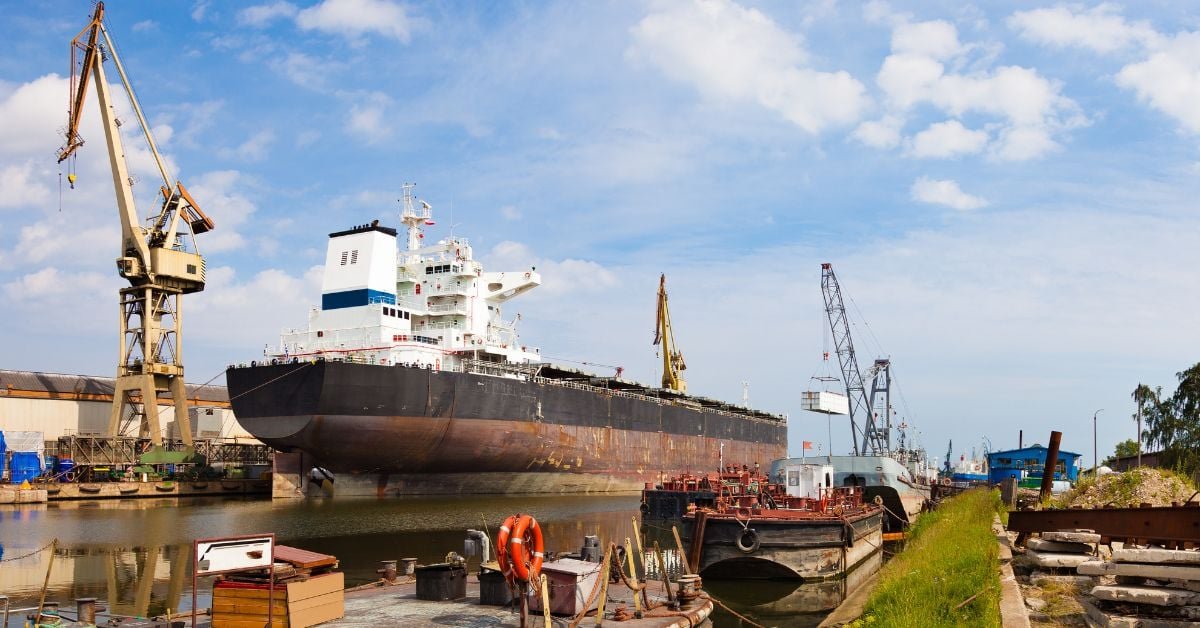
The United States and Denmark have formalized a maritime cooperation agreement designed to strengthen American shipbuilding capabilities by combining Danish expertise, private investment and advanced technology. The initiative seeks to expand the U.S. shipbuilding workforce, modernize shipyards and speed up vessel construction, maintenance and repair operations.
The memorandum of understanding was signed on October 22 by Jacob Helberg, U.S. Under Secretary of State for Economic Affairs, and Lars Lokke Rasmussen, Denmark’s Foreign Minister. It establishes a framework for leveraging Denmark’s maritime expertise to increase American shipbuilding capacity while opening new commercial opportunities for Danish suppliers.
Denmark is home to Maersk (OTC: AMKBY), the world’s second-ranked ocean container shipping line.
The deal is underpinned by investment, skills and technology
The partnership is focused on several areas including workforce development, maritime equipment, technological solutions and specialized services for shipbuilding, repairs and retrofits of vessels. It also allows for exploration of local partnerships and joint ventures to expand and modernize U.S. shipyard infrastructure.
For Danish companies the agreement could open up new opportunities to deliver equipment, technology and services to the American maritime industry. The framework also seeks to enhance cooperation between the maritime defense industries of the two countries, especially in developing technologies and capabilities with both military and commercial applications.
The U.S. State Department called the memo a first step toward a broader maritime partnership, noting its capacity to raise domestic jobs and national security. The initiative backs President Donald Trump’s executive order on bringing back American maritime dominance and the administration’s maritime action plan, both aiming to increase shipbuilding, develop a skilled workforce and strengthen supply chains.
Helberg wrote about the deal on X, stressing the need for more investment and a better-trained workforce in American shipyards. The partnership would speed up training and attract Danish capital, while providing faster and cheaper shipbuilding and repair services, he said.
A wider US plan to rebuild domestic ship-building
The deal with Denmark is part of a broader push by Washington to tap allied investment and industrial knowhow to rebuild its domestic shipbuilding industry.
The United States already has shipbuilding partnerships with South Korea and Japan, including investment, workforce development and production technologies. Washington is also a participant in the trilateral ICE Pact with Canada and Finland to improve icebreaker design and construction capabilities.
Under the new US-Denmark framework, both countries will exchange knowledge and best practices related to maritime policy and regulatory systems. Such exchanges will involve government authorities, industry associations and other stakeholders. It will be implemented jointly by the U.S. State Department and Denmark’s Ministry of Foreign Affairs.
But the announcement did not say which American shipyards might be involved, how much investment might be committed, what projects might be launched or when implementation might begin. The commercial scope of the partnership and the development timeline are not yet determined.
The deal is part of a wider drive to solve labor shortages and production bottlenecks by tapping investment and expertise from friendly nations. It also supports the goal of building stronger alternatives to China’s dominance of the global shipbuilding industry, said Washington.