Land Nov 20, 2026
US rail freight traffic climbs 7.3%, driven by a 10.7% surge in intermodal shipments
Eight of the ten major carload commodity categories recorded year-over-year growth, while automotive, forest products and metals posted some of the strongest increases.
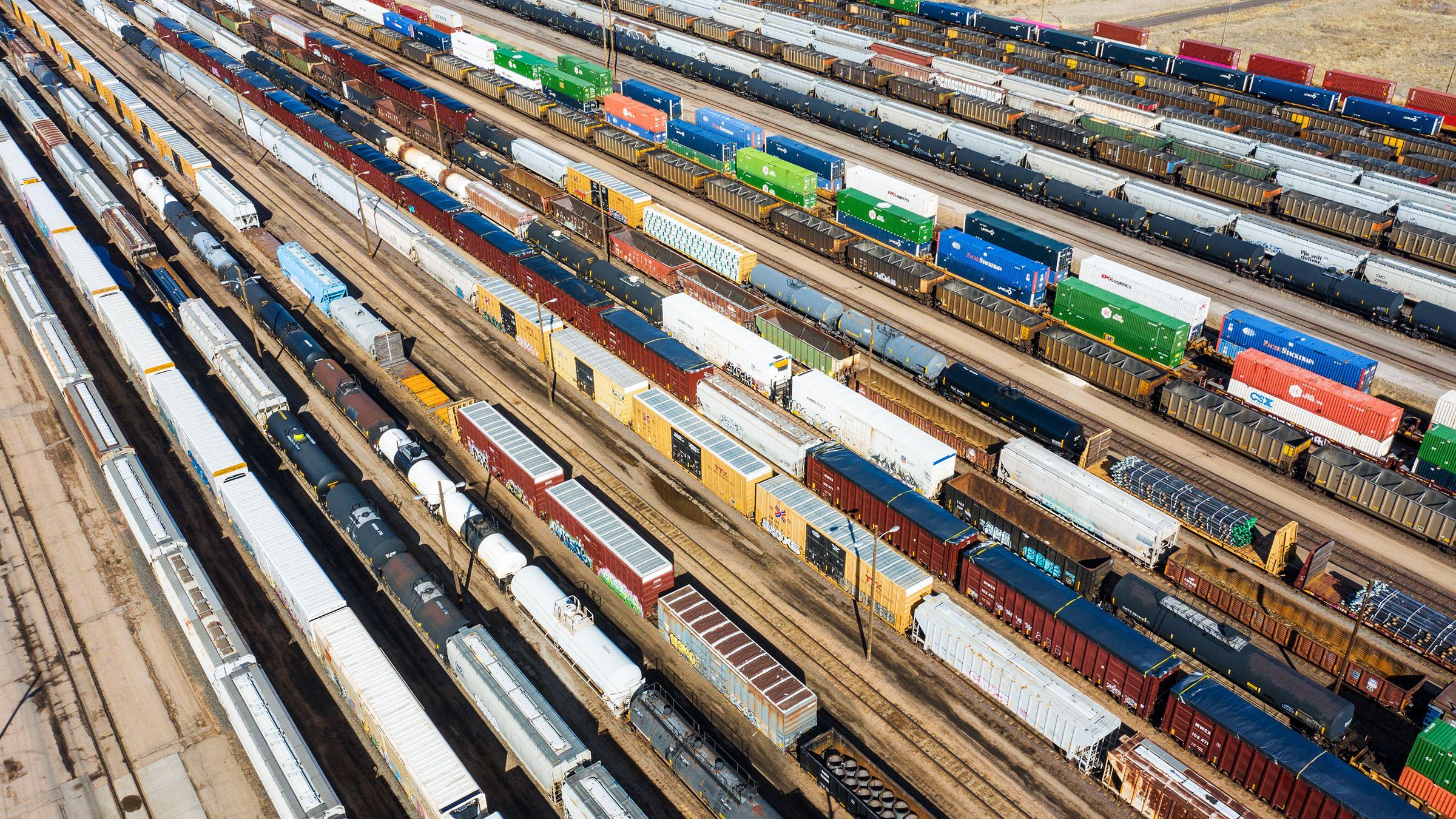
U.S. rail freight traffic was up a healthy 7.3% for the week ended Nov. 14, 2026 versus the same week in 2025. According to the latest numbers from the Association of American Railroads (AAR), intermodal shipments are leading the way in rail transportation and are growing faster than traditional freight carloads.
Intermodal traffic surged 10.7% year-over-year, well ahead of the 3.3% increase in total carload volumes. The results also show the breadth of the growth with eight of the ten major commodity groups reporting higher weekly shipments.
The biggest percentage gain among conventional freight categories was motor vehicles and parts, up 16.2%. Forest products were close behind with a 14% increase. Metallic ores and metals rose 10.7% and petroleum and petroleum products were up 10.3%.
Other commodity groups contributed to the positive performance as well. Food shipments were up 3.1% and farm products, excluding grain, were up 3.1%. Chemicals rose 2.3%, nonmetallic minerals climbed 2.1% and coal shipments edged up 0.9%.
Grain was the only one of the 10 major carload groups to post a weekly decline, with volumes down 4.7% from the comparable week a year ago.
This Week | Year-To-Date | ||||
|---|---|---|---|---|---|
Cars | vs 2025 | Cumulative | Avg/wk2 | vs 2025 | |
Total Carloads | 230,260 | 3.3% | 10,301,533 | 228,923 | 2.7% |
Chemicals | 33,369 | 2.3% | 1,513,816 | 33,640 | 2.3% |
Coal | 56,646 | 0.9% | 2,582,870 | 57,397 | -1.5% |
Farm Products excl. Grain, and Food | 17,908 | 3.1% | 787,932 | 17,510 | 3.5% |
Forest Products | 8,463 | 14.0% | 376,520 | 8,367 | 2.6% |
Grain | 24,396 | -4.7% | 1,055,065 | 23,446 | 9.4% |
Metallic Ores and Metals | 20,470 | 10.7% | 971,095 | 21,580 | 8.8% |
Motor Vehicles and Parts | 15,691 | 16.2% | 704,234 | 15,650 | 0.7% |
Nonmetallic Minerals | 33,154 | 2.1% | 1,398,039 | 31,068 | 2.0% |
Petroleum and Petroleum Products | 11,362 | 10.3% | 501,324 | 11,141 | 7.8% |
Other | 8,801 | -2.6% | 410,638 | 9,125 | 1.1% |
Total Intermodal Units | 299,659 | 10.7% | 12,869,933 | 285,999 | 5.0% |
Total Traffic | 529,919 | 7.3% | 23,171,466 | 514,921 | 4.0% |
(Chart: AAR)
U.S. rail traffic continues trend higher year-to-date
The positive weekly performance continues the general trend seen throughout 2026. Total U.S. rail traffic for the first 45 weeks of 2023 was up 4% compared with the same point last year.
Intermodal volumes were up 5% during that time, while conventional carload traffic was up 2.7%.
Grain was the top carload commodity year-to-date, up 9.4%, despite falling last week. Next came metallic ores and metals, up 8.8%, and petroleum and petroleum products, up 7.8%.
Coal was still on a more difficult trend. It was the only major carload category to stay below its 2025 level in the first 45 weeks of the year, and it fell 1.5%.
North American rail freight also rises
The rise wasn’t confined to the United States. Combined North American rail traffic for the nine reporting railroads operating in the United States, Canada and Mexico increased 7.2% year over year during the latest reporting week.
Carload shipments among the three countries increased 3.7 percent, while intermodal traffic was much stronger, up 10.5 percent.
Total North American rail traffic for the first 45 weeks of 2026 was up 3.5% on a cumulative basis from the comparable period last year.
Additional signs of growth come from automotive and forest products
The latest numbers indicate strength in a number of freight segments, most notably automotive and forest products. The strong weekly figures contrast with the broader economy, where higher interest rates have weighed on home building and auto sales for much of the year.
Intermodal transportation is not the only area where rail freight activity is seeing improvement, as gains are being seen in most major commodity categories. Instead, growth is taking hold in a number of traditional freight markets, supporting the positive trend in U.S. and North American rail traffic.
END OF REPORT