



Swedish power-to-fuel developer Liquid Wind has been declared bankrupt, marking a significant setback for one of the Nordic region’s most visible players in the e-methanol space and its ambitions to decarbonise shipping through alternative fuels.
The Gothenburg-based company entered bankruptcy proceedings on 11 May, with lawyer Lars Melin from Swedish law firm Styrks appointed as trustee to oversee the process.
According to the company, its operations including subsidiaries in Sweden, Denmark and Finland are now up for sale. Employees have already been informed and have met with representatives from the bankruptcy administration team managing the proceedings.
Founded in 2017, Liquid Wind focused on developing large-scale e-fuel facilities producing e-methanol using renewable electricity combined with captured biogenic carbon dioxide. The company positioned the fuel as a lower-carbon alternative for hard-to-abate sectors, including shipping, aviation, chemicals and heavy transport.
Over the years, Liquid Wind built a strong profile within maritime decarbonisation debates, promoting e-methanol as one of the more practical near-term fuel options for shipowners, particularly at a time when ammonia and hydrogen infrastructure remains under development.
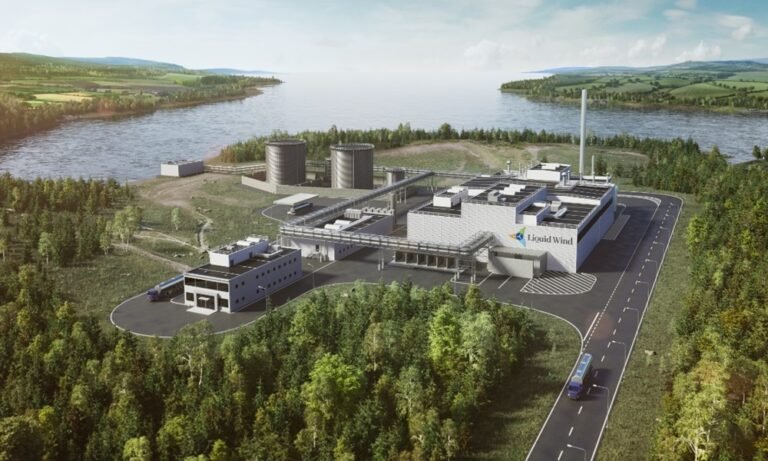
Its business model centred on modular and standardised production plants, each designed to produce around 100,000 tonnes of e-methanol annually while capturing approximately 150,000 tonnes of biogenic CO₂ per year.
The company’s project pipeline spanned several locations across Sweden and Finland, including developments in Örnsköldsvik, Sundsvall, Umeå, Östersund, Haapavesi and Naantali.
One of its most prominent initiatives was FlagshipONE in Örnsköldsvik, which the company described as Europe’s first commercial-scale green e-methanol facility to reach final investment decision. Danish energy group Ørsted acquired a 45% stake in the project in 2022 as part of its broader push into green fuels for shipping.
Liquid Wind also worked with German energy company Uniper on the NorthStarH2 project in Östersund, targeting production of more than 100,000 tonnes of e-methanol annually for use in shipping and chemicals.
The company had built partnerships with a range of industrial players including Siemens Energy, Alfa Laval, Topsoe, Carbon Clean and HyCap, reinforcing its position within the emerging e-fuels ecosystem.
In the maritime sector, Liquid Wind has signed several cooperation agreements linked to future e-methanol supply, including a project involving Finnish ferry operator Wasaline and Umeå Energi to explore fuelling the dual-fuel ferry Aurora Botnia, which operates between Sweden and Finland.
The company consistently argued that methanol-based fuels would play a key role in shipping’s energy transition, particularly as major liner operators and tanker owners continue investing in methanol-ready fleets.
Its bankruptcy comes at a moment when the shipping industry is still struggling to identify scalable and commercially viable alternative fuels, with many e-fuel projects across Europe facing mounting financial pressure, rising costs and uncertainty over long-term demand.
The situation also raises wider questions about the future of several Nordic e-methanol initiatives linked to shipping decarbonisation strategies and the development of future marine fuel supply chains.
The bankruptcy process is being managed by Lars Melin, alongside lawyers Jonas Hallberg, Erik Wendel, Åsa Nyqvist, Jenny Söderberg and Ellen van ’t Hof at Styrks Law Firm.