Tech Nov 10, 2026
Wing commits $125 million to expand drone production in Texas
The Alphabet subsidiary will build a manufacturing facility in Fort Worth capable of producing tens of thousands of aircraft annually, as it prepares to extend its Walmart delivery network across the United States and enter the Japanese market.
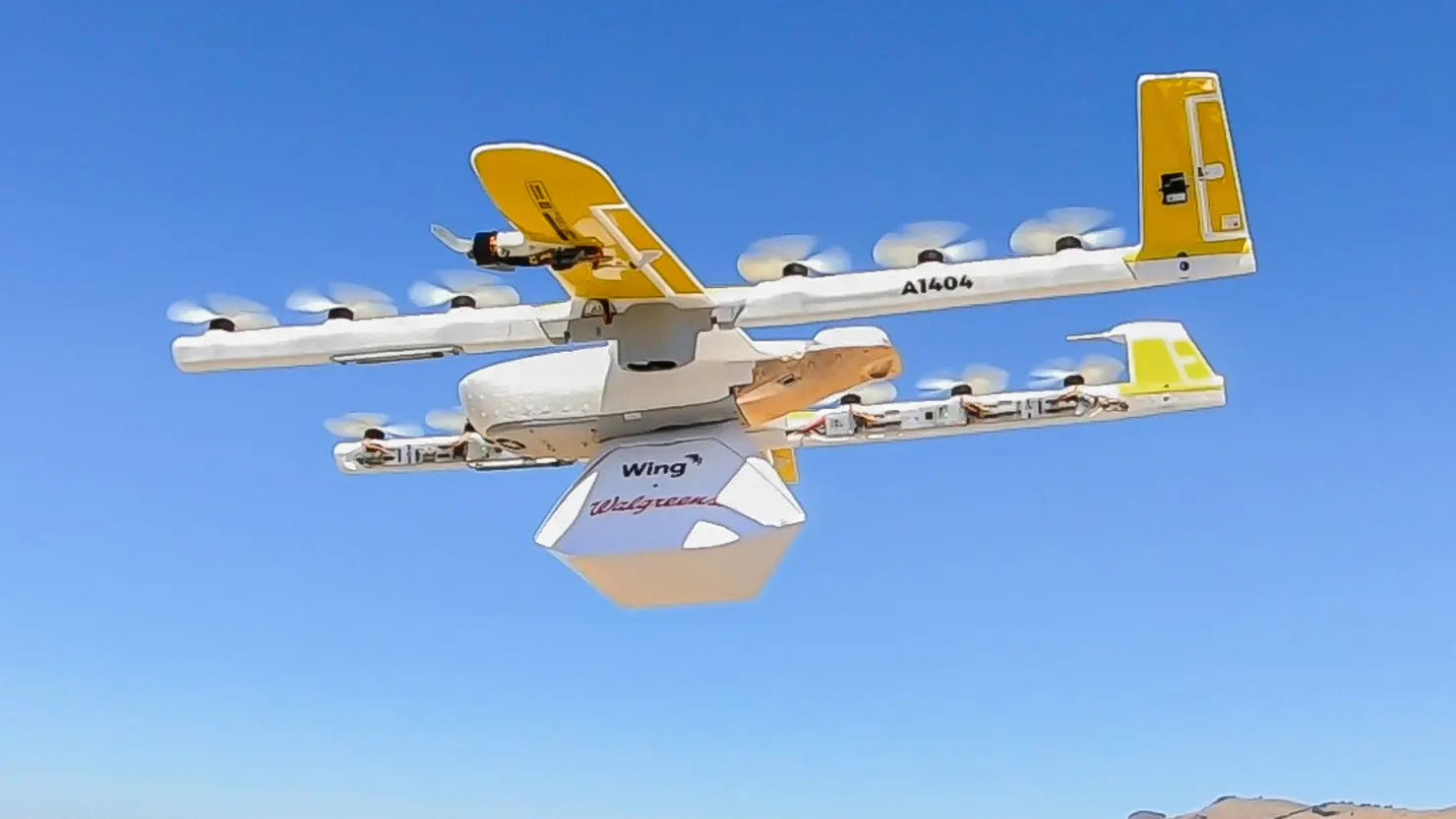
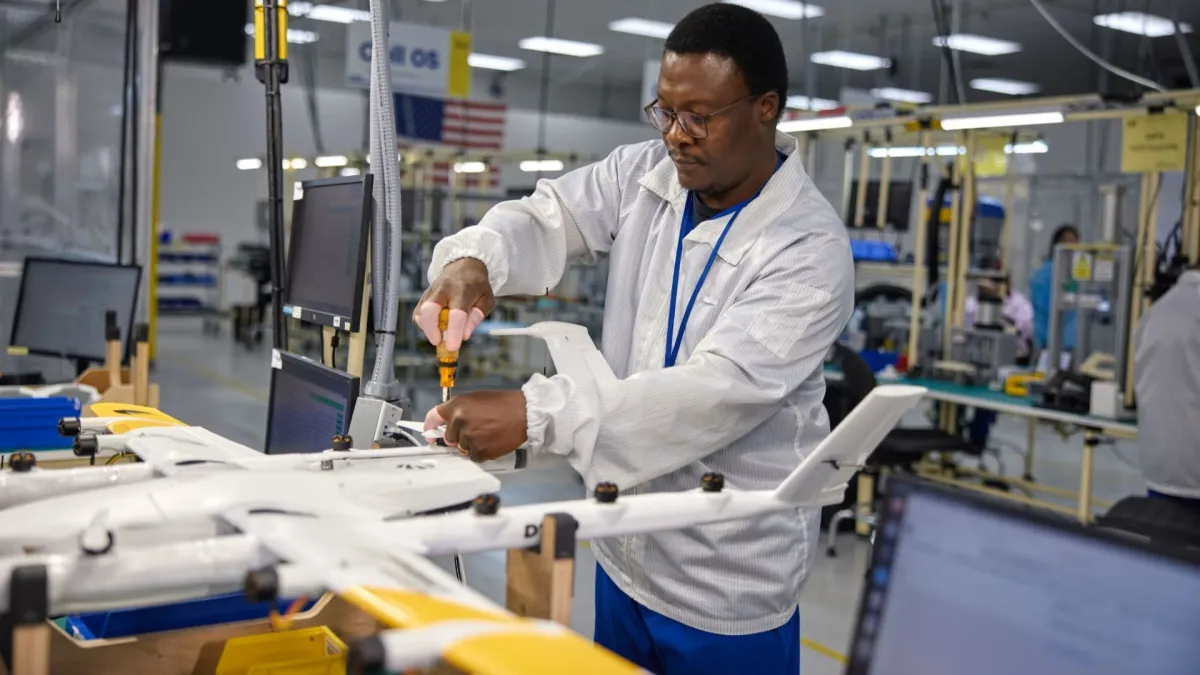
Wing, Alphabet’s drone delivery subsidiary (NASDAQ: GOOG), is stepping up its industrial capacity with a planned investment of $125 million in a new manufacturing facility in Fort Worth, Texas. The project, scheduled to be developed over the next two years, will cover 15,000 square feet and is intended to meet growing demand from retailers seeking faster delivery solutions.
The investment comes as the company prepares to accelerate the deployment of its autonomous aircraft across the United States. Part of the funding will also be allocated to research and development activities in California.
According to Wing, the new facility will have the capacity to manufacture tens of thousands of drones annually. The announcement, released on Friday, also marks the first time the company has provided projections regarding the future size of its delivery fleet.
The expansion is closely linked to Wing’s partnership with Walmart. The two companies aim to make drone delivery available in nearly 20 U.S. markets next year, potentially reaching more than 40 million people.
Wing currently operates from more than 70 sites and provides limited delivery services in five metropolitan areas, including Central Florida, Houston, Atlanta and Dallas-Fort Worth. The broader partnership network is expected to cover more than 270 Walmart store locations nationwide, with planned coverage extending to cities such as Los Angeles, Cincinnati, San Diego, Miami and Philadelphia.
Its aircraft can reach speeds of up to 60 mph and transport packages weighing as much as five pounds. Wing reports having completed more than one million residential deliveries to date, with most orders arriving within approximately 30 minutes.
The company's commercial expansion is not limited to Walmart. In September, Wing launched a pilot delivery programme for Lowe’s through the DoorDash marketplace. Fast-casual restaurant chain Panera is also testing the service in North Carolina.
Meanwhile, Walmart is pursuing a multi-provider strategy rather than relying exclusively on Wing. Last week, the retailer announced plans for a nationwide drone delivery network operated by Zipline, covering 300 store locations. Zipline has also secured $1.5 billion in funding to increase aircraft manufacturing capacity.
Drone delivery speeds up race for faster commerce
The investment underscores the increasing role of drones in the race to speed up e-commerce fulfillment. Retailers and online marketplaces are looking for alternative delivery models more and more to meet consumer demand for speed and convenience.
Traditional orders processed through fulfillment centers typically take between one and five days to arrive via courier networks. App-based services and independent drivers that support store-based delivery platforms can reduce that to around one to three hours.
Another possibility is drone delivery, which could cut the final delivery stage to a matter of minutes. This enables retailers to react more efficiently to urgent purchases and last minute consumer needs.
Regulatory changes might speed up national rollout
The next big step for the U.S. drone delivery industry is likely to come from the Federal Aviation Administration (FAA). Its long-awaited beyond-visual-line-of-sight (BVLOS) operations rules could open new frontiers for commercial use of autonomous aircraft.
Drone operators under current requirements generally need to maintain visual contact with their aircraft unless they get an individual waiver from the FAA. This has restricted companies from setting up large-scale delivery networks.
The proposed regulatory framework is expected to provide a clearer operating structure for commercial drone fleets, But the final rule, under review by the White House since July, was delayed from its previously expected February release.
The delay came amid concerns from administration officials about ensuring the regulation would allow for future technological developments, without giving an advantage to larger companies. The industry has voiced frustration at the slow process, saying uncertainty over regulations is stifling investment and expansion.
Under the proposed BVLOS regime, drone operations would generally be allowed at or below 400 feet above ground level, from approved sites with secure access.
Operators would still need FAA authorization for the areas they want to operate in. Applications will have to provide an estimate of the daily number of flights and the locations of take-off, landing and loading.
The proposed requirements would also create automated data service providers to enable large scale operations. These services will help keep autonomous drones and aircraft at a safe distance from one another. Operators had the choice of building their own data service capabilities or contracting with an external provider.
Drones would also need technology that can automatically detect and avoid crewed aircraft that are transmitting their position through ADS-B surveillance systems.
Additional oversight would cover large commercial fleets, including those in Wing’s planned operations. Operators would need to secure an FAA operating certificate and establish safety management systems and specific training programs.
A recent authorization demonstrates the regulatory environment beginning to adapt. On Monday, the FAA authorized the first-ever flight of a drone beyond the visual line of sight of its controller from the U.S. coastline over the Gulf of Mexico.
The authorization enables Skyways to operate its autonomous V2 vertical take-off and landing aircraft from Shell’s SPLC facility in Gibson, Louisiana, to an offshore Shell platform. The mission will involve inspection of a pipeline right-of-way and a simulation of equipment delivery to the platform.
Investment activity is also on the increase in the wider drone industry. Axon Enterprise Inc., best known for its Taser electroshock weapons, said last week it was investing $1.2 billion in Skydio, a company that specializes in public safety and defense technology. The deal increases Axon’s stake in the drone maker to 37%.
Skydio builds drones for uses in physical security, mapping, infrastructure and asset inspection, and national security.
Japan becomes Wing’s next international market
Beyond its U.S. expansion, Wing is preparing to enter Japan through a partnership with telecommunications company KDDI Corp. The two companies intend to introduce drone delivery services in selected areas of the country by the end of 2027.
Japan represents a potentially significant market for autonomous delivery solutions. Its ageing population and declining working-age workforce are contributing to a shrinking pool of delivery drivers, increasing the need for alternative logistics models.
Initial operations will concentrate on food deliveries. According to an announcement published on October 26, the partners intend to work with local authorities and other stakeholders to progressively extend services to everyday consumer goods, over-the-counter medicines and small retail products.
The division of responsibilities will see Wing supply the autonomous aircraft, flight systems and automated ground infrastructure. KDDI will contribute telecommunications infrastructure, regulatory compliance support and local market development.
The partnership is designed to establish the operational foundations needed to expand drone deliveries in response to Japan’s evolving logistics requirements.
Zipline reduces drone noise through new flight technology
While Wing is investing in manufacturing capacity and international expansion, rival Zipline is addressing another challenge facing the commercial drone sector: noise pollution.
Last month, the company announced changes to its aircraft flight technology designed to make drone operations quieter in residential neighbourhoods.
Unlike conventional multirotor drones, which generally need to keep all their motors running throughout a flight to remain airborne, Zipline uses fixed-wing aircraft capable of flying more like conventional planes.
Once the aircraft reach cruising speed and altitude, they can switch off all but one motor. This configuration reduces the need for continuous motor operation and helps limit noise.
Zipline has further developed its dynamic flight technology to improve the transition into wing-supported flight. The system uses wind conditions and gravity to accelerate and decelerate, drawing on principles similar to those used by birds when taking advantage of air currents.
Rather than following entirely static, pre-programmed flight paths, the aircraft dynamically adjust their trajectories to reduce sound emissions. The system takes into account wind, altitude and speed to identify quieter flight patterns.
During take-off, onboard weather sensors measure real-time wind conditions. The aircraft then combines this information with a proprietary sound model to determine the most appropriate transition into wing-supported flight.
Depending on the conditions, the drone may lower its nose to build speed, in a manoeuvre comparable to a cyclist accelerating downhill, or move upwards to reduce speed more quietly towards the end of a journey.
According to Zipline, the technology has now been deployed across its entire fleet. Beyond reducing noise, the system also improves operational efficiency.
The company reports that average flight times have been shortened by 53 seconds, thanks to faster transitions into and out of wing-supported flight.
Together, these developments illustrate the different priorities shaping the next phase of the commercial drone industry: increasing manufacturing capacity, securing regulatory approval, expanding delivery networks and improving the environmental and operational performance of autonomous aircraft.
END OF REPORT