Tech Nov 9, 2026
Fleetworthy introduces RADAR, an AI-powered tool designed to improve fleet cost control
The new technology helps trucking companies identify toll discrepancies, potential savings and operational inefficiencies with wider applications across Fleetworthy’s platform planned for 2027.
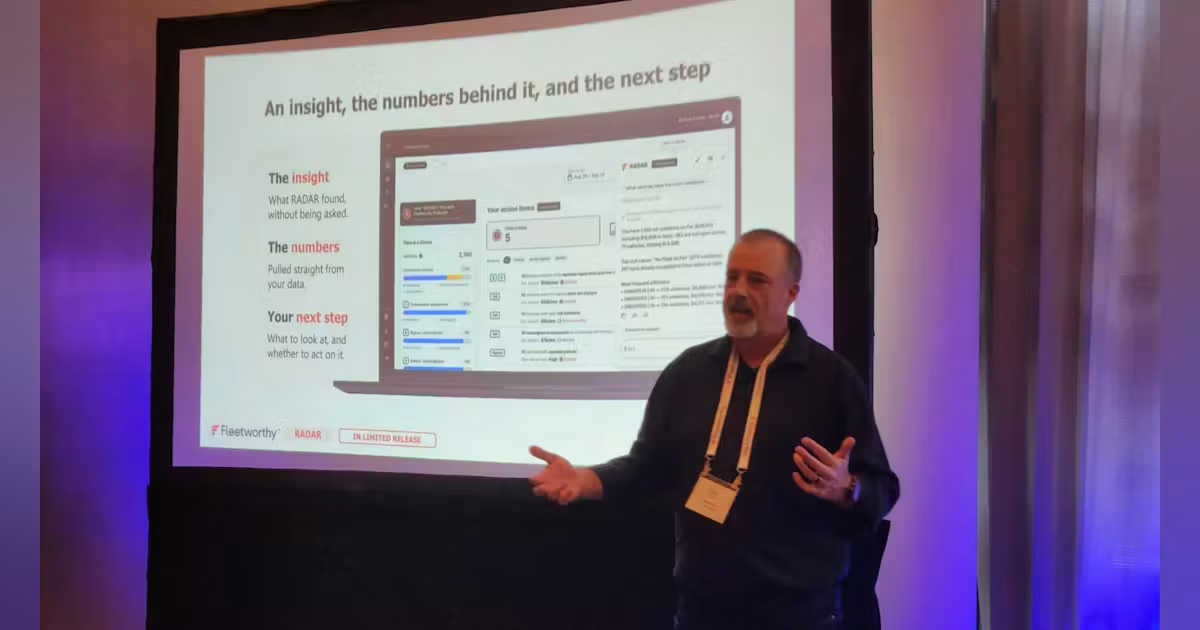
Fleetworthy is boosting its fleet management technology with the launch of RADAR, an artificial intelligence powered solution designed to give fleet operators better visibility into toll expenses, spending trends and operational performance.
RADAR isn’t a stand-alone chatbot or analytics app, it’s built directly into Fleetworthy’s existing software ecosystem. The technology allows fleet managers to ask questions about their operations, identify anomalies, and receive recommendations without having to manually sift through lengthy reports.
RADAR (Real-time AI, Decisioning and Automated Resolution) is being launched first via the Fleetworthy Toll Management product. Toll Management customers will be generally available in Q1 2027. The company also intends to bring the technology to its safety and compliance and weigh station bypass solutions, with beta versions of those applications due around the same time.
Fleetworthy launched RADAR Nov. 4 at its Nashville, Tenn., road show.
“The technology is designed to help fleet managers identify operational problems that can impact efficiency and profitability,” said Shay Demmons, chief product officer. This includes toll leakage and issues that could remove vehicles or drivers from service.
Toll Leakage: The difference between what a fleet should pay and what a fleet actually pays. e.g. being charged at higher plate based toll rates with better payment options available.
The launch is timely as trucking companies face growing pressure from rising operating expenses. The average cost to operate a truck was $2.336 per mile in 2025, up 3.4% from the previous year, the American Transportation Research Institute said. Toll costs rose even more sharply, up 13.2%.
Converting fleet data into actionable information
RADAR lets users interact with their toll data by asking questions about individual charges, such as why a toll is posted or how a transponder is working.
An important feature of the system is that it analyzes only the information that belongs to the individual customer. Fleetworthy does not use data from other customers to create industry benchmarks or develop comparative insights. Instead, each fleet gets recommendations and findings derived from its own transactions, spending patterns and operational history.
The technology is based on a commercial large language model and structured data queries. The language model puts the results into plain English so fleet managers can better understand what the information means. However, it does not compute the underlying numbers itself. These calculations are generated by running predefined queries against the customer’s Fleetworthy data, which the company claims is auditable.
RADAR enhances the platform dashboard with fleet-specific information. Users can spot unusual toll activity, track spending trends and identify potential opportunities to cut expenses. From these findings, the system can suggest possible next steps while leaving operational decisions to fleet managers.
Another important consideration is data confidentiality. RADAR uses individually held Fleetworthy customer accounts and the company has safeguards in place to prevent confidential information from being exposed to other users.
“These protections are very important,” said Mike Precia, President of Fleetworthy. “Fleetworthy is putting in place the necessary steps to avoid disclosure of confidential customer information to unauthorized persons.”
Early customer trials show tangible benefits
Fleetworthy piloted RADAR with a number of customers prior to a wider release, incorporating feedback to refine the technology.
The first tests have already demonstrated that it can reveal costs and operational issues that might otherwise be difficult to detect.
Demmons explained some customers may be able to spot toll leakage faster than through traditional reporting methods. Others used the system to find trucks that did not have transponders and retrieve transponder information without having to search through a bunch of reports.
Fleetworthy would not identify the companies that performed the tests.
The company also acknowledges that AI-generated responses could be inaccurate or not consistent with a fleet’s actual records. In such cases customers should contact the Fleetworthy support team for assistance.
The company, which is pouring more money into artificial intelligence, says RADAR is meant to assist, not replace, human decision-making. “It’s a human-centric approach that Fleetworthy takes,” Demmons said, noting that the technology should not be an opaque system coming to conclusions that can’t be understood.
Fleetworthy looks to boost its AI capabilities
Another step in Fleetworthy’s broader strategy to bring artificial intelligence across its fleet management platform is RADAR.
The company started building its AI capabilities around 18 months ago, setting up a dedicated team to look at how the technology could help solve operational challenges for its customers.
The strategy has also seen the company strengthen its underlying data infrastructure, and tie information across its various products. Combining these datasets is meant to lay the basis for more advanced AI-powered tools.
“We see great potential for artificial intelligence to help customers identify inefficiencies, better understand fleet performance and make more informed operational decisions,” Precia said.
The company’s longer-term ambition is to take RADAR beyond problem identification and recommending improvements. “Fleetworthy wants to bring in guided workflows to allow customers to investigate operational issues, assess the potential consequences and get help in determining how to resolve them.
“The goal is not just to point out where the customer needs to pay attention, but to help them understand how to fix the root causes,” Demmons said.
Fleetworthy, however, has not set a date for when these workflows will be introduced and RADAR pricing is still to be determined.
“Core capabilities such as the ability to query fleet data will likely be part of the core product,” says Demmons. Ultimately, more advanced capabilities such as guided operational workflows could require additional payment.
AI becomes a tool to manage the cost of trucking
Faced with ever-increasing operating costs, trucking industry fleet operators are looking for ways to identify unnecessary expenses and increase the utilization of their assets.
Fleetworthy combines toll monitoring, anomaly detection and AI-powered recommendations to help customers identify financial discrepancies and operational issues before they become bigger headaches.
While RADAR’s first deployment is focused on toll management, its planned expansion into safety, compliance, and weigh station bypass operations could result in the technology playing a significantly larger part in the company’s fleet management ecosystem.
The move also highlights a broader trend of using artificial intelligence not only to process operational data but also to transform that data into useful insights that guide day-to-day business decisions.
END OF REPORT