



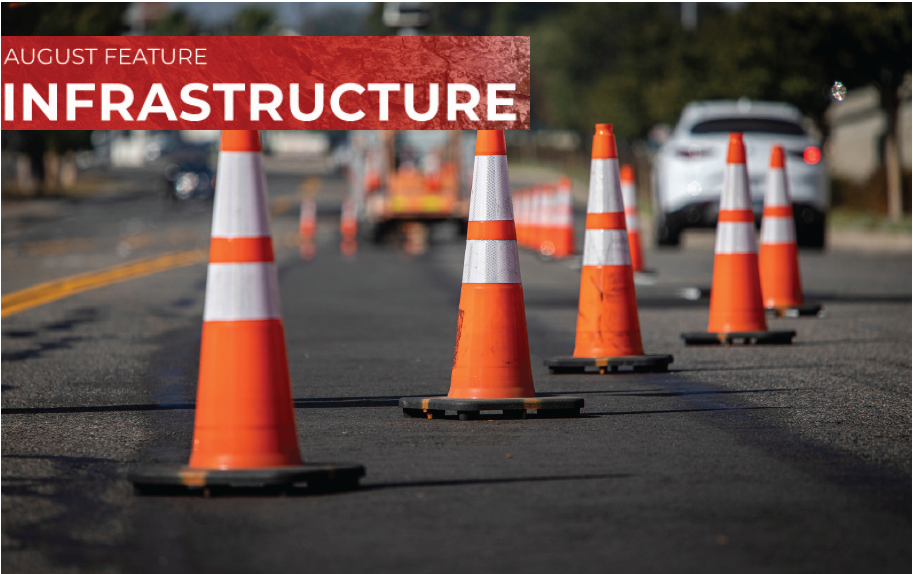
Crews are out across the city taking advantage of Winnipeg’s brief summer construction season to renew roads, bridges and active transportation infrastructure ahead of the return of Prairie winter.
Winnipeg’s main construction season runs from mid-May to October, due to the region’s long winters, giving the city about five and a half months for major infrastructure work.
The City of Winnipeg is working on projects for about 175 lane kilometers of roadways, 50 sidewalk locations and 15 kilometers of bike lanes and active transportation routes for summer 2026. Some $156.8 million in local and regional street improvements has been set aside by the city.
Winnipeg has broken down its infrastructure renewal program into four major categories: reconstruction, rehabilitation, pavement preservation and right-of-way improvements. Most of the projects scheduled for 2026 are already in the tendering process and either underway or soon to be underway.
Lagimodiere overpass rehab work underway
One of the largest projects is the Lagimodiere Twin Overpass Rehabilitation and Roadworks project which includes bridge rehabilitation as well as upgrades to Lagimodiere Boulevard.
The boulevard is a major north-south arterial on the eastern side of the Red River and is part of Manitoba Highway 59. It is also designated as Winnipeg Route 20.
The city is rehabilitating the two overpasses on Lagimodiere Boulevard over Concordia Avenue and the Canadian Pacific Kansas City (CPKC) rail line. Roadwork started in July 2026 at the intersection of Lagimodiere and Grassie Boulevard.
The project aims to replace the roadway and ramps and extend the life of the bridges another 50 years.
Multi-use pathways are also being built along Concordia Avenue to further enhance pedestrian and cyclist connections.
Construction will go on into 2026 and 2027. The city says the southbound bridge is part of the first phase, which is expected to be finished by October 31, 2026. The northbound structure will then be addressed in the second phase from January to November 2027.
PCL Constructors is the general contractor.
Pembina Highway project aims at safety, traffic flow
Construction is also underway in southwest Winnipeg on the Pembina Highway overpass at Abinojii Mikanah, formerly Bishop Grandin Boulevard.
The project includes rehabilitating the overpass, partially redesigning the interchange and making changes designed to improve safety and traffic movement.
Pembina Highway or Route 42 is a major arterial corridor in Winnipeg connecting several major neighborhoods and suburbs to downtown.
The work will include repairs to the bridge, roads and ramps, and relocating the ramp that connects eastbound Abinojii Mikanah from Chancellor Drive to Pembina Highway.
Transit stops will be relocated, and pedestrian and cyclist improvements will be made.
The project has been fully tendered with MD Steele as lead contractor. “Completion is expected by October 2026.
City needs options to road expansion
Road rehabilitation is still important work, but Ahmed Shalaby, professor of civil engineering at the University of Manitoba and leader of the university’s pavement research group, warns the number of roads repaired or potholes filled don’t necessarily tell the whole story of what the city needs in terms of transportation.
He says projects vary a lot in size and that Winnipeg should also be looking at ways to wean itself off roads rather than constantly expanding them.
Transportation options in Winnipeg are not as plentiful as other Canadian cities of similar size, Shalaby says. More investment in public transit and active transportation could save on long-term infrastructure costs, provided those systems are well utilized and routes are well connected.
At the moment, less than 10 per cent of trips are by transit, he notes.
Another possibility would be the rail network
Shalaby also suggests Winnipeg’s extensive rail network as a potential passenger transit opportunity.
The city has no immediate plans to use existing or abandoned rail corridors for passenger service, but he argues the shared use of existing railroad infrastructure could completely change the city’s transportation network.
That would require contracts with the owners of the railroads and federal legislation to encourage sharing, particularly in peak commuting times.
So the challenge for Winnipeg is not only to finish its summer construction program but to figure out how future investments can create a more diversified transportation system and relieve pressure on roads and bridges in the long term.