



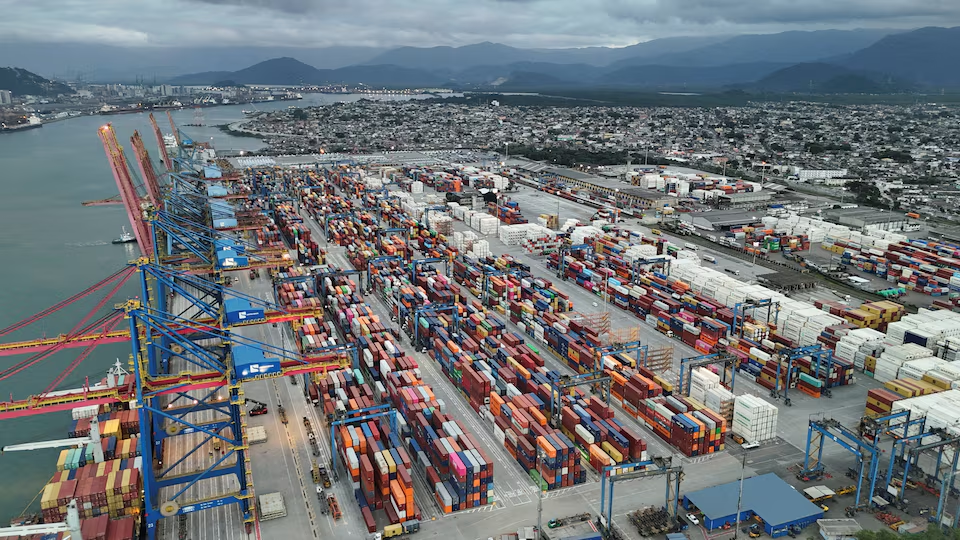
The Tecon 10 case, one of the most closely watched port projects in Latin America, is facing another delay. The auction scheduled to award this strategic terminal in Santos is being postponed, with the calendar now pointing toward spring. This decision extends a period of uncertainty that weighs on investors as well as the Brazilian logistics ecosystem.
In the background, the stakes are massive: Santos is an essential gateway for the country’s foreign trade, and any expansion project there is scrutinized under a magnifying glass. A postponement does not mean a halt, but it changes the market’s perception: when a major tender slips in time, it affects visibility on future capacities, related infrastructure plans (road/rail, logistics zones), and even the strategies of shipowners and terminal operators.
For shippers and freight forwarders, the impact is indirect but real. Uncertain additional capacity means potential pressure on slots, congestion that can last longer, and more difficult-to-anticipate port passage costs. For operators, it is also a matter of trust: the stability of the rules and the clarity of governance become as important criteria as purely financial parameters.
This new episode shows how much “terminal policy” influences the real economy: behind an auction date, there are fleet decisions, long-term contracts, and industrial location choices. In a global context of increased port competitiveness, every month counts.