



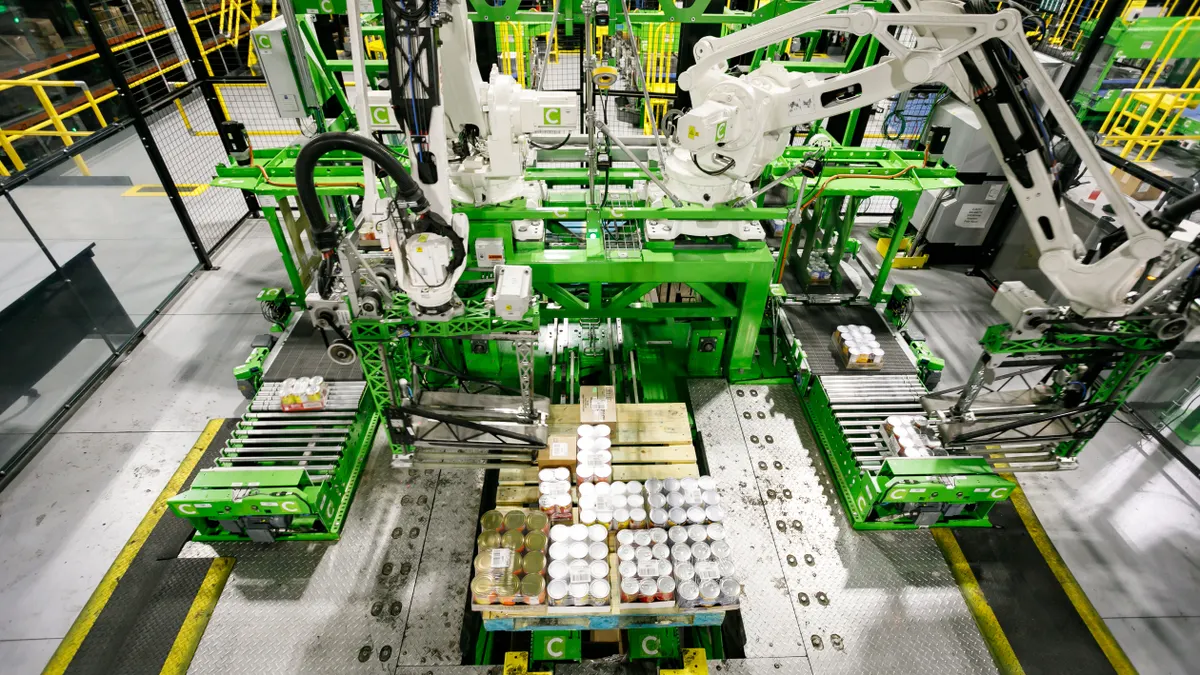
As manufacturers accelerate their investment in artificial intelligence and automation, the biggest obstacle may not be the technology itself, but the readiness of their facilities to support it.
That is the view of Asad Afzal, global director of transformation at A-SAFE Global, who says many factories and warehouses were never designed for the level of automation that AI now makes possible.
Afzal said the pressure point is increasingly physical rather than digital. In his experience working across industrial facilities over the past decade, he has seen rising congestion, repeated impact zones and infrastructure absorbing more wear than it was built to handle as automation expands.
He warned that if the physical environment does not evolve at the same pace as digital capability, operational pressure can build quickly. AI may improve workflows, he said, but it cannot solve problems caused by an outdated or friction-heavy layout.
The issue is becoming more urgent as automation scales up. A PwC survey of hundreds of executives indicates that automation across manufacturing is expected to more than double by 2030.
According to Ryan Hawk, PwC’s global and U.S. industrials and services leader, the real advantage will not simply go to companies that acquire new tools, but to those that can coordinate them effectively across the enterprise while also securing workforce support for the transformation.
Afzal said that as automation increases, tolerance for disruption falls. Throughput rises, internal traffic patterns change and the value of equipment in the building also increases. In that environment, the gap between digital capability and physical readiness becomes a significant business risk.
A growing number of large manufacturers are already working to close that gap. Companies such as Dassault Systèmes and Samsung are partnering with Nvidia to modernise production systems and prepare for next-generation manufacturing. But many companies are still lagging because of poor data quality, fragmented systems and skills shortages.
For manufacturers, the message is becoming clearer: AI may offer powerful gains, but the companies that benefit most will be those able to align technology, workflows and the physical production environment at the same time.