




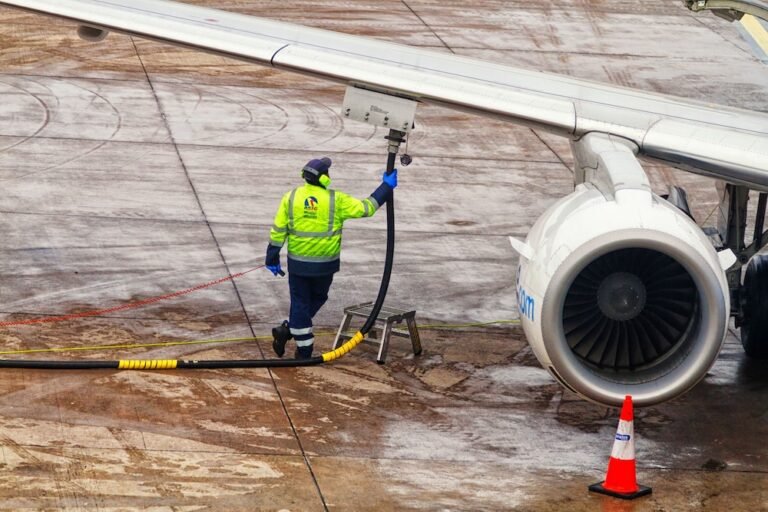
European airlines are reducing flight capacity as tightening jet fuel supplies push operating costs sharply higher.
The pressure follows a major drop in imports from the Middle East Gulf, with the last pre-conflict cargoes arriving earlier this month.
Since then, Europe has relied more heavily on domestic inventories.
Stocks in the Amsterdam-Rotterdam-Antwerp fuel hub have fallen by around 40 percent since January to roughly 4.7 million barrels, their lowest level since April 2020.
Refiners are attempting to maximise jet fuel production, but the strategy comes with trade-offs.
Many facilities are operating in “max jet mode”, diverting output toward aviation fuel at the expense of diesel, gasoil and gasoline.
This highlights a structural challenge in refining markets: boosting one product often tightens another.
Replacement imports from Egypt, Nigeria, Singapore, the UAE and Canada have offered partial support, but have not fully compensated for the loss of Gulf volumes.
The impact is already visible in airline operations.
Lufthansa has announced plans to cancel around 20,000 short-haul flights through October, while KLM and Scandinavian Airlines have also trimmed capacity.
Jet fuel crack spreads are currently trading around $70 to $80 per barrel, maintaining a premium of roughly $20 over diesel.
Analysts expect elevated pricing to continue through the second quarter, keeping pressure firmly on airline economics.