



Air cargo operators are increasingly adopting multi-hub routing strategies as closures across parts of the Middle East continue to disrupt traditional Asia-Europe corridors.
Industry estimates suggest flight activity on some affected trade lanes has fallen by 30 to 50 percent, forcing airlines to rethink how they move cargo between major markets.
Operators now face a difficult choice: use congested alternative corridors or accept longer and less efficient routings that weaken commercial viability.
Many are choosing a third option — redesigning network architecture around multiple transit hubs.
One example is the growing use of Istanbul as a strategic cargo gateway linking Asia with Europe.
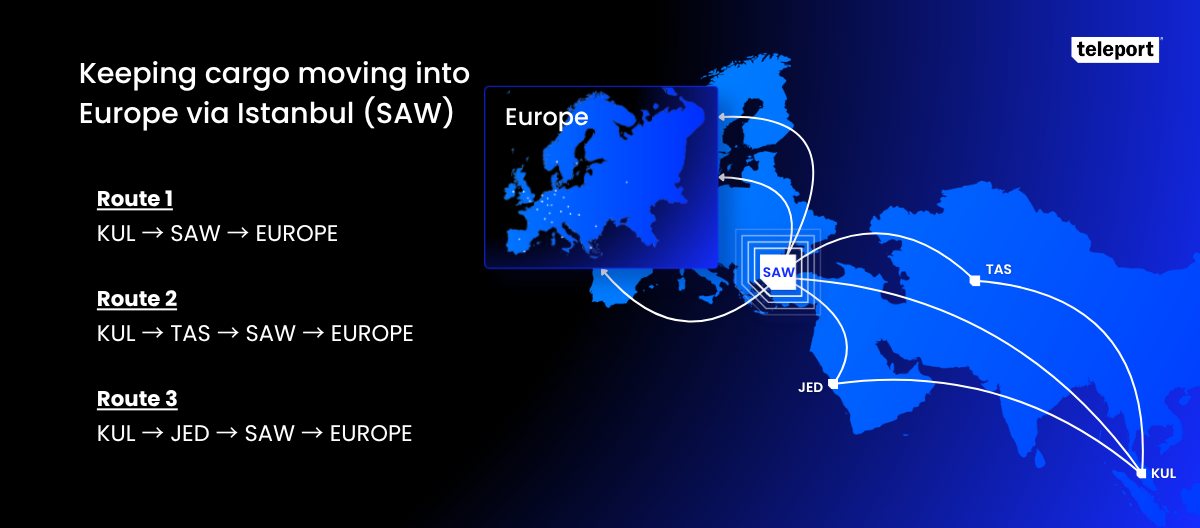
Some networks are now routing freight from Kuala Lumpur through Istanbul directly, or via secondary hubs such as Tashkent and Jeddah before onward European connections.
The objective is to build resilience into the middle mile so that disruption in one corridor does not paralyse the wider network.
By combining freighter capacity with passenger widebody bellyhold space, airlines can preserve more frequent access to Europe while reducing volatility in transit times.
Essential shipments such as food, pharmaceuticals and time-critical cargo are being prioritised where delays are least tolerable.
The broader lesson emerging from the crisis is that coordination is becoming more important than raw capacity.
Forwarders and airlines are relying more heavily on partnerships, shared lift and flexible routings to maintain throughput.
With disruption expected to continue into 2026, the sector appears to be shifting permanently toward more agile and collaborative network models.