



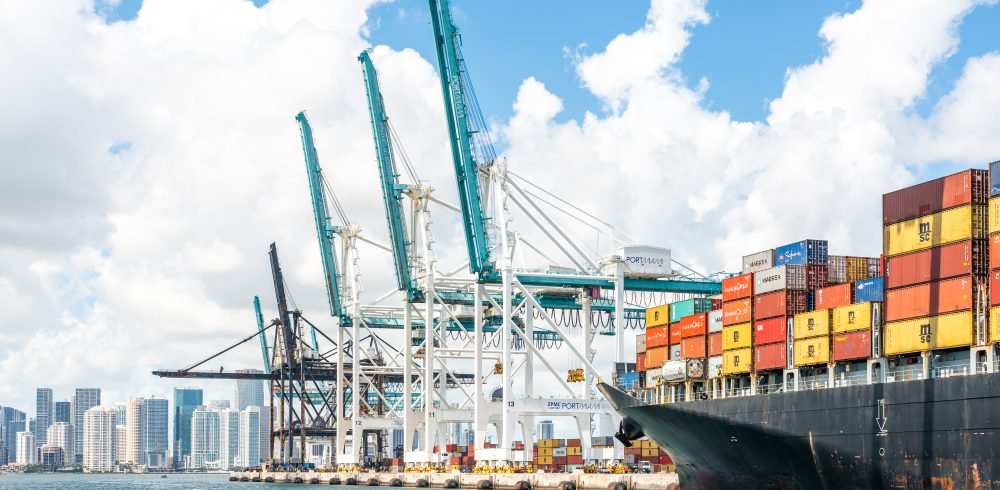
A new proposal emerging from the Trump administration has triggered debate across the maritime and logistics industries as policymakers consider introducing a universal fee on foreign-built vessels entering US ports.
The proposed measure would impose an additional charge on ships constructed outside the United States when they access American port infrastructure. Supporters of the idea argue that vessels benefiting from access to the US market should contribute more directly to maintaining and strengthening the country’s maritime capabilities.
However, industry analysts warn that the proposal risks introducing a form of double taxation at a time when global supply chains remain under pressure from geopolitical tensions, rising freight costs and ongoing disruptions in international trade.
Ships calling at US ports already contribute to maritime infrastructure through the Harbor Maintenance Tax (HMT), which is applied to imported cargo regardless of the vessel’s origin. Critics argue that introducing an additional fee specifically targeting foreign-built vessels would simply add another layer of cost to international trade.
The Harbor Maintenance Tax itself has long been controversial. Originally implemented as an ad valorem tax based on cargo value, it was initially applied to both imports and exports moving through US ports.
However, the US Constitution explicitly prohibits the taxation of exports. In response, the Supreme Court ruled that the Harbor Maintenance Tax could not be applied to export cargo. As a result, the financial burden of maintaining US port infrastructure shifted almost entirely to imports.
Legal precedent nevertheless allows for the possibility of introducing a “user fee” system, which differs from a tax because it must reflect the actual use of infrastructure.
The legal framework for such fees was established in the Supreme Court case Evansville Airport v. Delta Airlines. The decision created what is commonly referred to as the “Evansville Test,” which requires that a fee must not discriminate against interstate commerce, must reflect a fair approximation of use and must not be excessive.
Despite this legal framework, Congress has never converted the Harbor Maintenance Tax into a true user fee. As a result, exporters currently benefit from US port infrastructure without contributing through the same mechanism as importers.
Many analysts argue that instead of introducing a new tax targeting foreign-built ships, policymakers should reform the existing system.
One potential solution would involve transforming the Harbor Maintenance Tax into a harbor maintenance fee calculated according to vessel tonnage rather than cargo value. Under such a model, charges would be linked to the net or gross tonnage of the vessel.
Supporters say tonnage provides a more accurate representation of infrastructure usage, as vessel size, draft and channel depth requirements directly influence dredging operations and port maintenance costs.
Such a reform could satisfy the legal requirements outlined in the Evansville Test while creating a more balanced system in which both imports and exports contribute to maintaining US maritime infrastructure.
The upcoming Water Resources Development Act could offer Congress an opportunity to revisit the issue and redesign how harbor maintenance funding is collected.
For the logistics sector, the outcome of this debate could have significant implications, as port costs ultimately influence freight rates, shipping strategies and the competitiveness of global trade routes.
Across the freight forwarding community, developments in maritime regulation are closely monitored. Professional networks such as EAN Networks, which connects independent freight forwarders worldwide, frequently follow policy discussions that may influence international logistics flows and supply chain planning.
Many industry stakeholders argue that strengthening maritime infrastructure should focus on modernizing existing systems rather than introducing new layers of taxation that could increase the cost of moving goods through US ports.