




In global trade, reliability and speed have become decisive factors for supply chains. Some logistics companies build their growth on a simple but essential capability: responding immediately when transport is needed.
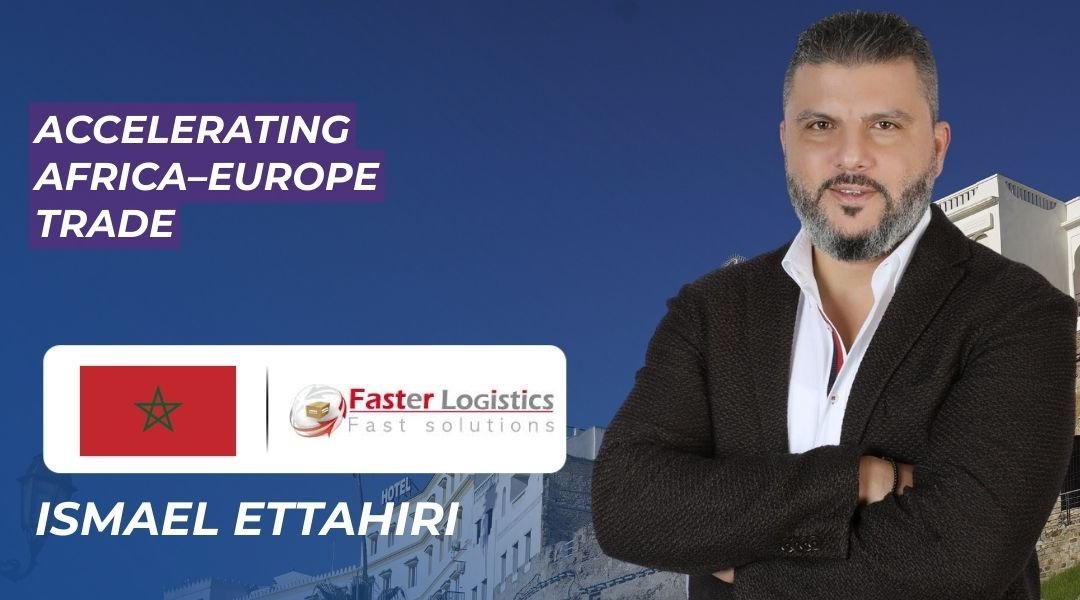
From northern Morocco, Faster Logistics, led by CEO Ismael Ettahiri, is part of a new generation of logistics operators developing express transport solutions designed to meet the demands of international supply chains.
Located in Tangier, a city that has rapidly emerged as one of the key logistics gateways linking Africa, Europe and major global shipping routes, the company focuses on a strategic segment of the logistics market: organizing rapid transport solutions for time-critical industrial shipments.
Faster Logistics specializes in national and international express transport services, providing companies with rapid logistics solutions when shipments need to move quickly across borders.
The company operates as the transport subsidiary of Puerto Transit, focusing on urgent shipments and logistics solutions tailored to the time-sensitive requirements of industrial clients.
Its operational model is built around responsiveness. The company’s teams are structured to respond quickly to customer requests and arrange immediate shipment collection in order to reduce transit times as much as possible.
In industrial environments where production interruptions can generate significant costs, such services address well-known operational challenges: urgent spare parts deliveries, critical shipments for production lines or time-sensitive cargo movements.
Logistics solutions are adapted according to operational parameters such as shipment weight, volume, delivery deadlines or specific cargo requirements in order to ensure fast and secure transportation.
Beyond speed, Faster Logistics places strong emphasis on operational coordination and service quality. Each shipment is typically managed through a dedicated contact point, allowing faster communication with customers and more efficient coordination of logistics operations.
The company also provides shipment tracking solutions, offering clients improved visibility over their logistics flows.
Founded in 2013, the company has gradually expanded within the logistics ecosystem of northern Morocco, supporting the region’s growing industrial base.
This development is closely linked to the strategic transformation of Tangier into one of the most important logistics gateways connecting Africa to European markets and global trade routes.
Faster Logistics has strengthened its presence within Medhub, the logistics platform linked to the Tangier Med port complex, allowing the company to support the growing needs of industries operating in the region, particularly in sectors such as automotive, textile and aerospace.
With its strategic location near the Strait of Gibraltar and its advanced infrastructure, Tangier Med has become one of the main logistics hubs connecting supply chains between Africa, Europe and international markets.
For logistics operators based in the region, proximity to such a global hub offers significant advantages for connecting industrial cargo flows to international trade networks.
In this environment, Faster Logistics continues to expand its connections with logistics partners operating across multiple international markets. Integration into professional freight forwarding networks helps strengthen cooperation between operators and facilitates the development of new commercial opportunities within the global freight industry.
This dynamic also reflects the broader evolution of Tangier’s logistics ecosystem, which has increasingly become a meeting point for international transport professionals. The city regularly hosts industry initiatives and gatherings focused on global supply chains, including events such as Tangier Connect 2026, bringing together freight forwarders and logistics operators from different markets.
Under the leadership of Ismael Ettahiri, Faster Logistics continues to develop around three key pillars: operational speed, flexibility and international connectivity.
In a global economy where supply chains are becoming more complex and increasingly sensitive to delivery timelines, logistics operators capable of combining strong local expertise with international partnerships are expected to play an increasingly important role in facilitating trade flows between continents.