



Flexport’s latest winter technology release arrived at precisely the right moment — even if the company did not know just how timely it would become.
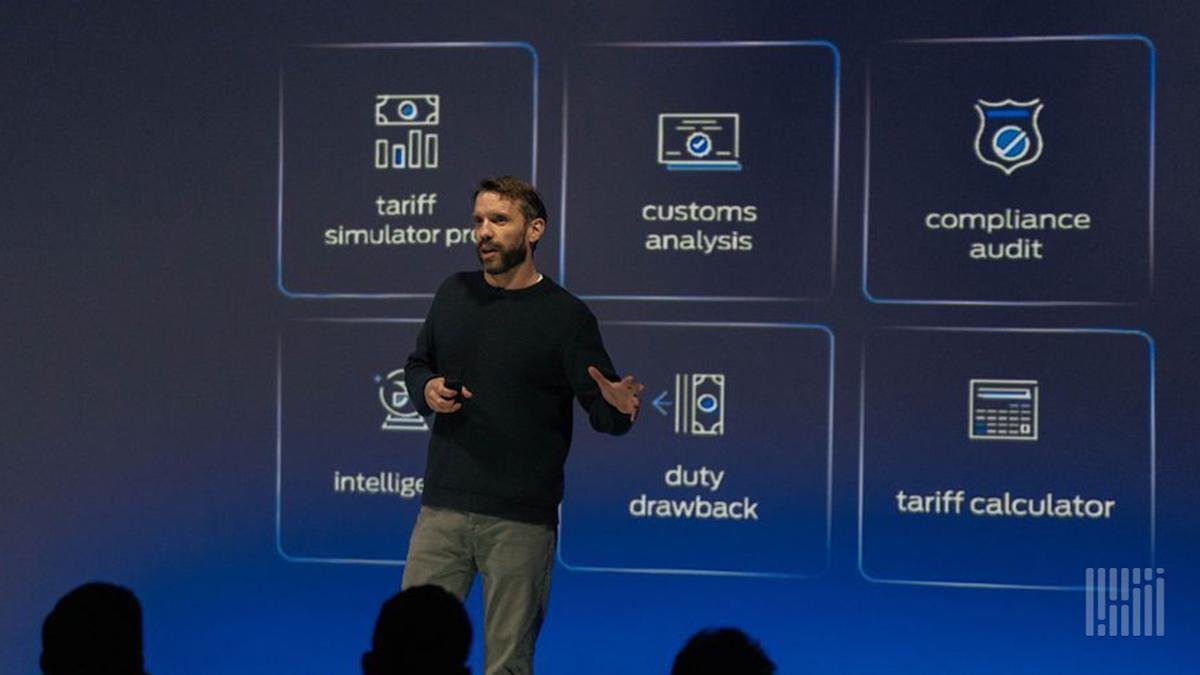
At a product event held in New York late last month, Flexport chief executive Ryan Petersen introduced a suite of new software features aimed at helping customers navigate an increasingly unstable global freight environment. Soon afterward, two major developments gave those tools even greater relevance: the U.S. Supreme Court’s rejection of tariffs imposed under the International Emergency Economic Powers Act, followed by the outbreak of wider freight disruption after U.S. and Israeli attacks on Iran.
One of the flagship products unveiled was Flexport Atlas, a free tool available both to Flexport users and non-users. Built on shipment monitoring data already available inside the company’s systems, Atlas is designed to show how the global ocean network is functioning in real time. Users can zoom in on ports, examine congestion, identify terminal activity and view ships entering and leaving individual gateways.
What may have seemed like a useful visibility tool at launch quickly became more significant once the Middle East conflict triggered sharp routing changes and additional network disruption.
Tariffs were another central theme of the rollout. Petersen noted that the Supreme Court decision suddenly made Flexport’s customs-related tools far more valuable than expected. The company’s earlier release had already included a tariff simulator, which he said had seen heavy usage. The tool is backed by Flexport’s customs compliance team, which interprets regulations and keeps the system updated.
According to Petersen, changes resulting from the Court’s tariff decision on a Friday had already been incorporated into the simulator by the following Monday. He added that U.S. Customs and Border Protection itself is reportedly the biggest user of the tool.
Flexport also developed a refund calculator linked to the possible reimbursement of IEEPA duties. Petersen said the product is simple to use, though he cautioned that the actual refund process will remain complex. In his words, the tool is intended to help companies understand what may eventually be recoverable — something finance teams will want to watch closely.
Another major announcement was the Flexport Digital Routing Guide, which aims to replace traditional static routing logic with agentic AI. Petersen criticized conventional routing guides as little more than fixed carrier lists between two port pairs. The new system is designed to make routing decisions based on real-time business preferences, such as whether a shipper wants the lowest cost, the earliest departure or a defined allocation ratio across carriers.
Flexport also expanded its search capabilities. After previously introducing a “single pane of glass” view across all customer shipments — even those not booked with Flexport — the company is now enhancing that search function with natural-language capabilities powered by AI. The feature is already live for some users and is expected to roll out more broadly in the coming weeks.
Customer feedback also drove changes to notifications. Petersen said users had complained of receiving too much information, so Flexport has reduced notifications by around 80%, focusing instead on more relevant and targeted alerts.
Among the additional tools launched was a live translation service covering Vietnamese, Thai, Korean, Italian, German and Spanish. Petersen said that language coverage should address about 86% of global container trade, while also reflecting the reality that many of the world’s most important manufacturing centers do not operate in English.
Finally, Flexport deepened its link with TikTok commerce, revealing that it now supports around one million orders per year for TikTok merchants. The company said sellers will now be able to connect inventory more directly through the Flexport seller portal, while end consumers will receive live tracking updates within the TikTok app.