



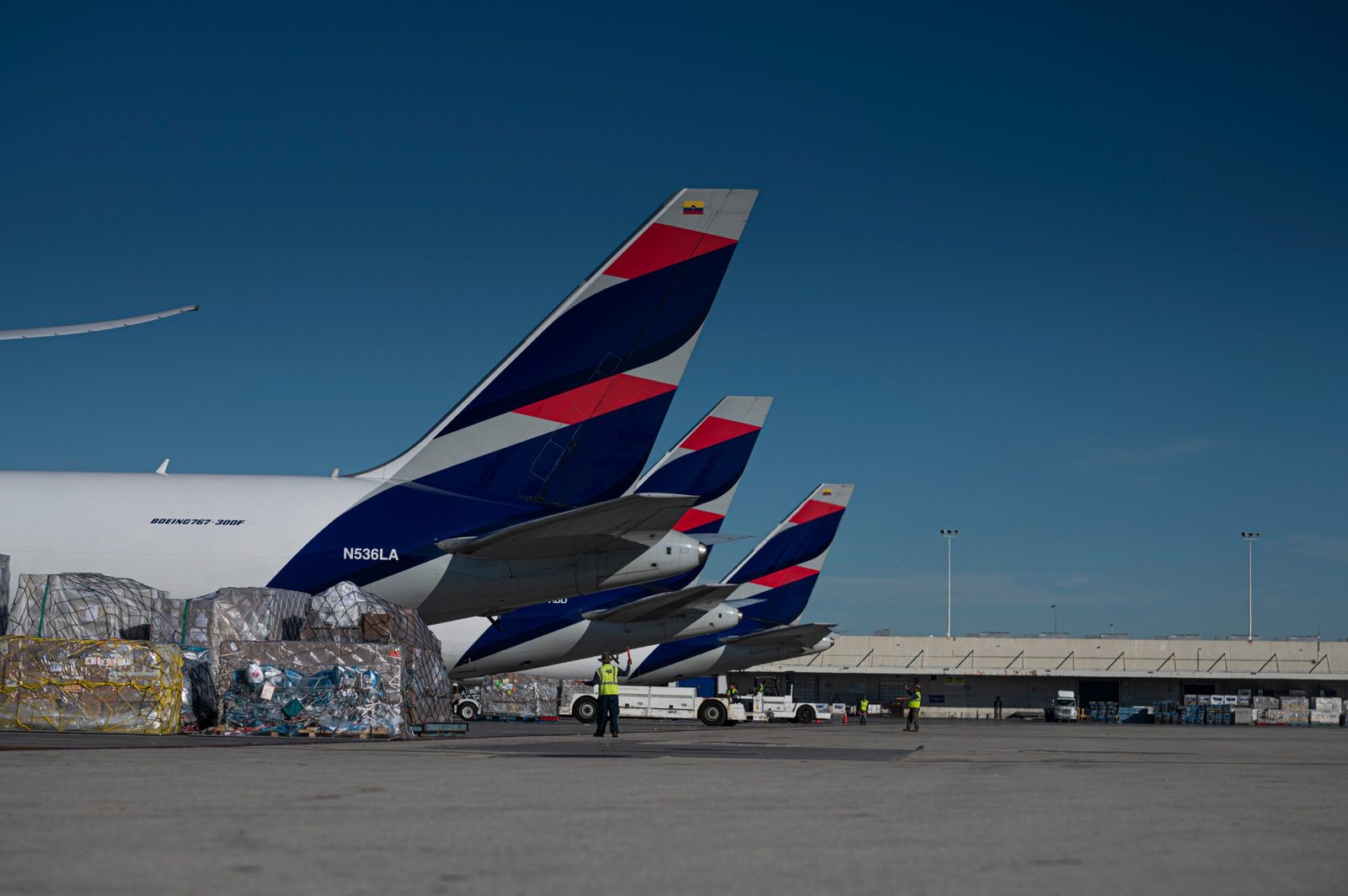
LATAM Cargo has reinforced its position as the leading air cargo operator in South America after transporting more than 1 million tons of cargo worldwide in 2025 and generating $1.7 billion in revenue through LATAM Group’s cargo affiliates.
According to the company, that performance represented 30% of the region’s cargo market, further consolidating its leadership. Cargo activity also accounted for 11.4% of the group’s consolidated revenues, underlining the strategic importance of the business within the wider LATAM Group.
The carrier noted that its operational performance, international expansion and ability to adapt in a demanding logistics environment were recognized in 2025 when it was named Cargo Airline of the Year by Air Cargo News. The award made LATAM Cargo the first South American airline in the past 20 years to receive that global distinction.
Chief commercial officer Santiago Álvarez said the airline’s leadership stems from a model that combines a dedicated freighter fleet with the cargo capacity available on passenger aircraft. In his view, that integrated structure allows LATAM to respond more flexibly to customer demand, adapt to the seasonality of different industries and maintain reliable connectivity throughout the year.
One of the company’s major milestones in 2025 was its biggest-ever expansion between Europe and South America. LATAM Cargo increased its offer on that corridor to 15 weekly freighter frequencies, raising capacity by 25%.
That network plays a crucial role in South America’s export economy, particularly for perishables. LATAM Cargo carries salmon from Chile, fresh fruit from Chile, Peru and Brazil, and flowers from Colombia and Ecuador.
In 2025 alone, the group transported around 250,000 tons of flowers from Colombia and Ecuador, maintaining a leading position in one of the most important flower trade flows between South America and the United States. This dominance was reaffirmed during the 2026 Valentine’s Day season, when LATAM led air flower shipments from both countries to the U.S. and Europe for the fourth consecutive year.
Fish exports also remained significant. The carrier moved close to 80,000 tons of salmon from Chile, mainly to the U.S., and transported more than 70,000 tons of other cargo out of Chile, Peru and Brazil during the year.
On the import side, LATAM Cargo also handled large volumes into South America, including industrial cargo, machinery, e-commerce shipments and pharmaceuticals. Imports rose 7% compared with 2024, with pharmaceutical traffic posting one of the strongest gains. The carrier reported a 43% increase in pharma volumes, supported by an IATA CEIV Pharma-certified network covering 221 active routes.
This week’s IATA World Cargo Symposium, held for the first time in South America, provided another platform for LATAM Cargo to highlight its strategic role. During the event in Lima, chief executive Andres Bianchi took part in an executive fireside chat with IATA director general Willie Walsh, where the discussion covered geopolitical shocks, airfreight bottlenecks and the growing importance of artificial intelligence. Both agreed that AI is likely to create clear benefits for air cargo, particularly given the vast amount of operational data the sector generates and relies on.