



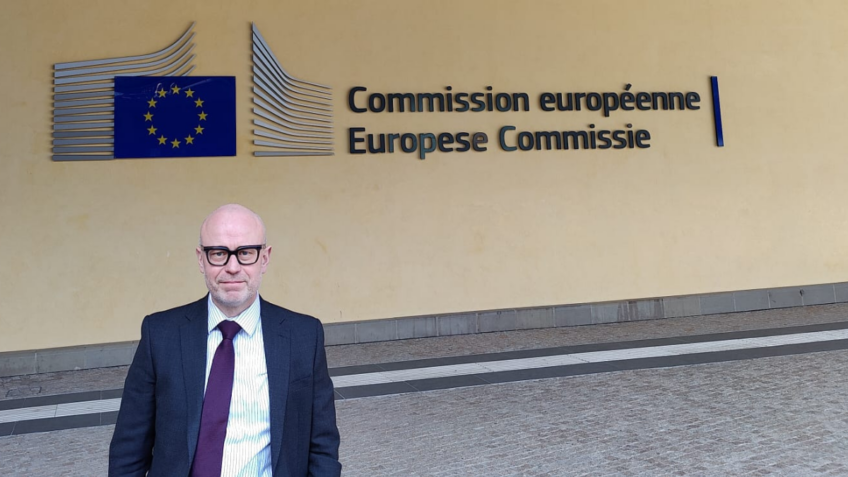
Pawel Jarza from the Policy and Compliance team at the British International Freight Association has met representatives of the European Commission in Brussels to discuss how the Windsor Framework is working in practice and what it means for the movement of goods between Great Britain and Northern Ireland.
Introduced in 2023, the Windsor Framework was designed to restore smoother trade flows within the UK internal market under post-Brexit conditions. Jarza’s meeting formed part of ongoing dialogue between policymakers and industry representatives to assess how the new arrangements are functioning on the ground and where improvements may still be needed.
During the discussions, Jarza highlighted the operational realities facing BIFA members when moving goods across the Irish Sea. While the Framework has simplified certain processes — including the removal of export declaration requirements for goods moving from Great Britain to Northern Ireland — freight forwarders are still dealing with a trading environment that remains complex.
Among the key concerns raised were the need to operate across two separate tariff regimes and determine whether goods are considered “at risk” of entering the European Union market. Additional requirements such as safety and security declarations, along with the implementation of systems including Import Control System 2, continue to add to the complexity of border procedures.
The talks also addressed the movement of small parcels and lower-value consignments, where some of the Framework’s detailed provisions continue to create practical challenges for operators.
BIFA said the meeting was used to relay direct feedback from its members and to underline the importance of maintaining close dialogue between regulators and the freight industry to ensure that the system works as effectively as possible.
Jarza said freight forwarders work at this border every day and therefore have first-hand insight into what works and what does not. He also stressed that if members encounter recurring systemic issues, they should report them so that the association can raise them with government departments and the European Commission and propose practical solutions where possible.
The association has also been expanding its focus on innovation. In February, BIFA confirmed that it had created a new artificial intelligence and technology working group in response to growing member interest in the opportunities and challenges AI presents from a freight forwarding perspective.