



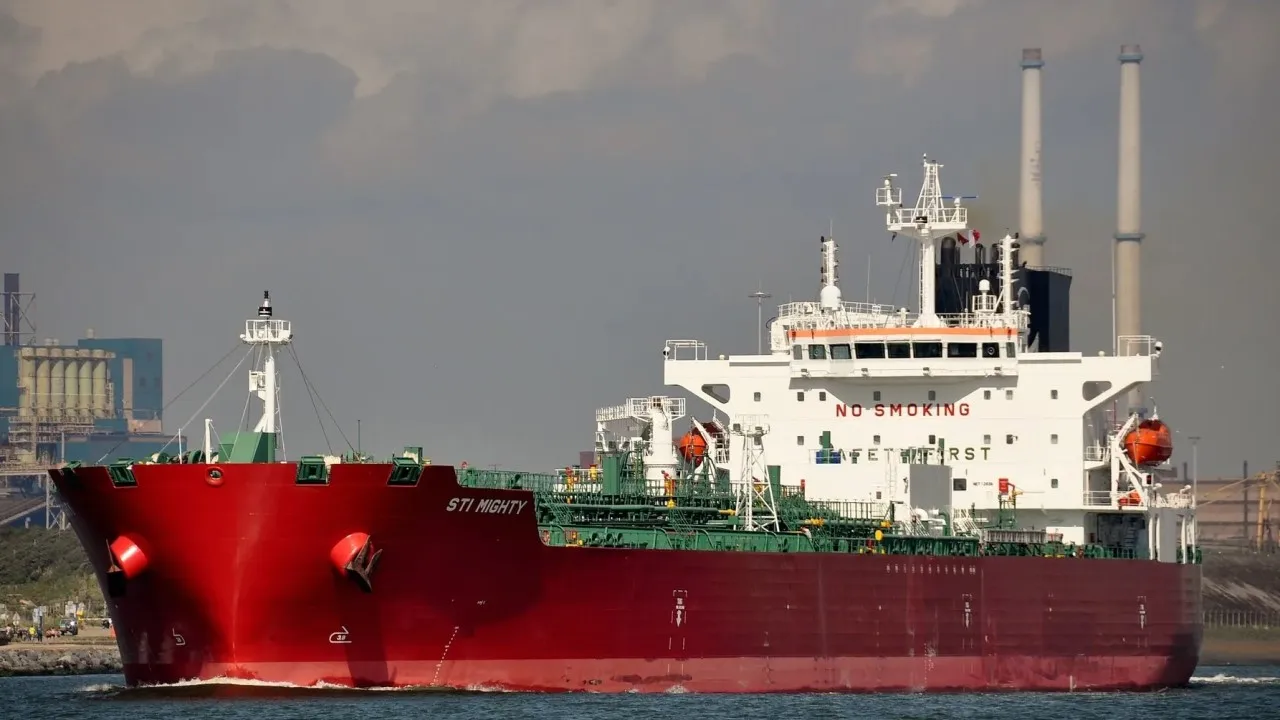
The tanker sector was already showing signs of stronger momentum before the latest escalation involving Iran, according to speakers at CMA Shipping 2026.
James Doyle, head of corporate development and investor relations at Scorpio Tankers, said that while recent hostilities in the Middle East are currently dominating attention, the market had already started to strengthen before those events. He reminded the audience that shipping is a cyclical business and one that is frequently shaped by supply shocks that are difficult to predict.
On the crude side, Doyle pointed to the positive impact of Sinokor’s activities, as well as broader market consolidation, as factors that were already supporting rates before the developments in Iran at the end of February. In product tankers, he highlighted a combination of strong demand and the dislocation of refining capacity as major drivers of market strength. Over time, he said, refineries have moved farther away from end consumers, increasing transport demand.
Later in the day, another CMA session focused on the state of the tanker market in 2026 and featured shipowners, managers and advisors. Jason Klopfer, managing director at Navig8, which was acquired by Adnoc Logistics in 2025, said that crude moving to a wider range of discharge ports has created fragmentation, higher utilisation and what he described as positive confusion in the market, as vessels are often less certain about where they will ultimately discharge.
He also echoed concerns around refinery geography, while pointing to the ageing global tanker fleet and the growing number of sanctioned vessels. In his view, the market was already facing a situation where supply was not sufficient to meet positive demand, creating the conditions for a tighter tanker environment.
Bart Kelleher, president of Ardmore Shipping, said his company has taken a flexible and highly situational approach to capital allocation, balancing shareholder returns with investment in the business. He noted that such investment can take different forms, from efficiency upgrades to cargo capability improvements and well-timed acquisitions.
He referred in particular to a programme of upgrading tank coatings during drydockings, going well beyond statutory requirements, as well as the purchase of second-hand vessels during a market dip in the second quarter of 2025. According to Kelleher, that move expanded the fleet by 15% and improved earnings power, with those ships now significantly more valuable.
He also said the company has been introducing new technologies incrementally across the fleet rather than waiting for mandatory five-year drydock cycles.
Looking further ahead, Peter Wallace from Lloyd’s Register’s Risk Advisory Group outlined two long-term structural trends: a gradual shift away from the previous model of globalisation, where finished products will increasingly come from different locations than in the past, and a wider transformation of shipping driven by automation, crewing issues, energy transition and environmental pressure.
Wallace said environmental considerations remain one of the most powerful long-term forces shaping the industry. He added that future technologies are likely to favour more capital-intensive shipping models, citing examples such as nuclear propulsion where costs are concentrated more heavily upfront rather than across the operating life of a vessel.