



What began as a light-hearted Commodores’ Debate at CMA Shipping 2026 quickly turned serious as senior industry figures confronted the growing impact of the Iran conflict on global shipping.
The panel featured several past Commodores of the Connecticut Maritime Association alongside 2026 Commodore Dag von Appen, non-executive chairman of Navigator Gas and board member at Ultranav. The debate was moderated by Marine Money president Matt McCleery.
The discussion took place after another night of escalating attacks on merchant vessels by Iran. Morten Arntzen, senior shipping industry advisor at Macquarie Bank and 2007 Commodore, was the only speaker on stage with a direct connection to a ship caught in the violence. He said a vessel financed by Macquarie had been struck by a suicide drone in Iraq, outside the Strait, resulting in a total constructive loss and the death of one crew member.
That ship was the Safesea Group tanker Safesea Vishnu, which was hit by an unmanned craft while carrying out ship-to-ship transfers in Iraqi waters. The strike triggered an explosion and a fast-spreading fire. The 28 crew members abandoned the vessel by jumping into the sea, and one seafarer later died.
Von Appen said one Navigator Gas vessel had been in the Gulf on the day US strikes on Iran began, but by sheer luck it managed to pass out of Hormuz the same day.
Lois Zabrocky, president and chief executive of International Seaways, said it was largely luck that none of the roughly 70 tankers under her company’s control were in the Arabian Gulf when hostilities erupted. She did, however, praise Shell, which had chartered three of the company’s vessels, for taking a cautious approach that prevented one ship from entering the Gulf.
Richard Du Moulin, chairman of Pangaea Logistics and 1999 Commodore, focused on the human cost. He said sending a ship into a war zone is a very serious decision and argued that owners who take that risk without properly sharing the rewards with crews, or do so when the danger is simply too high, are failing in their duty. In his view, an owner’s first responsibility is to the crew and the second is to those who may later have to rescue both ship and seafarers.
Von Appen warned that if the closure of the Strait of Hormuz continues, oil and gas prices will face a major shock.
Despite the gravity of the situation, none of the speakers believed the crisis would continue for months.
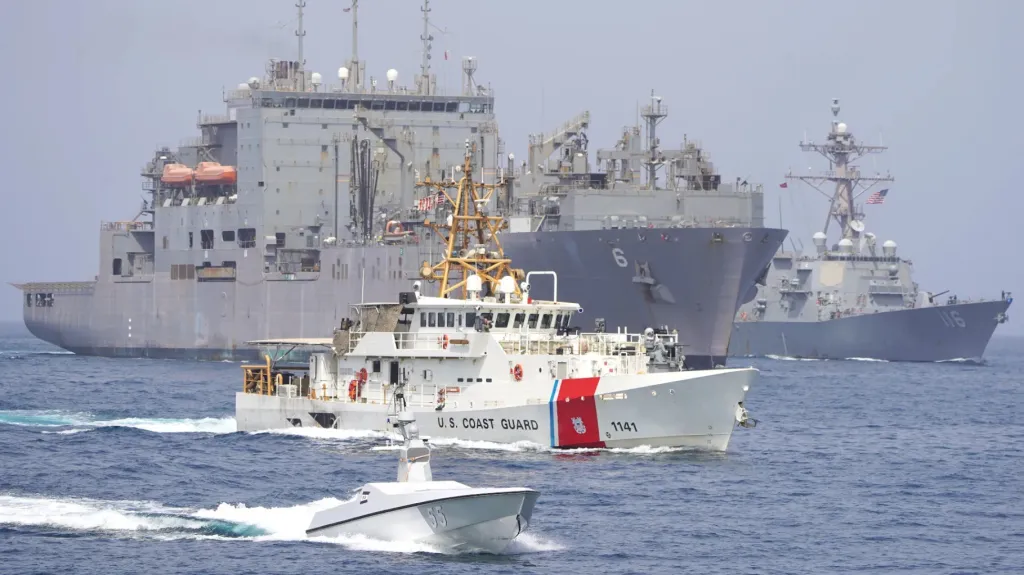
On the question of whether US naval escorts might help merchant ships transit the Strait safely, Arntzen argued that while convoys worked against Somali piracy, today’s threat is very different. He said even highly sophisticated warships may struggle when facing large-scale drone attacks, making passage effectively impossible for the time being.
Peter Evensen, former president and chief executive of Teekay Shipping, took a broader political view, saying he believes the United States may back off before Iran does. He also noted that the world cannot do without 15 to 20 million barrels of oil per day for long.
Zabrocky added that while non-OPEC production could increase incrementally from regions such as the Americas, those gains would still not be enough if Hormuz remained closed for any meaningful period.
In a quick round of forecasts, Arntzen was the only panellist to say he believes oil could reach $150 a barrel during the crisis, while Evensen alone expected the situation could push the US into recession.