



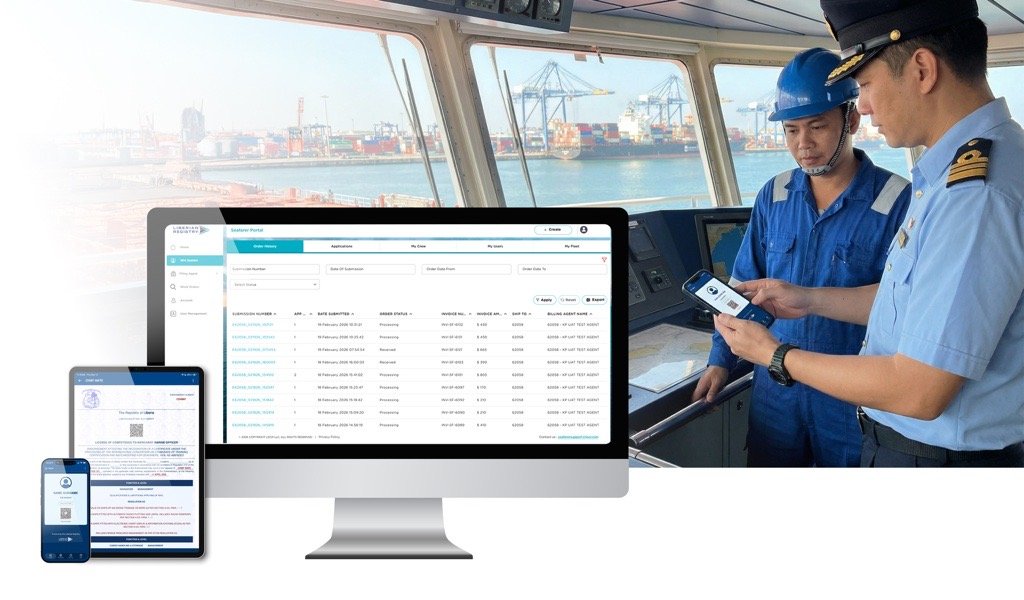
The Liberian Registry is introducing electronic seafarer documents as part of a wider digital upgrade aimed at improving document security, simplifying access and strengthening compliance oversight across the crewing process.
The registry, the largest ship registry in the world, said digitally verifiable documents will give port authorities, shipowners and other stakeholders greater confidence that seafarers hold valid and properly checked credentials. It also expects the move to reduce fraud risks and minimize inspection-related delays.
Under the new system, physical documents such as Certificates of Receipt of Application will include QR codes, while electronic certificates will also be issued for every processed application. These digital credentials are intended to complement, not replace, existing hard copy documents.
The registry says the use of QR-coded, digitally verifiable documents will allow Port State Control officers to confirm credentials more quickly and more reliably. It also believes the additional oversight will help coastal states maintain stronger maritime security standards while improving transparency and operational efficiency across the wider shipping industry.
As part of the rollout, the registry’s Seafarer Electronic Application System will migrate into the Seafarer Portal, and a new solution called Crew360 will introduce additional vetting and verification checks on every application. The goal is to streamline how credentials are submitted, processed and issued, while improving overall compliance control.
For seafarers, that should mean faster processing. For shipowners, it should provide greater assurance that applications have undergone enhanced review before documents are issued.
The registry is also launching the SEA360 mobile app, which will allow Liberian seafarers to securely access their Seaman’s Book, licenses, certificates and recorded sea service directly from their phones. The electronic documents available through the app will function as digital equivalents of hard copy credentials and will also include QR codes for instant verification within the registry’s systems.
One of the more significant elements of the rollout is the direct connection it creates between the registry and Liberian seafarers themselves. Through the app, seafarers will be able to interact more directly with Port State Control officials and other responsible parties, including Designated Persons Ashore.
Liberian Registry CEO Alfonso Castillero said the initiative is rooted in the registry’s broader priority of supporting and protecting seafarers. He described SEA360 not just as a document-access tool, but as a direct channel through which seafarers can receive guidance, updates and support.
For the registry, the digital shift is being framed as both a compliance upgrade and a seafarer support initiative — one that aims to improve visibility, security and confidence in the credentials that underpin maritime careers.