



The continuing conflict in the Middle East is forcing reinsurers to reprice risk more aggressively, and a prolonged crisis could weaken the growth outlook for leading reinsurers in the Middle East and Africa (MEA) region, according to GlobalData.
The research group said the impact of the conflict is twofold: direct exposure around conflict zones is raising the risk of losses and forcing repricing, while indirect effects — including higher reinsurance costs, capital movement and inflation — are also putting upward pressure on premiums.
GlobalData’s Middle East and Africa Reinsurers Database shows that reinsurers in the region wrote $4.4 billion in premiums in 2024, equal to around 1.1% of global reinsurance premiums. Between 2020 and 2024, the market recorded a compound annual growth rate of around 7.1%.
However, the current war involving the US, Israel and Iran is expected to reshape operating conditions significantly.
According to GlobalData analyst Manogna Vangari, the regional market remains highly concentrated. In 2024, the top five reinsurers accounted for 64.1% of total premiums. African Re expanded its share from 25.2% in 2023 to 27.2% in 2024, while Middle East-based players represented 20.7% of premiums. Saudi Re, Kuwait Re and Oman Re together contributed 15.7%.
Some reinsurers remain particularly exposed to the region. African Re and Arundo Re generate the majority of their premium income locally, at around 87.5% and 80% respectively. By contrast, Saudi Re generates only 42.5% of its business from the MEA region, with the rest coming from international markets.
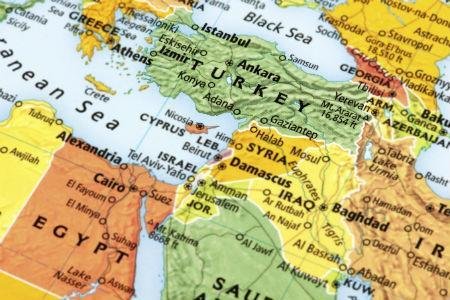
Vangari said regional reinsurers are under increasing pressure as countries including Iran, the UAE, Saudi Arabia, Qatar, Bahrain, Oman, Iraq, Kuwait and Israel deal with drone and missile attacks, airspace closures and disruption to trade routes.
The most exposed lines include marine, aviation, war risk, hull, cargo and energy, where premiums are rising sharply, policy cancellations are increasing and war-risk exclusions are tightening.
Several members of the International Group of P&I Clubs have already announced that they will stop providing war-risk cover for vessels trading in and around Iran, including waters up to 12 nautical miles off the Strait of Hormuz and across the Persian Gulf, from 5 March 2026.
In marine hull, short-term rate increases of 25% to 50% are expected in the Gulf, while some underwriters have already cancelled annual hull war policies under standard seven-day war clauses.
To stabilise capacity, the United States has established a major reinsurance facility through the International Development Finance Corporation and the US Treasury, offering up to $20 billion in maritime reinsurance, including war-risk support, for the Gulf.
Despite the pressure, reinsurers in the region are still seen as relatively well capitalised. GlobalData also noted that many are investing in AI-based underwriting and pricing tools, while regional regulation is increasingly encouraging stronger data management and operational resilience.
The market is also seeing broader product innovation, including modular policies, embedded insurance, microinsurance and parametric structures.
Still, GlobalData’s view is that the near-term response remains defensive. Reinsurers are demanding higher premiums, tightening terms and reducing capacity — particularly in specialty business lines.
If the conflict remains limited in time and geography, the immediate risks may stay manageable. But if the war continues or expands, GlobalData warns that the pressure on reinsurance markets and local insurers across the MEA region could become far more severe.