



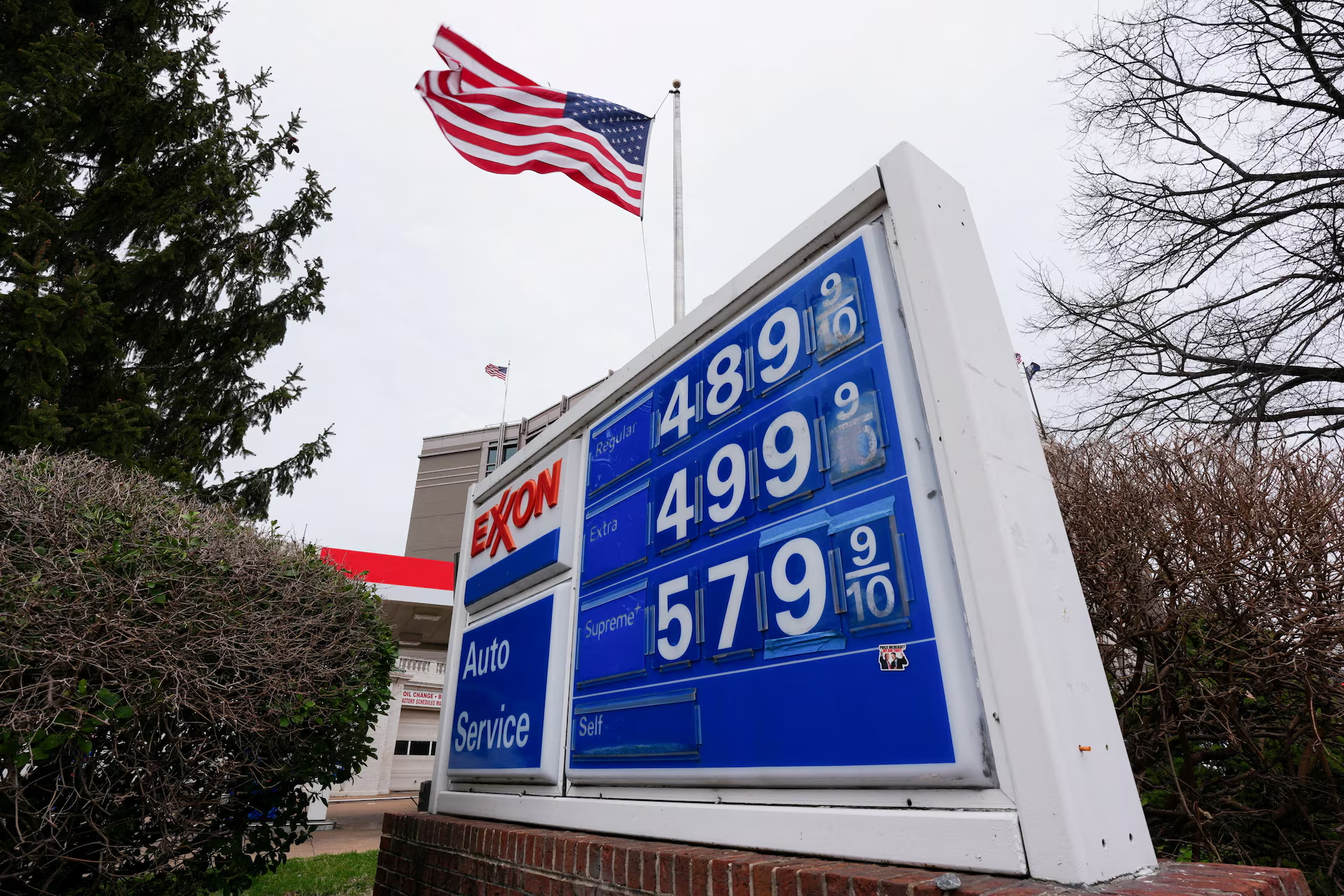
Diesel prices in the United States have climbed above $5 per gallon for the first time since 2022, reflecting a sharp escalation in global fuel markets as the conflict in the Middle East continues to disrupt oil flows.
The Department of Energy / Energy Information Administration (DOE/EIA) reported that the national benchmark retail diesel price reached $5.071 per gallon, rising 21.2 cents compared with the previous week.
The increase marks the ninth consecutive week of price gains, pushing diesel costs up by roughly $1.60 per gallon during that period. Before the rally began, the benchmark price stood at $3.459 per gallon.
This latest jump brings the number of weeks since 2000 in which diesel prices exceeded $5 per gallon to 33, with all previous occurrences recorded during the energy crisis of 2022.
Energy markets have been reacting strongly to disruptions around the Strait of Hormuz, where escalating tensions between the United States, Israel and Iran have created significant uncertainty over oil shipments.
Ultra-low sulfur diesel futures on the CME commodity exchange illustrate the volatility. Prices closed at $2.596 per gallon on February 27, the final trading day before the outbreak of hostilities, before climbing sharply to reach $4.0147 per gallon, an increase of more than $1.41.
Energy analysts warn that the market could face further disruption due to declining production in the Middle East.
According to Rystad Energy, the region has lost more than 12 million barrels per day of oil production since Iran effectively closed the Strait of Hormuz. That represents roughly 7% of global petroleum demand.
The firm also warned that a worst-case scenario could see production fall to 6 million barrels per day, representing a drop of nearly 70% compared with pre-war output levels.
Much of the remaining supply relies on alternative export routes, including Saudi Arabia’s East-West pipeline to Yanbu on the Red Sea and the UAE’s pipeline to Fujairah. However, both routes face constraints due to tanker shortages and potential security risks.
At the same time, some countries are attempting to find diplomatic solutions to maintain energy flows. According to Bloomberg, Iraq is currently negotiating with Iran to allow some of its tankers to pass through the Strait of Hormuz.
Iraqi oil production has already fallen sharply, dropping from about 4.2 million barrels per day before the war to roughly 1.5–1.6 million barrels per day, much of which is now used domestically for electricity generation and refinery operations.