




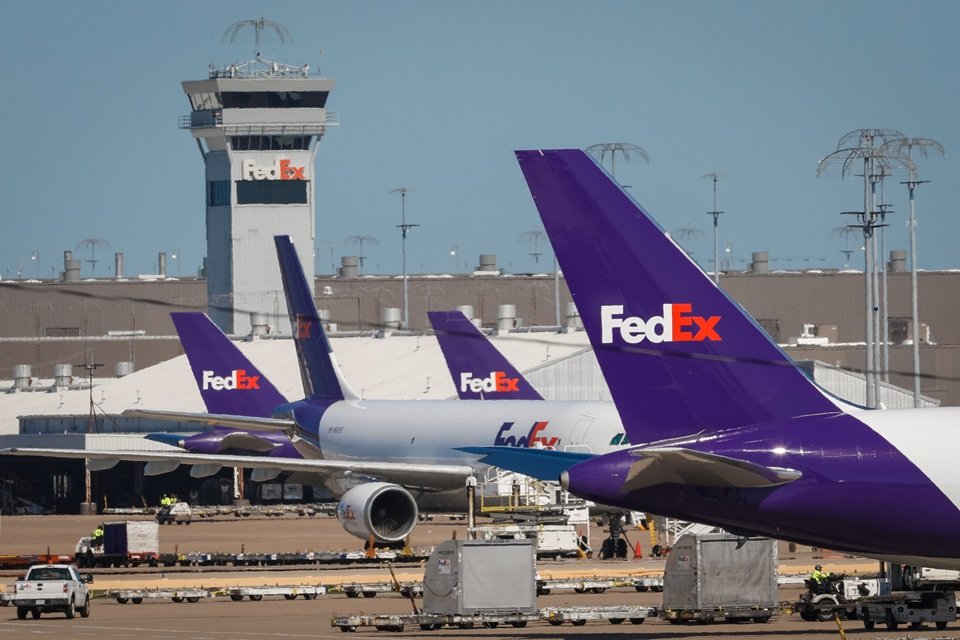
Alarm bells rang in February when data from the US Bureau of Transportation showed that US cargo airlines had shed 29,185 jobs in December alone.
Almost all of those losses were linked to FedEx, which accounted for 29,113 departures during the month. On the surface, the figures looked dramatic, but only a relatively small share of those job cuts were tied directly to air operations.
Since combining its Express and Ground businesses, FedEx has reported its entire workforce under the airline category in Department of Transportation statistics, regardless of whether employees are actually involved in aviation activity.
Even so, the scale of workforce reduction at the major integrators is striking. UPS eliminated 48,000 roles last year and shut 24 facilities, and its management now intends to remove another 30,000 positions this year. FedEx, meanwhile, is pursuing $2bn in savings by the end of next year under its Network 2.0 plan and has already closed around 200 of the 475 facilities marked for shutdown.
Behind these decisions is a broader strategic shift. Both FedEx and UPS have concluded that carrying millions of parcels for Amazon does little to strengthen margins and that competing aggressively in the final-mile B2C segment is no longer attractive. Instead, they are pulling back from that business and focusing more on higher-yield freight.
That change inevitably points to some contraction in air operations, although both companies are moving cautiously when it comes to pilot numbers.
UPS has decided to retire its MD-11 fleet permanently, but rather than reduce pilot headcount, it has chosen to retrain MD-11 crews for other roles. FedEx has taken a different route, introducing a 13% reduction in minimum guaranteed flight hours and targeting about 400 early retirements.
Pilot recruitment, which accelerated sharply after the pandemic, has eased in the past two years. That slowdown has temporarily reduced pressure on regional carriers, usually the first part of the industry to feel the strain. But there is little reason to believe that relief will last.
Strong growth in passenger aviation, an ageing workforce and the high cost of training new pilots all point to a future supply shortage. The FAA’s Aerospace Forecast for 2025 to 2045 suggests that demand for pilots in North America will continue to exceed supply at least until 2034.
The outlook is even more troubling for aviation engineers. According to AeroProfessional, the shortage has become critical and will not be solved through short-term recruitment drives alone.
The labour challenge extends beyond pilots and engineers. Air traffic controllers, customs officers, security screeners and cargo handlers are also in short supply, creating pressure points across the wider logistics chain.
For an industry already under strain, the years ahead are likely to remain difficult. Even as the major integrators shrink parts of their business, aviation and air cargo still face a structural labour problem that is far from resolved.