



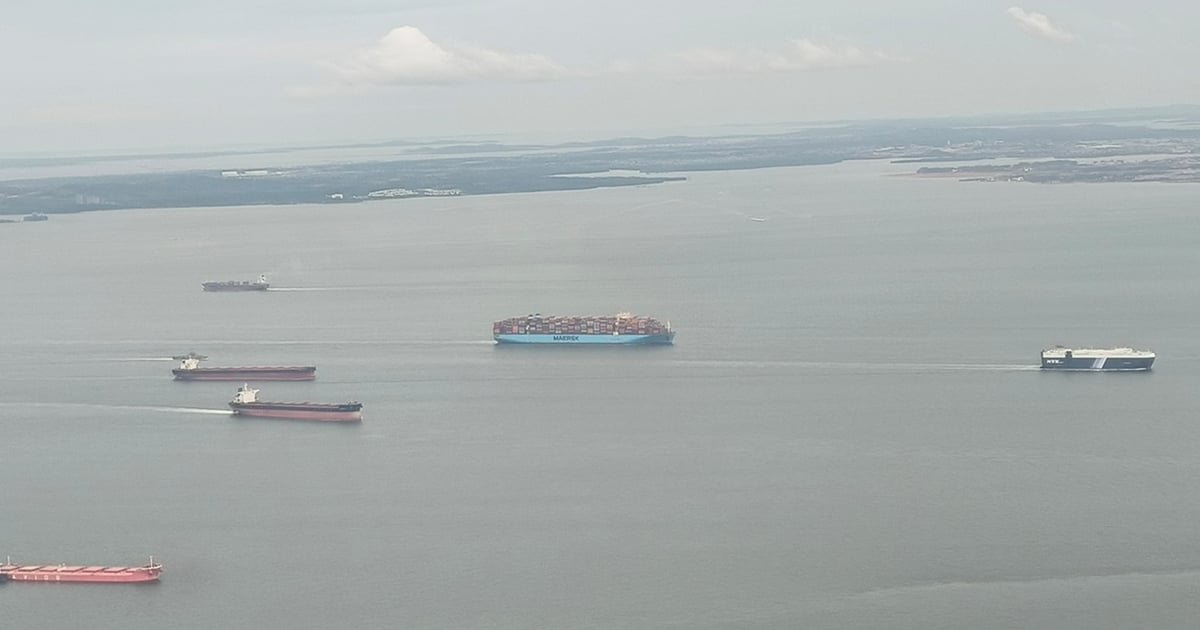
While the world’s attention is currently focused on the Strait of Hormuz, the busiest waterway on earth remains the Straits of Malacca and Singapore, which recorded historic traffic volumes in 2025.
The effective closure of the Strait of Hormuz by Iran since the start of the war with the US and Israel on 28 February has pushed strategic chokepoints back to the top of the geopolitical agenda. At the same time, the recently signed Indonesia-US defence cooperation agreement has raised concerns in regional media. Singapore, one of the littoral states of the Malacca and Singapore Straits, has also made its position clear on freedom of navigation, stating that it would not negotiate with Iran over paying tolls for passage through Hormuz.
Security concerns in the 500-mile Malacca Strait, which narrows to just 1.7 miles at one point, are not new. They peaked around 2004, when piracy was a major threat. In the first half of that year alone, there were 20 attacks on ships, 30 crew members taken hostage, and four fatalities.
International pressure prompted Indonesia, Malaysia and Singapore to coordinate patrols and crack down on piracy. That period also contributed to the creation of organisations such as ReCAAP.
More than two decades later, traffic in the waterway has grown dramatically. In 2004, there were 63,636 transits by vessels over 300 gt. In 2025, the number exceeded 100,000 for the first time, reaching 102,525 transits, according to figures from the Malaysian Marine Department compiled by the Nippon Maritime Center.
Those figures are based on STRAITREP data and reporting by vessels at the northern end of the Malacca Strait at One Fathom Bank, at the southern end at Iyu Kecil, and at the western entrance to the Singapore Strait. Traffic by vessels over 300 gt increased by 8.72% compared with 94,301 transits recorded in 2024.
That volume translates into an average of 281 reports per day to Klang VTS in Malaysia.
The biggest users of the strait are container ships, excluding deeply laden ultra-large container vessels, with an average of 74 transits per day. They are followed by tankers at 60 per day, excluding laden VLCCs, and dry bulk carriers at 57 per day.
The fourth-largest category is made up of deeply laden vessels with a draught of more than 15 metres, including VLCCs over 150,000 gt and ULCVs, a category unique to the Malacca and Singapore Strait reporting system. According to the Nippon Maritime Center, transits in this category have nearly doubled over the last 10 years to an average of 28 per day in 2025, accounting for around 10% of total traffic.
LNG and LPG carriers averaged 13 transits a day, general cargo ships averaged 25, and car carriers around seven per day in 2025.