




Mexico’s heavy-duty truck sector remains under pressure. In March 2026, both production and exports declined year on year once again, reflecting the continued weakness of US demand.
According to data released by INEGI, Mexico produced 12,617 heavy-duty trucks during the month, down 6.6% compared with March 2025. Exports totalled 10,625 units, a decline of 5.9% year on year.
Industry representatives pointed to a mix of structural and cyclical pressures behind the slowdown, including soft freight demand, cautious fleet investment across North America, elevated inventories among carriers, and growing competition from used truck imports into Mexico.
For Guillermo Rosales, president of AMDA, the industry is still working its way out of a sharp downturn that began in 2025. At the same time, he believes policy measures aimed at supporting fleet renewal and limiting used truck imports could help improve production and export demand later in 2026.
Despite the year-on-year declines, industry officials noted that both production and exports improved on a month-to-month basis, which they see as a possible early sign of stabilisation after a weak start to the year.
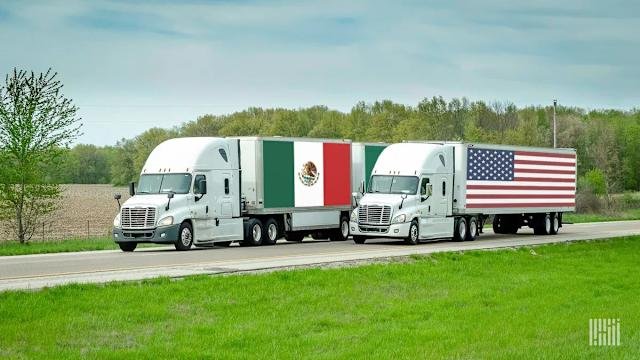
The United States remains by far the dominant market for Mexican heavy-duty truck exports. In the first quarter, it accounted for 92% of shipments, equal to 21,661 units. That level of dependence underlines just how closely Mexico’s truck manufacturing sector is tied to US freight cycles, fleet investment decisions and replacement demand.
Officials from ANPACT said exports remain heavily concentrated in freight-focused units, particularly Class 8 vehicles, with diesel continuing to dominate both production and outbound volumes. Rogelio Arzate, president of the association, said the country’s principal export product is cargo equipment, and that nearly all units exported in March were designed for freight use.
March exports fell by 6%, from 11,288 units in March 2025 to 10,625 units this year. On a quarterly basis, exports were down 30.3% to 23,550 units, clearly reflecting the softness of the wider North American freight market.
Even so, ANPACT pointed to monthly improvement, noting that export volumes rose from around 7,800 units in February to more than 10,600 in March.
By manufacturer, Freightliner remained the top producer and exporter in Mexico during March, building 8,366 trucks, up 1.4% year on year, and exporting 8,097 units, down 2.8%. International Trucks Inc. ranked second, producing 2,990 units, down 2.7%, and exporting 2,359 units, down 17.7%.
INEGI’s key market figures for the month were as follows:
* Production: 12,617 units (-6.6% YoY)
* Exports: 10,625 units (-5.9% YoY)
* US share of Q1 exports: 92%
Top OEM production in March:
* Freightliner: 8,366 units
* International: 2,990 units
* Kenworth: 748 units
* Isuzu: 192 units
Top OEM exports in March:
* Freightliner: 8,097 units
* International: 2,359 units
* Kenworth: 169 units
The market mix remains highly concentrated, with cargo trucks accounting for around 97% of production, while diesel remains the dominant powertrain across both production and exports.