



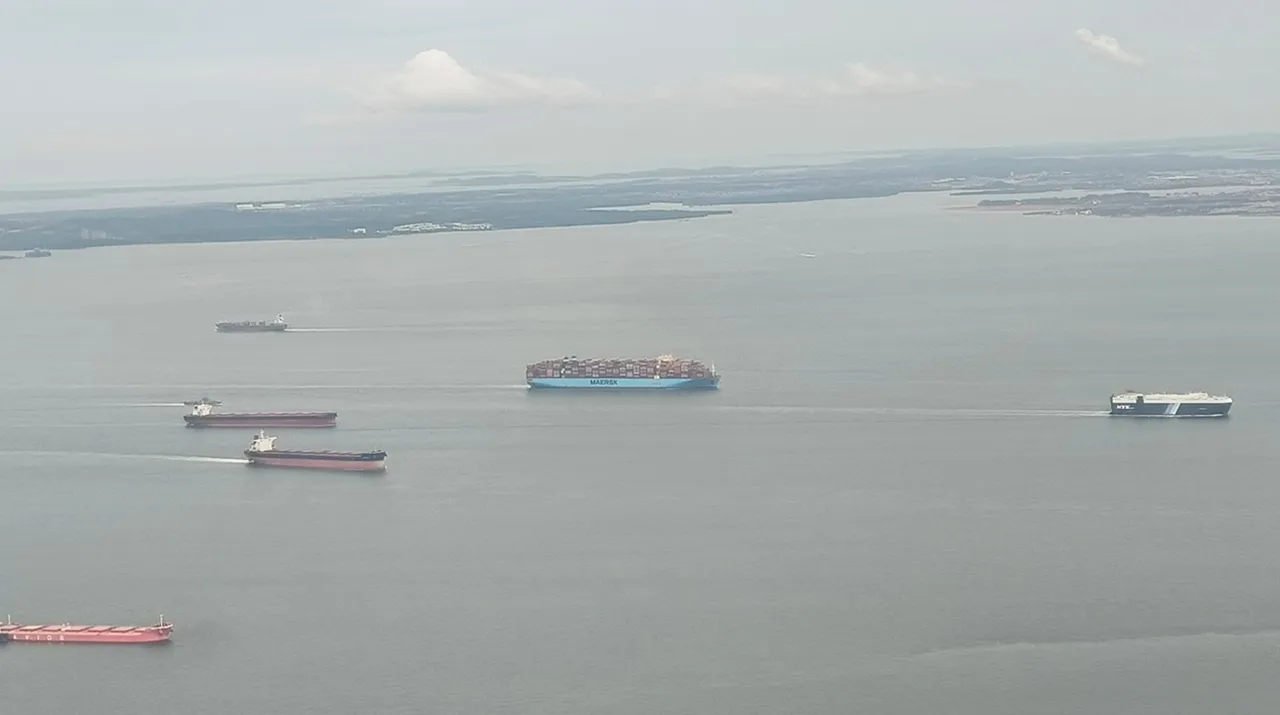
Indonesia’s finance minister has reportedly suggested that ships transiting the Malacca Strait could one day be charged a toll, an idea said to have been prompted by Iran’s move to impose fees on vessels using the Strait of Hormuz.
One of the busiest shipping lanes in the world, the Malacca Strait handled 102,525 transits by vessels over 300 gross tonnes last year, equivalent to around 281 ship movements per day. The waterway is bordered by Indonesia, Malaysia and Singapore.
Attention has recently shifted toward both the Malacca and Singapore Straits after Iran effectively closed the Strait of Hormuz during its conflict with the US and Israel and began charging approved vessels transit fees of up to $2 million. Singapore, in particular, has remained firm in defending freedom of navigation under UNCLOS.
Indonesia’s finance minister, Purbaya Yudhi Sadewa, appears to have taken a different line. Speaking at a symposium in Jakarta and quoted by local media, he said Indonesia sits on a strategic global trade and energy route and questioned whether it is right for ships to pass through the Malacca Strait without being charged.
He added that if Iran is moving to charge ships for transiting Hormuz, then a three-way split among Indonesia, Malaysia and Singapore in the Malacca Strait could amount to a substantial sum — especially as Indonesia controls the largest and longest stretch.
Even so, the idea would be far from easy to implement. Purbaya himself reportedly acknowledged that any such move would require the agreement of both Malaysia and Singapore.
The strait is already governed by a cooperative mechanism established in 2007 between the three littoral states.
Speaking on CNBC on 22 April, Singapore Foreign Minister Vivian Balakrishnan pointed to that arrangement and reiterated Singapore’s position, saying there are no tolls and that all three countries are trade-dependent economies with a shared strategic interest in keeping the route open.
That same position was echoed last week during the 34th meeting of the Aids to Navigation Fund Committee, where Singapore’s Maritime and Port Authority said in a social media post that the littoral states had reaffirmed their commitment to keeping the Straits of Malacca and Singapore open and safe in accordance with international law.
Indonesia has also ratified UNCLOS, which enshrines the principle of freedom of navigation — another factor that would complicate any attempt to introduce passage charges.